Home
What Makes a Cyberpunk Setting and How to Build Your Own Dystopia
A cyberpunk setting is defined by the juxtaposition of "Low Life and High Tech." It depicts a near-future society where advanced technology—such as artificial intelligence, cybernetics, and global networks—coexists with systemic social decay, extreme wealth inequality, and the erosion of government power in favor of megacorporations . Unlike traditional science fiction, cyberpunk focuses on marginalized individuals surviving in the shadows of a hyper-industrialized, often neon-drenched urban landscape.
Why We Define Cyberpunk as Low Life and High Tech
The phrase "Low Life, High Tech" serves as the non-negotiable foundation of the genre. According to Wikipedia's overview of Cyberpunk , this contrast highlights a world where technological progress has failed to improve the human condition for the masses. Instead, technology is often used as a tool of oppression or a desperate means of survival for those on the fringes of society.
In a cyberpunk setting, the traditional social contract has effectively dissolved. While citizens in a 20th-century dystopia might fear a totalitarian "Big Brother" government, the cyberpunk citizen fears the corporate arcology. The state has been hollowed out, leaving a vacuum filled by private entities that provide security, infrastructure, and even law enforcement—but only to those who can pay. For the "low life" protagonist, this means navigating a world where they are technically advanced but socially discarded.
Lawrence Person, a noted critic, defined the cyberpunk protagonist as a marginalized, alienated loner who lives in the cracks of a highly integrated, invasive technological society. This figure isn't a hero in the classical sense; they are often a "console cowboy," a street-level dealer, or a corporate defector. Their relationship with technology is intimate and often physical, involving neural interfaces or prosthetic limbs that blur the line between human and machine.
"The future is already here – it's just not evenly distributed."
— William Gibson
This quote encapsulates the core of the setting. The "high tech" is present, but it belongs to the elite, while the "low life" inhabitants repurpose the scraps. Bruce Bethke, who coined the term in 1980, combined the concept of "cybernetics" with "punk" to describe a generation of tech-savvy troublemakers who refused to follow the rules of the established order.
The Three Pillars That Created the Modern Cyberpunk Aesthetic
While the genre has evolved, three specific works established the visual and thematic language that almost every modern setting draws upon. These pillars define the tech level, the primary conflicts, and the "vibe" of the world.
Visual Language from Blade Runner (1982)
Ridley Scott’s Blade Runner ranks among the top influences for the visual identity of the genre. It introduced the "used future" aesthetic—a world that looks lived-in, dirty, and decaying despite its advanced robotics. The setting of Los Angeles 2019, characterized by perpetual rain, massive neon advertisements, and a dense, multi-ethnic urban sprawl, became the blueprint for every "Night City" that followed. It moved sci-fi away from the sterile, white-plastic corridors of the 1960s and into the grime of the street.
Literary Blueprints from Neuromancer (1984)
William Gibson’s Neuromancer provided the structural bones of the genre. It introduced the concept of "cyberspace"—a consensual hallucination representing the world's data—and the "Matrix." Gibson’s writing focused on the corporate-dominated landscape of Chiba City and the Sprawl, establishing the trope of the "hacker" as a high-stakes mercenary. His work solidified the idea that in a cyberpunk setting, information is the most valuable currency, and the "console cowboy" is the one who knows how to steal it.
Body Horror and Kinetic Energy in Akira (1988)
Katsuhiro Otomo’s Akira brought a distinct Japanese perspective to the genre, focusing on Neo-Tokyo. It introduced themes of government corruption, secret military experiments, and the physical mutation of the human form. Akira emphasized the "punk" aspect through biker gangs and youth rebellion, while its depiction of psychic powers and body horror added a visceral, terrifying layer to the technological dystopia. It proved that cyberpunk could be as much about the evolution of the flesh as it was about the evolution of the machine.
| Work | Primary Tech | Visual Vibe | Core Conflict |
|---|---|---|---|
| Blade Runner | Bio-engineered Androids | Neon, Rain, Noir | What defines a human soul? |
| Neuromancer | Cyberspace & AI | Gritty, High-Contrast | Corporate espionage & data theft |
| Akira | Biotech & Espers | Kinetic, Urban Decay | Youth rebellion vs. State control |
Exploring Cyberpunk Sub-Settings Beyond the Neon City
While the "Neon City" is the most recognizable environment, the genre has expanded into diverse sub-settings that offer fresh perspectives on the "Low Life, High Tech" theme. According to POCGamer's analysis of sub-settings , world-builders can look to the sea and the stars for inspiration.
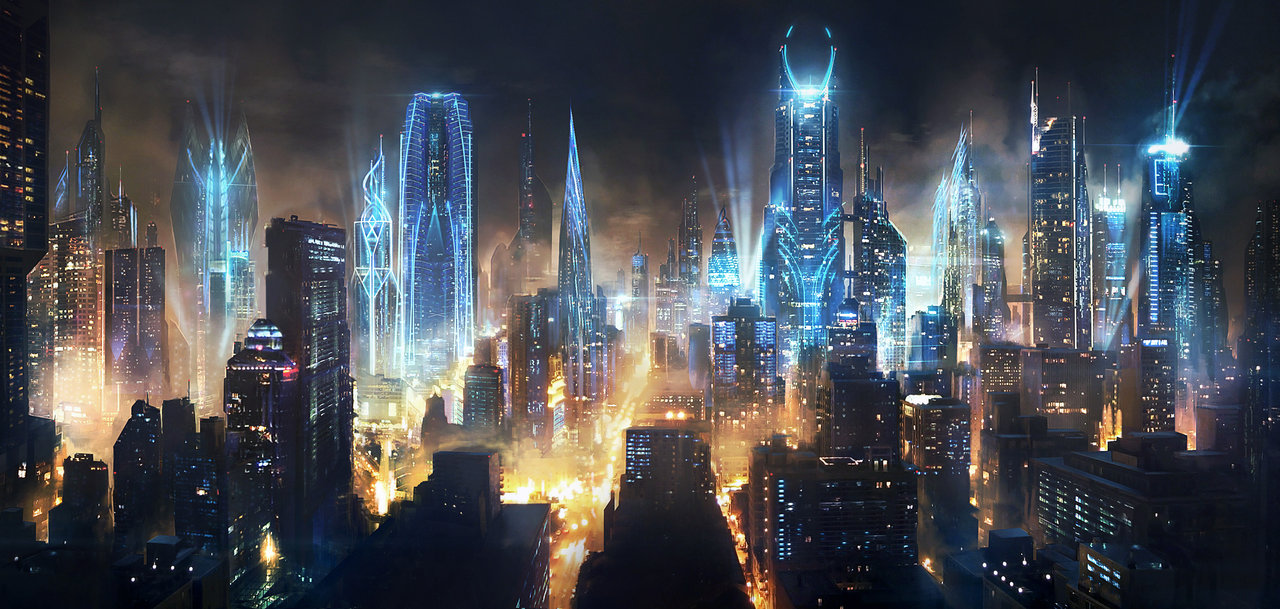
Image source: Compromise and Conceit
- The Drift Nations
- These are independent, floating artificial islands or pirate states. In these settings, the "low life" consists of maritime scavengers and data-havens located in international waters, away from corporate jurisdiction.
- Deepdown Facilities
- Moving the dystopia to the ocean floor, these settings focus on undersea corporate wars. The pressure of the deep serves as a metaphor for the crushing weight of the social hierarchy.
- Highrider Confederation
- This "early stellar" variant extends the setting to Earth’s orbit, Mars, and the asteroid belt. Here, the conflict is between the "Highriders" (orbital workers) and the Earth-bound corporations that own their oxygen and water.
How Megacorporations Replace the Government in Dystopian Worlds
In a cyberpunk world, the state is often a vestigial organ. The real power lies with megacorporations like Arasaka, Militech, or the Tyrell Corporation. These entities exercise extraterritoriality , a legal concept where corporate grounds are considered sovereign soil. This means corporate security forces act as the police, and corporate bylaws replace national constitutions.
The setting is physically divided by this power structure. You have the "Arcologies"—massive, self-contained skyscrapers where corporate employees live in sterile, high-tech luxury—and the "Combat Zones" or "Slums" below. This verticality is a literal representation of the class divide. The higher you are in the building, the cleaner the air and the better the tech. The "street" is where the discarded technology and people end up, creating a vibrant but dangerous ecosystem of black-market cyberware and gang warfare.
Comparing How Different Systems Handle Technology and Humanity
A key element of any cyberpunk setting is the "cost" of technology. Different fictional universes handle the psychological and spiritual impact of cybernetic modification in distinct ways. As noted in discussions on RPGnet , these systems define the tone of the world.
- The Cyberpsychosis Model: Found in Cyberpunk 2077 and RED , this model treats cyberware as a drain on sanity. As a person replaces more of their biological self with chrome, they lose empathy and eventually snap, becoming a "cyberpsycho." This frames technology as an addictive, corrosive force.
- The Essence Model: Used in Shadowrun , this system links technology to the loss of a "soul." Every piece of cyberware reduces a character's Essence; if it hits zero, they die. This creates a direct conflict between technological power and spiritual health.
- The Full Conversion Model: Seen in Ghost in the Shell , this view is more nuanced. Technology is a seamless evolution of the self. The conflict isn't about losing humanity, but about the blurring of identity—if your brain is the only organic part left, are you still "you"?
Does a Cyberpunk Setting Always Need Neon Lights and Rain?
There is a growing debate among fans and creators about whether the "aesthetic" (neon and rain) is essential to the genre. Some argue that a setting can be cyberpunk even if it looks like a modern suburb. This is often called "Invisible Cyberpunk."
In this variant, the tech is hidden in plain sight. Instead of glowing cyber-arms, the dystopia is found in gig-economy algorithms that control workers' lives, biometric surveillance cameras disguised as streetlights, and the fact that most people carry a high-powered tracking device (a smartphone) in their pockets. Series like Humans or movies like Ex Machina explore cyberpunk themes without the 1980s visual tropes, focusing instead on the social and ethical implications of near-future tech.
Real Cities That Prove the Future Is Already Here
Many modern megacities already mirror the multi-layered urban decay of cyberpunk fiction. Chongqing , China, is often cited as a real-world "Night City" due to its extreme verticality, where monorails pass through apartment buildings and bridges span hundreds of feet above the ground level. Similarly, Tokyo’s neon density and historical role as a tech hub provided the original inspiration for the "techno-orientalism" found in early Western cyberpunk.
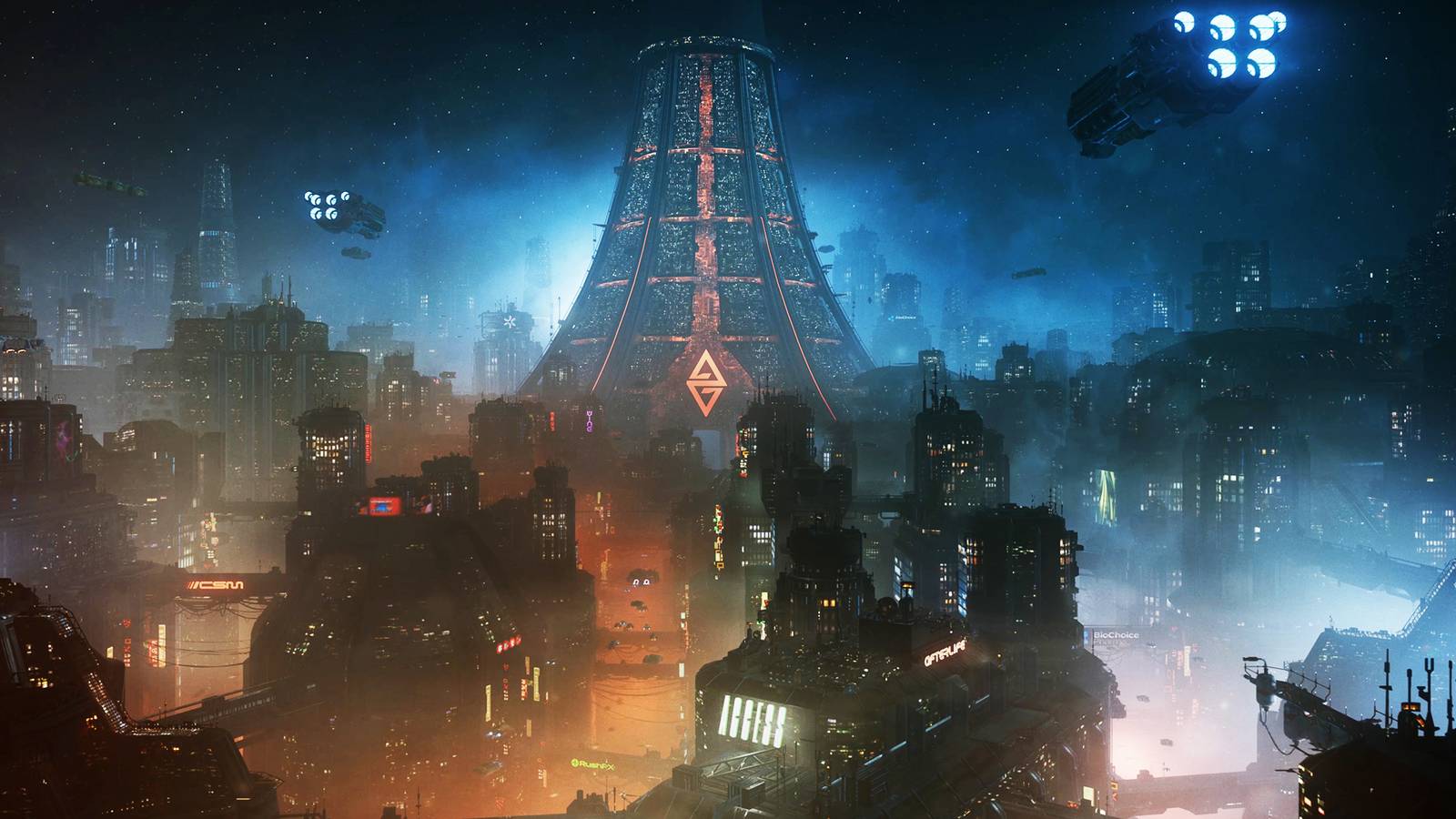
Image source: TheGamer
How to Build a Unique Cyberpunk World Without Using Clichés
If you are building your own setting, it is important to move beyond the surface-level tropes. Follow these steps to create a world with depth:
- Define the "High Tech": Don't just say "robots." Is the world dominated by biotech, neural AI, or perhaps nanotechnology? The specific tech should dictate the problems of the world.
- Define the "Low Life": Who is the underclass? Are they displaced factory workers, digital refugees, or a new generation of "bio-hacks"?
- Establish the Systemic Conflict: What is the specific cost of living in this world? Is it the loss of privacy, the loss of physical autonomy, or the commodification of memory?
- Create a Unique Sub-Setting: Move the action to a rural "dust bowl" where tech is failing, or an orbital station where gravity is a luxury.
- Replace the Villains: Instead of a generic "Evil Corp," create a corporation that provides something the protagonists actually need, making the conflict morally gray.
Frequently Asked Questions
What are the 5 key elements of a cyberpunk setting?
The five core elements typically include: 1) Megacorporations that hold more power than governments, 2) Urban decay and high-density living, 3) Pervasive cybernetic modification or AI, 4) Dystopian social stratification (the extreme gap between rich and poor), and 5) The "Low Life, High Tech" philosophy where advanced tools are used by marginalized people.
Is a cyberpunk setting always set in the future?
While traditionally set in the near-future (often 20-50 years from the time of writing), many modern critics argue that we are living in a "present-day cyberpunk" world. The themes of corporate surveillance, gig-economy slums, and ubiquitous networking are already reality, leading to the "Invisible Cyberpunk" sub-genre set in the contemporary era.
What is the difference between Cyberpunk and Steampunk?
The primary difference lies in the technology and the tone. Cyberpunk focuses on digital technology, cybernetics, and a cynical, dystopian future. Steampunk is usually set in a reimagined Victorian era powered by steam and clockwork, often carrying a more optimistic or adventurous tone, though it can also explore social inequality.
Why is Night City so iconic in the genre?
Night City, primarily from the Cyberpunk TTRPG and Cyberpunk 2077 , is iconic because it serves as a "Free State" microcosm of the genre's themes. Its 24km² scale is packed with industrial pollution, corporate arcologies, and street-level chaos, making it a perfect sandbox for exploring the "Low Life, High Tech" dynamic. According to Cyberpunk Wiki , its location in Northern California adds to its "frontier" feel.
Can a cyberpunk setting include magic?
Yes, this is a popular sub-genre known as "Urban Fantasy Cyberpunk." The most famous example is Shadowrun , which blends traditional cyberpunk tropes (hackers, megacorps, cyberware) with fantasy elements like elves, dragons, and spellcasting. In these worlds, magic is often treated as another resource to be exploited by corporations.
Key Takeaways for Building a Cyberpunk Setting
Understanding the cyberpunk setting requires looking past the neon lights to the systemic rot beneath. Here are the essential points to remember:
- 1. Prioritize Philosophy Over Aesthetic: A world is only cyberpunk if it maintains the "Low Life, High Tech" juxtaposition, regardless of whether it has neon signs.
- 2. Focus on Corporate Sovereignty: The most effective dystopias replace the government with entities that prioritize profit over human rights.
- 3. Define the Humanity Cost: Decide how technology affects the soul or mind—whether through "Cyberpsychosis" or a gradual loss of identity.
- 4. Utilize Verticality: Use the physical height of your setting to represent the socio-economic divide between the street and the arcology.
- 5. Explore Sub-Settings: Look beyond the city to "Drift Nations" or orbital colonies to provide a fresh take on the genre.
- 6. Ground the Tech in Reality: Draw inspiration from modern megacities like Chongqing to make your fictional world feel plausible and lived-in.
Start your world-building by identifying one modern technological trend and imagining how a megacorporation would exploit it to the detriment of the working class.