Home
What Is Cyberpunk Media and Where Should You Start After 2077?
Cyberpunk media is a sub-genre of science fiction characterized by "high tech and low life." It typically features marginalized protagonists navigating dystopian futures dominated by megacorporations, pervasive cybernetics, and artificial intelligence. If you are looking for a starting point after playing Cyberpunk 2077 , the foundational works include the film Blade Runner , the anime Akira , and William Gibson's novel Neuromancer . Additionally, "Media" refers to a specific character role in the tabletop lore—investigative journalists who use information as a weapon against corporate tyranny.
The explosion of interest in the neon-drenched streets of Night City has led many to seek out more "cyberpunk media." Whether you are a fan of the Cyberpunk 2077 video game, the Edgerunners anime, or the original tabletop roleplaying games (TTRPG), the genre offers a vast landscape of stories that explore the intersection of humanity and technology. However, the term can be confusing, as it refers both to a broad artistic movement and a specific profession within the game's universe.
In this guide, we will break down the essential movies, books, and music that define the genre. We will also clarify the "Media" role for those transitioning to the TTRPG and provide a curated pipeline of recommendations based on how you played the game. By understanding the historical roots and modern evolutions of the genre, you can better appreciate the social commentary and aesthetic depth that makes cyberpunk a enduring pillar of science fiction.
What Defines the Cyberpunk Genre?
At its core, cyberpunk is defined by the juxtaposition of advanced technological achievement and social decay. This "Low Life, High Tech" mantra, as described by Wikipedia's overview of the genre , focuses on characters who are often on the fringes of society. Unlike traditional space operas that might feature heroic captains or galactic empires, cyberpunk stories are grounded in the grime of overcrowded cities and the digital shadows of the "datasphere."
The Core Tropes of the Dystopia
Several recurring themes define the genre's boundaries. First is the dominance of Megacorporations . In these worlds, companies like Arasaka or Tyrell Corporation often hold more power than sovereign nations, controlling everything from the food people eat to the air they breathe. Second is the Ubiquitous Datasphere —a precursor to the modern internet where hackers (or "netrunners") navigate virtual landscapes to steal secrets or sabotage systems.
Third, Pervasive Cybernetics explore the blurring line between man and machine. Characters frequently replace limbs or organs with mechanical upgrades, leading to philosophical questions about the "Ghost" or soul within the machine. Finally, the setting is almost always Urban and Oppressive . Think rain-slicked streets, towering skyscrapers covered in holographic advertisements, and a permanent sense of midnight.
The Origins of the Word
The term "cyberpunk" was not originally a marketing label. It was coined by author Bruce Bethke in 1980 for a short story titled "Cyberpunk," which was eventually published in 1983. Bethke created the word by combining technology-focused terms with "troublemaker" energy to describe a generation of tech-savvy youth who used their skills to disrupt the status quo. According to historical accounts, this combination of high-tech capability and punk-rock rebellion provided the perfect name for a movement that was already brewing in the works of writers like Philip K. Dick and J.G. Ballard.
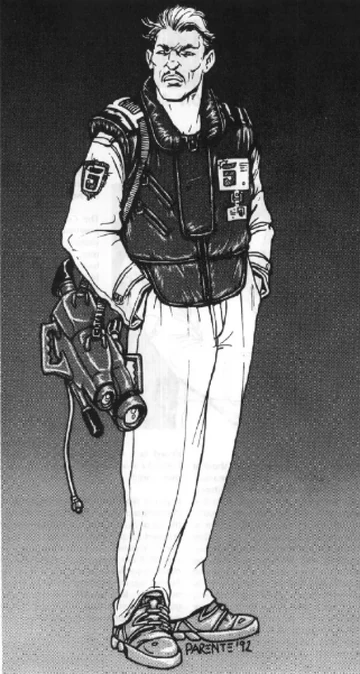
Image source: Cyberpunk Wiki - Fandom
Is Media a Genre or a Character Class?
One of the most common points of confusion for new fans is the dual meaning of "Cyberpunk Media." While it generally refers to movies and books, in the context of the Cyberpunk Red and 2020 TTRPGs, a Media is a specific character class or "Role." If you are searching for this term, you might be looking for how to play this role rather than what to watch.
The Media Role in Cyberpunk Red and 2020
In the tabletop game, Medias are the truth-seekers of the dark future. They are not just reporters; they are influencers, investigative journalists, and data-thieves who believe that the right story can topple a corporate empire. Their primary special ability is Credibility . According to the Cyberpunk Wiki , a high-level Media has the power to be believed by the masses, even when the corporations are pumping out propaganda. At Level 9 or 10, a Media can expose scandals of "Watergate proportions," causing stock prices to plummet and sparking literal revolutions.
Famous Medias in Fiction
To understand the "Media" role, one should look at archetypes like Spider Jerusalem from the comic series Transmetropolitan . Spider is a gonzo journalist who uses a combination of drugs, foul language, and a "bowel disruptor" gun to expose the corruption of the President. Another example is Susan Sommers from Venus Wars , who represents the combat journalist navigating a war zone to get the truth back to the public. These characters demonstrate that in a cyberpunk world, information is just as lethal as a monowire or a heavy pistol.
- Credibility: The ability to have your reports taken as fact by the public.
- Streetwise: Navigating the urban underworld to find sources.
- Human Perception: Detecting lies during high-stakes interviews.
- Composition: Crafting the narrative that will sway the city's opinion.
Essential Cyberpunk Movies and Shows for Beginners
If you are new to the genre, the sheer volume of content can be overwhelming. However, a few foundational films have set the visual and thematic standards that almost all modern works—including Cyberpunk 2077 —follow. These films are widely regarded as the gold standard for neon-noir storytelling.
The Foundational Films
Blade Runner (1982) is the most significant visual influence on the genre. Directed by Ridley Scott, it introduced the aesthetic of the rain-soaked, neon-lit Los Angeles and explored the humanity of "Replicants." Its sequel, Blade Runner 2049 , is also a top-tier option that expands on these themes with modern cinematography. Parallel to this is Akira (1988) , the Japanese animated masterpiece that brought "cyber-biker" culture and body horror to the forefront. The destruction of Neo-Tokyo in Akira remains one of the most iconic moments in all of science fiction.
Modern Must-Watch Hits
In recent years, the genre has seen a massive resurgence. Cyberpunk: Edgerunners on Netflix is a standout choice that perfectly captures the hyper-violent, emotional core of Night City. It serves as a prequel to the game and has been praised for its vibrant animation and tragic storytelling. Another strong contender is Altered Carbon (Season 1), which explores a future where consciousness can be transferred between bodies (or "sleeves"), effectively making the wealthy immortal.
The SQUID to Braindance Connection
Fans of the "Braindance" mechanic in Cyberpunk 2077 should watch the 1995 film Strange Days . The film features a technology called "SQUID" that allows users to record and playback human experiences, including physical sensations and emotions. As noted in Twisted Wonderland's media analysis , Strange Days is a direct thematic predecessor to the BD technology seen in the game, focusing on the illicit trade of "black market" memories.
Image source: GameRant
Must-Read Cyberpunk Books That Shaped the Future
While movies provide the visuals, literature provides the philosophical depth of the genre. The "Big Bang" of cyberpunk literature occurred in the early 1980s, but the roots go back to the "New Wave" science fiction of the 1960s and 70s.
The Sprawl Trilogy by William Gibson
William Gibson's Neuromancer (1984) is arguably the most influential book in the genre. It popularized the term "cyberspace" and introduced the archetype of the "console cowboy" (hacker). The story follows Case, a washed-up netrunner hired for one last job that involves a powerful AI. The Sprawl Trilogy, which includes Count Zero and Mona Lisa Overdrive , established the gritty, high-tech heist vibe that defines much of the genre today.
The Philosophical Roots
Before Gibson, Philip K. Dick was exploring the nature of reality and identity. His novel Do Androids Dream of Electric Sheep? served as the basis for Blade Runner and remains a foundational text for anyone interested in the "humanity" of AI. Other essential early works include Snow Crash by Neal Stephenson, which introduced the concept of the "Metaverse" and blended cyberpunk with a more satirical, fast-paced tone.
Modern Progressive Cyberpunk
The genre has evolved to address modern concerns like data privacy and corporate-owned democracy. Infomocracy by Malka Older is a significant advancement in the genre, imagining a world where a global micro-democracy is managed by a massive information search engine. This "progressive" cyberpunk focuses less on the "cool" factor of cybernetics and more on the systemic struggles of living in a world where information is the only currency.
Japanese Cyberpunk and the Rise of Body Horror
While Western cyberpunk often leans into the "noir" detective aesthetic, Japanese cyberpunk frequently explores transhumanism through the lens of body horror. This sub-genre focuses on the visceral, often painful fusion of flesh and metal.
Beyond the Neon: Mechanical Fusion
Films like Tetsuo: The Iron Man are foundational to this style. It is a black-and-white fever dream about a man who slowly turns into a mass of scrap metal. Unlike the sleek chrome of Cyberpunk 2077 , Japanese body horror is messy, industrial, and deeply psychological. Other key films include 964 Pinocchio and Tokyo Gore Police , which push the boundaries of how technology can deform and "evolve" the human form.
The Ghost in the Shell Legacy
Mamoru Oshii’s 1995 Ghost in the Shell film is a top-rated masterpiece that balances high-octane action with deep philosophical inquiries. It asks: if every part of your body is replaced by machinery, and your brain is connected to a global network, what is left of "you"? The "Ghost" refers to the soul or consciousness, while the "Shell" is the cybernetic body. This film, along with its TV series Stand Alone Complex , influenced everything from The Matrix to modern AI research.
What to Watch Based on Your Cyberpunk 2077 Life Path
One of the best ways to find new media is to look at the "Life Path" you chose in Cyberpunk 2077 . Each path represents a different sub-genre of cyberpunk.
| Life Path | Recommended Media | Primary Vibe |
|---|---|---|
| Nomad | Mad Max: Fury Road , Venus Wars | Dusty, Industrial, Survivalist |
| Street Kid | Akira , Dredd , Attack the Block | Gritty, Kinetic, Anti-Authoritarian |
| Corpo | Max Headroom , Succession , Mr. Robot | Cold, Political, High-Stakes |
The Nomad Pipeline
If you enjoyed the Badlands and the sense of family among the Aldecaldos, you should look toward "Post-Apocalyptic" or "Desert Cyberpunk." Mad Max: Fury Road captures the high-speed vehicular combat, while the anime Venus Wars features unicycles and urban warfare in a way that feels very "Nomad."
The Street Kid Pipeline
For those who love the alleys of Heywood and the neon of Watson, the "Street Kid" vibe is best found in Dredd (2012). It features a "Mega-City" that feels like a more claustrophobic Night City and a protagonist who is a pure instrument of the law in a lawless world. Akira is also essential here for its focus on youth gangs and rebellion.
The Corpo Pipeline
If you preferred the boardrooms of Arasaka, you should explore media that focuses on corporate espionage and systemic control. Max Headroom is a cult classic that satirizes corporate television, while Mr. Robot (though set in our near-present) captures the "hacker vs. megacorp" energy better than almost any other show.
The Sound of the Future: Essential Darksynth and Synthwave
Cyberpunk is as much an auditory experience as a visual one. The "sound" of the future is often defined by Darksynth —a heavier, more aggressive version of 1980s synthwave that incorporates industrial and metal influences.
Top Artists to Follow
If you want to build a "Night City" playlist, start with Perturbator . His music is widely regarded as the blueprint for modern darksynth, blending haunting melodies with crushing beats. Mega Drive is another essential artist, offering a more "digital heist" sound that fits perfectly with netrunning themes. For something more atmospheric and emotional, DEADLIFE provides tracks that evoke the melancholy of a rain-slicked balcony overlooking a dying city.
The Industrial Influence
The roots of cyberpunk music lie in 80s industrial bands like Front 242 and Skinny Puppy . These artists used synthesizers to create harsh, mechanical sounds that reflected the anxieties of the burgeoning computer age. Modern cyberpunk media often pays homage to these roots by mixing electronic textures with distorted, "glitchy" elements that suggest a world where the hardware is starting to fail.
How Cyberpunk Media Has Evolved Since the 1980s
The Shift to Post-Cyberpunk
In recent decades, the genre has shifted toward "Post-Cyberpunk." While classic cyberpunk is often nihilistic, post-cyberpunk features protagonists who have a stake in society. They might be police officers, corporate fixers, or community leaders trying to make the system work rather than just burning it down. Ghost in the Shell: Stand Alone Complex is a prime example of this, focusing on a government task force that deals with cyber-terrorism.
Political and Economic Evolution
Modern media is also becoming more politically explicit. The TTRPG Hard Wired Island , for example, focuses on the economic struggles of living on a space station owned by corporations. It introduces mechanics for "Burden" (debt) and community organizing, reflecting modern anxieties about the gig economy and wealth inequality. This shows that while the "neon" aesthetic remains, the "punk" element is evolving to address the specific challenges of the 21st century.
Frequently Asked Questions
While the term was coined by Bruce Bethke in 1980, many consider the "New Wave" science fiction of the 1960s to be the precursor. However, the 1982 film Blade Runner and the 1984 novel Neuromancer are generally cited as the works that solidified the genre's identity and aesthetic.
No, the "Media" role is not a selectable player class in the Cyberpunk 2077 video game. It is a role found in the Cyberpunk Red and 2020 tabletop RPGs. In the video game, Medias appear as NPCs or are referenced in the lore, but the player character V is always a Mercenary/Edgerunner.
The primary difference is the era and technology. Steampunk is based on 19th-century Victorian aesthetics and steam-powered technology, often with a more optimistic or adventurous tone. Cyberpunk is based on a dystopian future with advanced digital technology, AI, and a focus on social decay and corporate control.
Yes, Cyberpunk: Edgerunners is fully canon to the Cyberpunk 2077 universe. The events of the anime take place roughly a year before the start of V's story in the game. You can even find references to the anime's characters, such as David Martinez, within the game itself.
If you enjoy the genre, you should check out the Deus Ex series (especially Human Revolution and Mankind Divided ), System Shock , Cloudpunk , and Ghostrunner . Each of these games explores different aspects of the genre, from immersive sim stealth to high-speed action.
Final Takeaways
Navigating the world of cyberpunk media is about more than just finding "cool neon" aesthetics; it is about exploring the tension between humanity and the systems that seek to control it.
- Understand the Core: Remember the "Low Life, High Tech" mantra that defines the genre's social commentary.
- Watch the Big Four: Start with Blade Runner , Akira , Ghost in the Shell , and read Neuromancer .
- Clarify the Media Role: Distinguish between the genre and the TTRPG character class focused on investigative journalism.
- Explore Sub-Genres: Look into Japanese body horror or modern progressive cyberpunk for a different perspective.
- Follow the Pipeline: Use your Cyberpunk 2077 Life Path to find media that matches your specific interests.
- Immerse in the Sound: Check out darksynth artists like Perturbator to complete the sensory experience.
Start your journey by watching the original 1982 Blade Runner to see where the visual language of Night City truly began.