Home
What Is the Real Story of Sleeping Beauty and How Has It Changed Over Time?
The story of Sleeping Beauty is a narrative of fate, growth, and transformation that traces back to Ancient Egyptian and Norse mythology . While modern audiences recognize the Disney version, the original literary tales by Giambattista Basile (1634) and Charles Perrault (1697) are significantly darker, involving non-consensual encounters and a second act featuring a cannibalistic Ogress. The core plot involves a princess cursed at birth to prick her finger on a spindle and fall into a deep sleep, only to be awakened after 100 years when the curse expires or a specific condition is met.
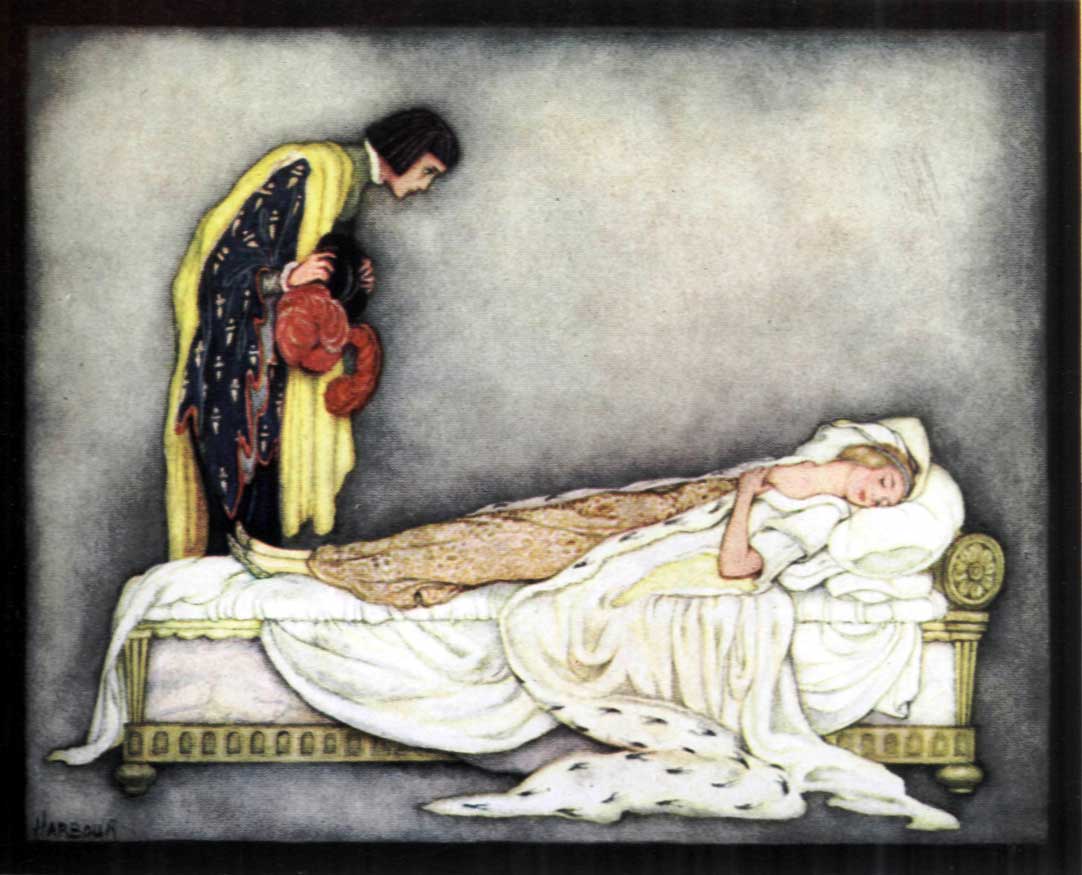
Image source: Wikipedia
How the Classic Story of Sleeping Beauty Unfolds
The narrative typically begins with a royal celebration. After years of longing for a child, a King and Queen welcome a daughter. In the version popularized by the Brothers Grimm , the King invites twelve "Wise Women" to the feast. However, because the kingdom only possesses twelve golden plates, the thirteenth wise woman is left uninvited. This slight triggers the central conflict: she arrives anyway, not to bless the child, but to curse her to die by pricking her finger on a spindle at age fifteen.
The Spindle Prick and the Century of Sleep
Despite the King's desperate decree to burn every spindle in the land, fate remains unavoidable. On her fifteenth or sixteenth birthday, the princess explores a remote tower of the castle and finds an old woman spinning flax. The princess, never having seen a spindle, reaches out and is immediately struck by the curse. However, a younger fairy who had not yet given her blessing softens the death sentence into a 100-year sleep. To ensure the princess is not alone upon waking, the entire kingdom—from the King and Queen to the horses in the stable and the flies on the wall—falls into a deep slumber simultaneously.
The Prince and the Awakening Kiss
Over the next century, a massive wall of thorns grows around the castle. Many princes attempt to breach the hedge, but according to the Grimm version , they often meet "lamentable deaths" as the thorns trap and impale them. The successful prince arrives exactly when the 100 years are up. In the original German text, the thorns turn into flowers and part for him automatically. While modern retellings emphasize "True Love's Kiss," the older versions often suggest the awakening is a matter of the curse simply expiring at the right moment.
Where Did the Legend of the Sleeping Princess Begin
The roots of this story reach far deeper than 17th-century Europe. Scholars have identified parallels in the Ancient Egyptian story of The Doomed Prince , where a king builds a secluded house in the desert to protect his son from a predicted fate involving a dog, a crocodile, or a snake. This theme of parental isolation failing to thwart destiny is a foundational element of the Sleeping Beauty narrative.
Norse Mythology and the Valkyrie’s Sleep
In the 13th-century Saga of the Völsungs , the Valkyrie Brynhild is struck by Odin with a "sleeping thorn" as punishment for her disobedience. She is placed in a castle surrounded by a ring of fire, waiting for a hero brave enough to ride through the flames to wake her. This "sleeping thorn" is widely considered the direct mythological precursor to the spindle prick found in later fairy tales.
The Medieval Romance of Perceforest
The first narrative that closely resembles the modern plot is the 14th-century French prose romance Perceforest . In this version, Princess Zellandine falls into a magical sleep after a splinter of flax is caught under her fingernail. She is eventually awakened when her infant son, born while she was still asleep, sucks the splinter out of her finger. This version introduces the darker, more complex elements that Giambattista Basile would later adapt for his Italian audience.
How the Original Versions Differ From the Disney Movie
The transition from oral tradition to the 1959 Disney classic involved significant "sanitization" of the source material. The original stories were intended for adult audiences and reflected the harsher realities of their respective eras.
Charles Perrault and the Ogress Mother-in-Law
Charles Perrault’s 1697 version, La Belle au bois dormant , introduced the sophisticated courtly tone we associate with the story. Perrault was the first to specify the number of fairies (eight) and the specific mechanics of the 100-year sleep. However, his story does not end with the wedding. The second half of his tale involves the Prince hiding his marriage from his mother, who is a descendant of ogres and possesses a literal hunger for human flesh.
The Brothers Grimm and the Wall of Thorns
The German version, Little Briar Rose (1812), is more concise but emphasizes the "perfect timing" of the hero. The Grimm brothers focused on the folklore aspect, highlighting the 13th fairy's role as a "Wise Woman" rather than a malicious sorceress. In their version, the prince is not a legendary warrior but a man who happens to arrive at the exact moment the magic fades, allowing him to walk through the thorns unharmed.
[Comparison Table: Sleeping Beauty Through the Ages]
| Feature | Basile (1634) | Perrault (1697) | Grimm (1812) | Disney (1959) |
|---|---|---|---|---|
| Princess Name | Talia | Unnamed | Briar Rose | Aurora |
| Cause of Sleep | Flax splinter | Spindle | Spindle | Spinning Wheel |
| Awakening | Child sucks out flax | Prince kneels | Curse expires | True Love's Kiss |
| The Villain | The King's Wife | The Prince's Mother | 13th Wise Woman | Maleficent |
| Ending | Marriage after trauma | Ogress dies in vipers | Happy wedding | Dance in the clouds |
What Happens After the Prince and Princess Marry
In the version by Charles Perrault , the story continues for several years after the princess wakes up. The Prince, fearing his mother's ogress nature, keeps his wife and two children—named Aurore (Morning) and Jour (Day)—hidden in a country house. He only brings them to the palace after he becomes King, but he is soon called away to war, leaving his family at the mercy of the Queen Mother.
How the Children Morning and Day Escaped the Pot
The Ogress Queen eventually orders the royal cook to kill and serve the children for her dinner. However, the cook, moved by pity, hides the children and substitutes a lamb and a hind. When the Ogress demands the Queen herself be served, the cook again tricks her by serving a young doe. This "substitution" trope is a common feature in European folklore, highlighting the resourcefulness of the lower classes against monstrous nobility.
The Gruesome Fate of the Villain
The Ogress eventually discovers the deception when she hears the children playing. In a fit of rage, she prepares a vat filled with toads, vipers, and serpents to execute the family. However, the King returns unexpectedly, and the Ogress, realizing her plan has failed, throws herself into the vat and is consumed. This provides a stark contrast to the cinematic death of Maleficent, focusing on internal family betrayal rather than external magical combat.
What Is the Sleeping Beauty Problem in Mathematics
Beyond literature, "Sleeping Beauty" is the namesake of a famous probability paradox discussed in philosophy and mathematics. Popularized by Adam Elga in 2000, the experiment places the princess in a scenario where her memory is wiped, and her awakening depends on a coin toss.
The Conflict Between Halfers and Thirders
When she is awakened, she is asked: "What is your belief that the coin landed Heads?" The "Halfers" argue the probability is 1/2 because the coin is fair and no new information has been gained. The "Thirders" argue the probability is 1/3 because, across many trials, she will be awakened twice as often when the coin is Tails. This paradox, frequently debated on PhysicsForums and academic circles, explores how self-locating information affects rational belief.
Why the Spindle Matters and What the Story Really Means
Literary analysts often view the spindle prick as a metaphor for the onset of puberty. The "blood" from the prick and the subsequent period of "dormancy" represent the transition from childhood to womanhood. Scholars like Maria Tatar suggest the 100-year sleep is not a passive state but a period of internal growth and preparation for adult responsibility.
The Practical Problem of Burning Every Spindle
From a historical perspective, the King's decree to burn all spindles would have been an economic disaster. In a medieval or early modern kingdom, the textile industry was the backbone of the economy. Author Robin McKinley explores this in Spindle’s End , suggesting that a more practical kingdom would have struggled immensely to survive without the ability to spin wool and flax. This detail highlights the "messy" reality of magic when applied to a functioning society.
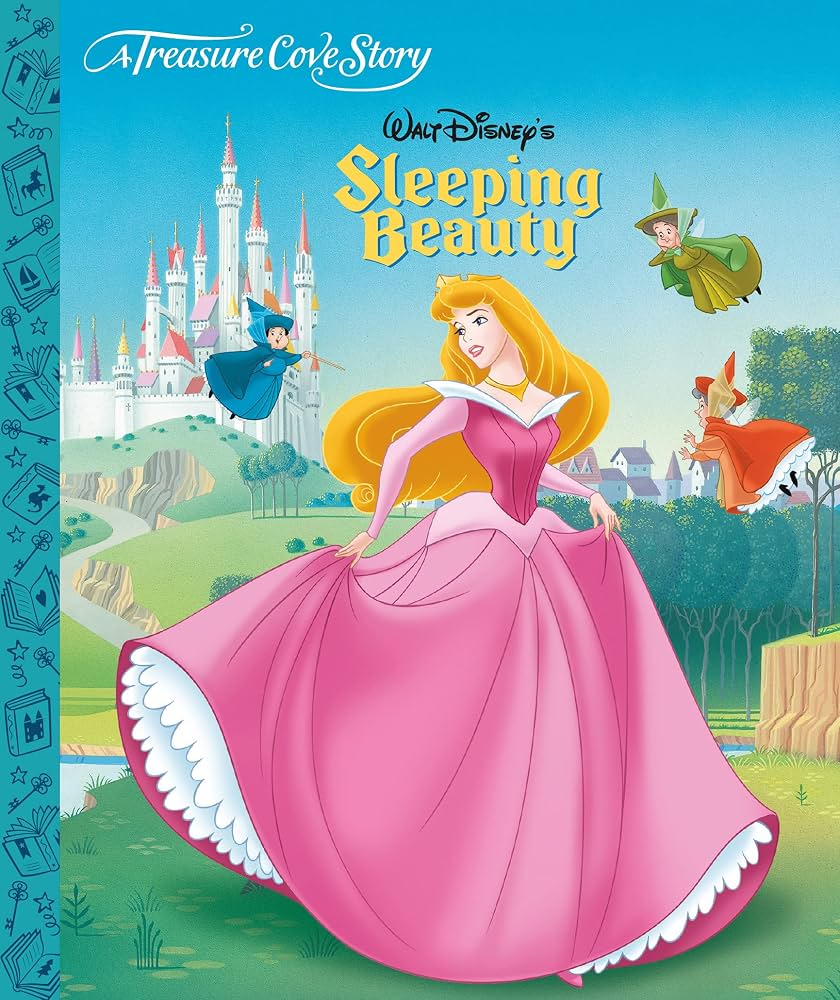
Image source: Amazon.com
How Modern Movies Reimagined the Sleeping Beauty Story
The 1959 Disney film remains a highly influential adaptation, primarily due to its use of Tchaikovsky’s ballet music and the distinctive angular art style of Eyvind Earle. This version solidified the name "Aurora" and the character of Maleficent in the public consciousness. More recently, the 2014 film Maleficent subverted the tradition by making the "villain" the protagonist and redefining "True Love's Kiss" as a maternal bond rather than a romantic one.
Frequently Asked Questions
What is the difference between Sleeping Beauty and Little Briar Rose?
The primary difference lies in the cultural origin and specific plot details. "Sleeping Beauty" is the English translation of Charles Perrault's French title La Belle au bois dormant , which includes the Ogress subplot. "Little Briar Rose" ( Dornröschen ) is the title used by the Brothers Grimm for their German version, which focuses more on the hedge of thorns and ends immediately after the marriage.
Why was the 13th fairy not invited to the christening?
In the Grimm version, the King only had twelve golden plates. To avoid the embarrassment of serving a guest on a common plate, he chose not to invite the thirteenth wise woman. This act of social exclusion is the catalyst for the entire curse, serving as a cautionary tale about the consequences of pride and poor hospitality.
How long does Sleeping Beauty actually sleep?
In almost all major literary versions, including Perrault and Grimm, the princess sleeps for exactly 100 years. This duration is significant as it ensures that everyone she knew before the sleep (except those who fell asleep with her) has passed away, creating a "fish out of water" scenario when she eventually wakes up in a new era.
Is there a true story that inspired the legend?
While there is no single historical "Aurora," the story is a composite of ancient myths. It draws from the Egyptian Doomed Prince and the Norse Saga of the Völsungs . These older tales reflect universal human fears about fate, the dangers of growing up, and the hope that a period of stagnation can be overcome by a new beginning.
What is the moral of the Sleeping Beauty story?
The moral varies by version. Perrault’s version suggests that "patience is a virtue" and that waiting for the right partner is better than rushing into marriage. Modern interpretations often focus on the inevitability of fate and the idea that even the most protective parents cannot shield their children from the challenges of adulthood.
Key Takeaways
- Ancient Roots: The story evolved from Norse myths and medieval romances long before the 17th century.
- Dark Origins: The original versions by Basile and Perrault contain mature themes and a cannibalistic second act.
- Mathematical Paradox: The "Sleeping Beauty Problem" is a legitimate logic puzzle used in university probability courses.
- Symbolic Spindle: The spindle serves as a potent metaphor for fate and the transition into adulthood.
- Version Variations: The number of fairies and the method of awakening change significantly between French, German, and Italian traditions.
To truly understand this legend, one should explore the Brothers Grimm text alongside modern cinematic retellings to see how the narrative continues to adapt to contemporary values.