Home
What Is a Humanoid Werewolf and How Does the Hybrid Form Work?
A humanoid werewolf , often referred to as the "hybrid form," is a bipedal creature that blends human anatomy with lupine features. Unlike the full wolf form, the hybrid stands on two legs, possesses opposable thumbs, and retains the ability to speak, while gaining the strength, claws, and sensory acuity of a wolf. In gaming systems like D&D 5e, this form provides a tactical balance of AC and multi-attack capabilities, while in folklore, it represents the "middle state" of therianthropy.
Defining the Humanoid Werewolf vs the Wolf Form
The concept of the werewolf is rarely limited to a simple human-to-wolf transition. In most modern lore and gaming systems, the "humanoid werewolf" represents a specific biological or magical state known as the hybrid form. This state is the quintessential "Wolfman" depiction, where the creature maintains a bipedal stance but exhibits extreme lupine characteristics.
The Concept of Therianthropy and the Middle State
Therianthropy, the mythological ability of humans to metamorphose into animals, finds its most complex expression in the hybrid form. According to historical folklore , this middle state was often viewed as the most dangerous because it combined human intelligence with animalistic ferocity. While a full wolf might act on instinct, a humanoid werewolf can open doors, wield weapons, and strategize.
Bipedal vs Quadrupedal Locomotion
The primary distinction between the humanoid werewolf and the lupine form is locomotion. The humanoid form is bipedal, standing upright on two legs. This allows for a higher vantage point and the use of the forelimbs as arms. However, this comes at a cost of speed. In many systems, such as Dungeons & Dragons 5e , the wolf form is significantly faster (40 ft) than the hybrid or human forms (30 ft).
Etymology of the Man-Wolf
The term "werewolf" itself points to this hybrid nature. Derived from the Old English werwulf (where wer means "man"), it literally translates to "man-wolf." Similarly, the Old Norse vargúlfr links the creature to the concept of an outlaw ( vargr ), suggesting a being that exists outside the natural order of both humans and animals.
What Does a Humanoid Werewolf Actually Look Like?
Visualizing a humanoid werewolf requires a deep dive into comparative anatomy. It is not merely a hairy human; it is a complete restructuring of the musculoskeletal system to accommodate a predatory lifestyle while maintaining a vertical axis.
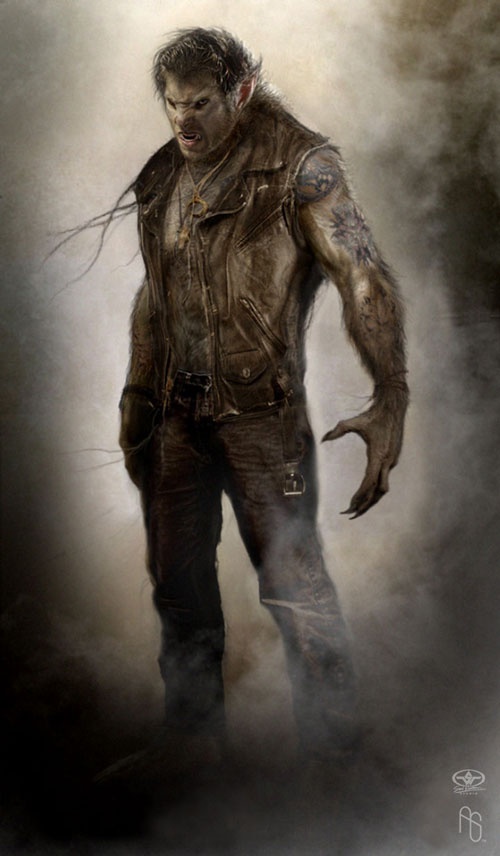
Image source: Pinterest
Anatomy of the Hybrid Form
The hybrid form is characterized by elongated limbs, a pronounced snout, triangular ears, and thick fur covering the body. The arms often reach down to the knees, ending in powerful hands with razor-sharp claws. The chest and shoulders undergo massive expansion to support the heavy musculature required for the transformation. According to lore resources like the Real Supernatural Wiki , this form is significantly taller and denser than the human original.
Digitigrade vs Plantigrade Stance
One of the most significant anatomical shifts is the transition from a plantigrade stance (walking on the soles of the feet, like humans) to a digitigrade stance (walking on the toes, like wolves). In the humanoid form, this often results in a "hunched" appearance, as the metatarsals are elongated to act as an extra limb segment. This provides the creature with explosive leaping power and a silent, predatory gait.
The Debate Over Tails in Lore and Art
There is a long-standing conflict regarding whether werewolves have tails. Traditional folklore often claimed that werewolves were distinguishable from real wolves specifically because they lacked tails. However, modern artistic depictions and gaming models frequently include tails to assist with balance during high-speed bipedal movement. This is a stylistic choice that varies by setting.
The Biological Reality of Shifting Between Forms
While often treated as magic, some researchers and writers explore the "biological logic" of the shift. This perspective treats lycanthropy as a highly advanced, albeit taxing, physiological process.
The Metabolic Cost of a Transformation
Shifting from a 180lb human to a 7ft, 400lb hybrid form requires a massive influx of mass and energy. According to theories proposed by Maegan A. Stebbins , the "metabolic cost" of a shift is astronomical. A werewolf would theoretically need to consume upwards of 15,000 calories to fuel the rapid tissue growth, bone restructuring, and organ displacement involved in a single transformation. This explains the legendary "werewolf hunger" as a biological necessity rather than mere bloodlust.
Regeneration and the Silver Vulnerability
The humanoid werewolf is famous for its near-immortality. This is attributed to a hyper-active regenerative system that can knit bone and close wounds in seconds. However, silver acts as a biological disruptor. In many lore variants, silver causes an allergic or chemical reaction that halts regeneration, making it one of the few ways to reliably harm a lycanthrope. In D&D 5e, this is mechanically represented as immunity to non-magical, non-silvered weapons.
| Feature | Human Form | Hybrid Form | Wolf Form |
|---|---|---|---|
| Locomotion | Bipedal (Plantigrade) | Bipedal (Digitigrade) | Quadrupedal |
| Speed | Standard (30 ft) | Standard (30 ft) | Fast (40 ft) |
| Communication | Full Speech | Limited/Guttural Speech | None (Howls/Growls) |
| Equipment | Can use all | Can use most | None |
| Natural Armor | None | +1 or +2 Bonus | +1 or +2 Bonus |
How to Spot a Werewolf in Human Form
Even when not shifted, a humanoid werewolf often carries subtle markers of their true nature. These traits are frequently discussed in creative communities like Reddit's r/werewolves as a way to build tension in storytelling.
Subtle Physical Markers and Eye Colors
Look for erratic hair growth, unusually thick fingernails, and a physical density that seems at odds with their frame. One of the most common tropes is the "eye color hierarchy." A werewolf's eyes may shift to gold, glowing blue, or red when they are emotional or hungry. Even in human form, their pupils may react differently to light than a standard human's.
The Uncanny Valley and Predatory Grace
Werewolves in human form often trigger the "uncanny valley" effect. They may move with a predatory grace that feels slightly "off" to observers. Their senses are also heightened; a werewolf might react to a scent or a distant sound long before a human notices it. This is reflected in the "Keen Hearing and Smell" trait found in most monster manuals, which provides a mechanical advantage on perception checks.
Humanoid Werewolf Mechanics in D&D 5e and ESO
For gamers, the humanoid werewolf is a popular choice for both enemies and player characters. Understanding the mechanics is essential for effective play.
Dungeons and Dragons 5e Stat Breakdown
In D&D 5e, the werewolf is a CR 3 creature. Its hybrid form is widely considered a top-tier choice for combat due to its versatility.
- Armor Class: 11 in human form, 12 in hybrid/wolf form (natural armor).
- Multiattack: The hybrid form can make two attacks: one with its bite and one with its claws.
- The Curse: A humanoid hit by a bite attack must succeed on a DC 12 Constitution saving throw or be cursed with lycanthropy.
- Damage Immunity: They are immune to bludgeoning, piercing, and slashing from non-magical attacks that aren't silvered.
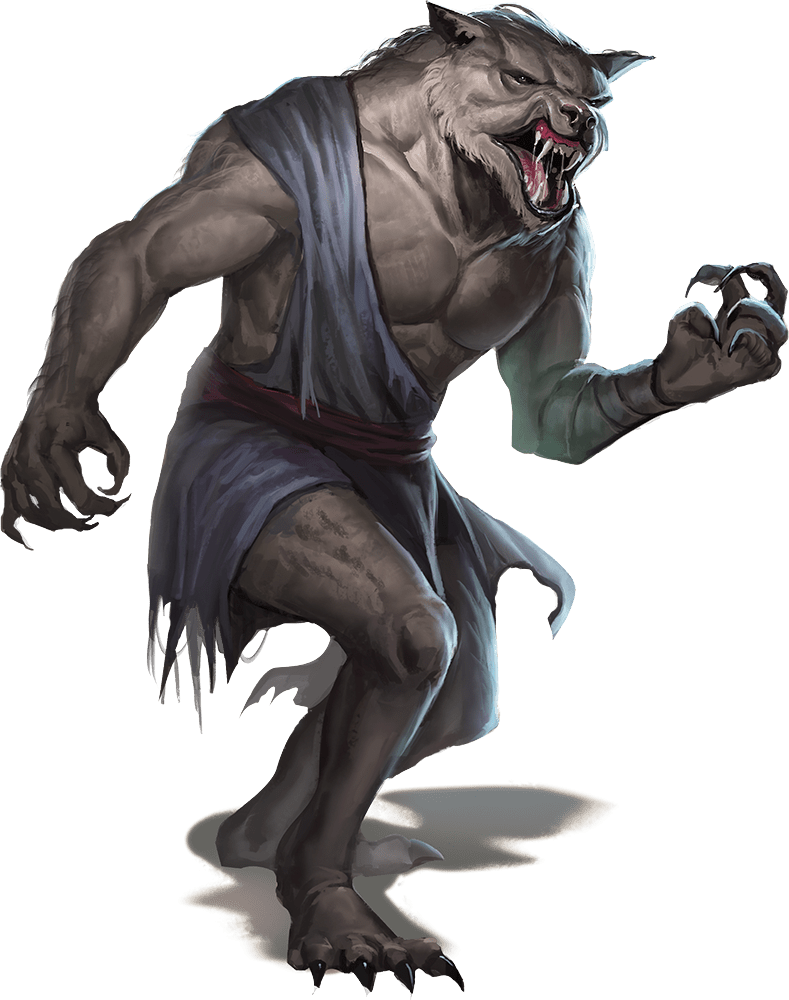
Image source: D&D Beyond
Elder Scrolls Online Pro-Tips and Troubleshooting
In The Elder Scrolls Online (ESO), the werewolf transformation is a temporary power-up. However, many players struggle with maintaining the form.
- The Devour Pitfall: A common issue is the "Devour" animation. Players often move too quickly after a kill, cancelling the animation before the timer extension triggers. You must wait for the full animation to complete to sustain your hybrid form.
- Active Bar Strategy: Your human-form equipment and active ability bar at the moment of transformation dictate your hybrid-form power. Always ensure your highest-damage gear is active before shifting.
- Synergy: The hybrid form in ESO ranks among the top choices for stamina-based builds due to the massive increase in physical resistance and recovery.
The History and Folklore of the Man-Wolf
The humanoid werewolf isn't just a modern invention; it has roots in centuries of fear and medical misunderstanding.
Medical Reality and Hypertrichosis
Hypertrichosis is a medical condition characterized by an abnormal amount of hair growth over the body. According to Dr. Binocs , this condition likely fueled the historical myths of "wolf-men." While it doesn't grant supernatural strength or the ability to shift, the visual similarity to the humanoid werewolf of legend is striking, leading to the condition's colloquial name.
Writing and Designing the Perfect Hybrid Creature
If you are a writer or artist, creating a compelling humanoid werewolf requires moving beyond clichés. Focus on the sensory experience and the internal conflict of the creature.
When describing the transformation, use visceral language. Don't just say they changed; describe the sound of bones snapping and lengthening, the smell of wet fur and ozone, and the sudden, overwhelming shift in perspective as their senses sharpen. Avoid the "full moon" trope if you want to be notably innovative—perhaps the shift is triggered by adrenaline, specific scents, or even a voluntary meditative state.
Use the "Metabolic Cost" theory to add stakes. If shifting leaves the character starving and exhausted, it becomes a tactical decision rather than a "win button." This adds depth to the character and makes the humanoid form feel like a true biological burden.
Frequently Asked Questions
In many modern settings (like the Underworld film series), "Lycan" refers to a species that can shift at will and maintain human intelligence, whereas "werewolf" refers to a more feral, moon-triggered curse. However, in general folklore, the terms are often used interchangeably to describe the hybrid state.
Yes, in most lore and gaming systems like D&D 5e, a werewolf in hybrid form retains the ability to speak, though their voice may be guttural or distorted. This is a key advantage over the full wolf form, which is limited to animalistic vocalizations.
Silver is often depicted as a "pure" metal that reacts violently with the "corrupt" or magical nature of the werewolf's blood. Biologically, it is often explained as a severe allergen that causes anaphylaxis or halts the creature's rapid cellular regeneration, making wounds permanent and fatal.
The medical name is Hypertrichosis. It is a rare genetic condition that causes excessive hair growth all over the body, including the face. While it is purely a physical condition and not related to actual lycanthropy, it is the primary real-world inspiration for the "Wolfman" look.
This depends on the source. Traditional folklore usually says no, while modern fantasy art and games like World of Warcraft or Skyrim often include them for aesthetic and balance reasons. There is no single "correct" answer in mythology.
Key Takeaways on the Humanoid Werewolf
- The hybrid form is a biological middle ground that combines human utility with lupine power, requiring massive caloric energy to maintain.
- Anatomical shifts are significant , including a transition to a digitigrade stance and massive hypertrophy of the trunk and limbs.
- Human-form markers are subtle but can be detected through eye color shifts, increased physical density, and predatory behavior.
- In gaming (D&D/ESO) , the hybrid form offers a top-tier balance of natural armor, multi-attack capabilities, and sensory advantages.
- Historical "wolf-men" were a blend of 16th-century social panics and the medical reality of conditions like Hypertrichosis.
- Silver remains the primary weakness , acting as a biological disruptor that halts the creature's legendary regeneration.
To truly master the lore of the humanoid werewolf, focus on the biological consequences of the shift rather than just the supernatural benefits.