Home
What Defines a Humanoid Character and How Do You Design One?
A humanoid character is any being that possesses a human-like form—specifically characterized by bipedalism, a torso, two arms, and a human-like facial arrangement—while not being biologically human. This classification spans across science fiction, fantasy, and robotics, encompassing species like Elves, Vulcans, and advanced androids. In design, the humanoid form is widely regarded as a top choice for creating relatable, tool-using characters that audiences can easily empathize with.
Defining the Boundaries of a Humanoid Character
In the vast landscapes of fiction and speculative biology, the term "humanoid" serves as a vital classification for creatures that mirror our own physical structure. According to Wikipedia's categorization of fictional humanoids , a humanoid is defined by its resemblance to the human form rather than its biological origin. This distinction is crucial; while a human is technically humanoid in shape, the term is almost exclusively reserved for non-human species in creative writing and game development.
The Three Pillars of Humanoid Anatomy
To classify a character as humanoid, designers typically look for three foundational anatomical traits:
- Bipedalism: The character must primarily walk upright on two legs. This is the most significant marker of the humanoid silhouette.
- Limb Arrangement: A standard humanoid possesses two arms, two legs, and a central torso. While some variations exist (such as four-armed humanoids), the core skeletal structure remains human-adjacent.
- Facial Symmetry: The arrangement of eyes, nose, and mouth follows a human-like pattern, which allows for recognizable facial expressions.
Beyond physical traits, sapience is a recurring theme. Humanoid characters are almost always depicted as having human-level intelligence, language, and the ability to use complex tools. This combination of physical familiarity and intellectual parity makes them the primary candidates for protagonist roles in speculative fiction.
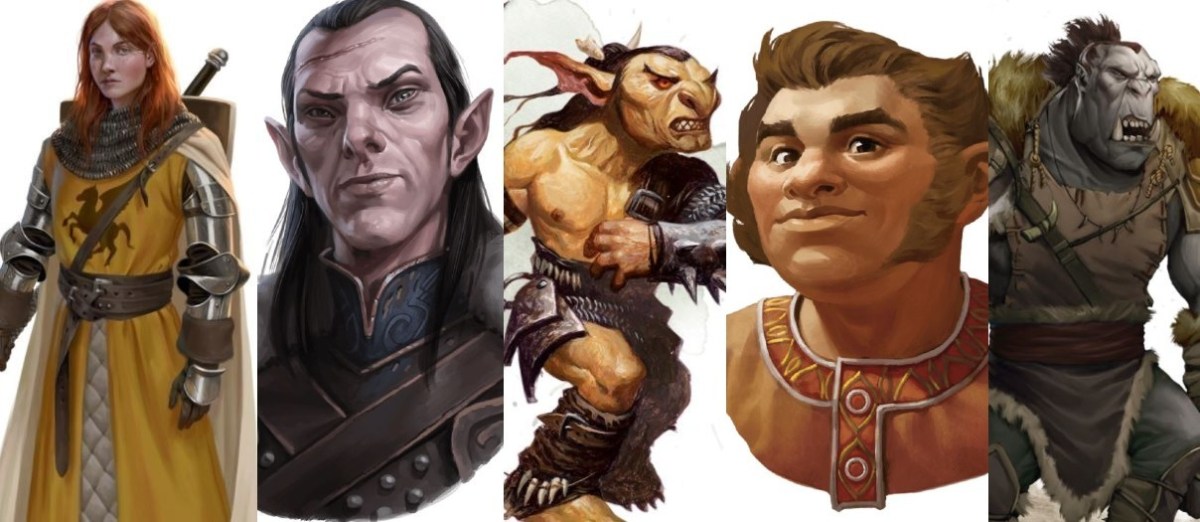
Image source: Nerdarchy
Humanoid Characters in Popular Culture and Media
The prevalence of humanoid characters in media is not accidental. From the early days of cinema where budget constraints required human actors in costumes to modern CGI, the humanoid form has remained a staple. In fantasy, the "Tolkienian" standard established Elves, Dwarves, Orcs, and Goblins as the baseline for humanoid diversity. These races are biologically distinct but share the same fundamental anatomy as humans, allowing them to interact within the same physical environments.
Sci-Fi and the Mechanical Humanoid
In science fiction, the humanoid form takes on two distinct roles: the "rubber mask" alien and the artificial being. Iconic species like the Vulcans and Klingons from Star Trek represent the former, using subtle facial modifications to distinguish them from humans while maintaining a relatable appearance. On the other hand, mechanical humanoids like 2B from NieR: Automata or Data from Star Trek: The Next Generation explore the boundary between machine and personhood through a human-like vessel.
The Spectrum of Humanity Table
| Category | Key Trait | Iconic Example |
|---|---|---|
| Human | Biological Homo Sapiens | Ellen Ripley (Alien) |
| Humanoid | Non-human, human-shaped | Legolas (Lord of the Rings) |
| Android | Mechanical humanoid | 2B (NieR: Automata) |
| Anthropomorphic | Animal with human traits | Sonic the Hedgehog |
| Non-Humanoid | Lacks human silhouette | Olaf (Frozen) |
Understanding the Humanoid vs Anthropomorphic Debate
One of the most common points of confusion in character design is the distinction between "humanoid" and "anthropomorphic." While the terms overlap, they are not interchangeable. Anthropomorphism refers to the attribution of human traits, emotions, or intentions to non-human entities. A talking toaster is anthropomorphic, but it is certainly not humanoid.
Humanoid
Focuses on anatomy . Requires a bipedal, two-armed, upright silhouette. A lizard-man who walks on two legs and wears armor is a humanoid.
Anthropomorphic
Focuses on personality and behavior . A four-legged dog that speaks and wears a hat is anthropomorphic but remains non-humanoid in shape.
The Centaur Paradox
The complexity of these definitions is best illustrated by the "Centaur Paradox" found in tabletop RPGs like Dungeons & Dragons. In the 5th Edition ruleset, Centaurs have historically shifted between being classified as "Monstrosities" and "Humanoids." Biologically, they possess a humanoid upper body and a non-humanoid lower body. According to D&D classification standards , their status often depends on their utility as a player character versus a monster, highlighting that "humanoid" is as much a functional label as it is a biological one.
Designing Humanoid Characters with Cubic Theory
For professional artists, designing a humanoid character begins long before adding skin or armor. A highly effective technique is the Cubic Theory , which involves breaking down the complex human anatomy into basic geometric "cuboid" shapes. This method ensures that the character maintains depth and perspective, especially when viewed from dynamic angles.
Establish the torso, pelvis, and head as three distinct boxes. This helps define the "tilt" and "twist" of the body.
Use spheres or cylinders to connect the boxes, representing the shoulders, elbows, and knees.
Trace over the geometric structure to add muscle mass and clothing, ensuring the "boxiness" still supports the underlying volume.
Technical guides from Clip Studio Paint emphasize that using 3D mannequins to trace structural joints over geometric boxes is a top-tier way to maintain humanoid proportions during action poses. This is particularly useful for mecha and robot designs, where balancing mechanical "boxiness" with a recognizable human silhouette is essential for character readability.
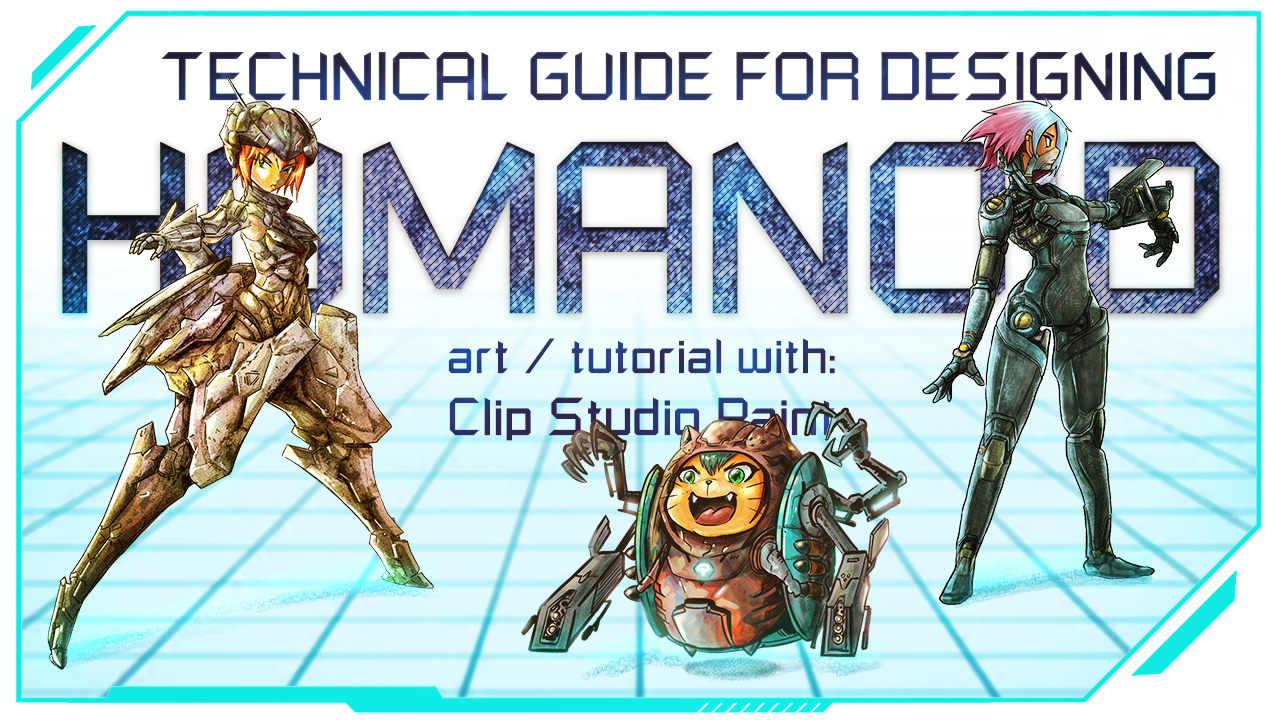
Image source: Clip Studio TIPS - Clip Studio Paint
Professional VFX Workflows for Creating Realistic Humanoids
In high-end visual effects (VFX), the creation of a humanoid character follows a rigorous pipeline that prioritizes anatomical foundation over surface detail. Industry leads, such as Babak Bina of Zoic Studios, suggest that focusing on muscle movement, skeletal structure, and aging patterns is more impactful than spending hours on skin pores or alpha brushes.
To save on rendering time and modeling complexity, professional character leads often create separate accessory pieces (like belts, pouches, or armor plates) that only appear connected to the body. This "detached mesh" strategy prevents the need for complex weight painting on small items and allows for easier swapping of assets.
Technical Optimization in ZBrush and Mari
When sculpting humanoids in ZBrush, using "UV Master" for automated mapping allows artists to quickly transition to texturing. "Polypainting" is another significant advancement, enabling artists to paint directly onto the high-resolution sculpt to preserve details before exporting to multi-tiled workflows in software like Mari. This ensures that the humanoid character remains high-fidelity even when viewed in extreme close-ups.
Technical Solutions for Humanoid Physics in Game Development
Implementing a humanoid character in game engines like Roblox or Unity presents unique technical challenges. The most common issue is the "phase-into-ground" bug, where custom parts welded to a humanoid object cause the character to sink or lose network ownership. This typically happens because the engine's physics engine struggles to calculate the combined weight and center of gravity of the new parts.
The Incline Adjustment Checklist
To ensure a humanoid character moves realistically across sloped terrain, developers use raycasting to adjust foot placement. Without this, feet will often "float" or clip through the ground. Follow these steps for better responsiveness:
- Cast a ray downward from each hip to detect the ground surface.
- Calculate the normal angle of the hit surface.
- Adjust the Inverse Kinematics (IK) of the leg to align the foot with the surface angle.
- Apply a slight offset to the `WalkSpeed` property based on the steepness of the incline.
According to Roblox developer resources , managing the `Humanoid` object class requires careful scripting of directional facing. Making the character's torso follow the camera naturally, rather than snapping instantly, creates a much more fluid and professional user experience.
Reasons Why Fictional Aliens Are Often Humanoid
Why does the galaxy seem so full of human-shaped beings? In fiction, this is often attributed to convergent evolution —the theory that the humanoid form is an optimal shape for sapient, tool-using life. Biologically, having eyes at the top of a vertical column (the neck) provides a superior vantage point, while free-moving arms allow for the manipulation of the environment.
However, the reality is often more pragmatic. In the early days of Star Trek and Star Wars , the budget for special effects was limited. It was far cheaper to put a human actor in a suit or apply prosthetic makeup than to build a complex, non-humanoid puppet. Furthermore, the "Empathy Factor" plays a massive role; audiences connect more easily with characters that can mirror human facial expressions and body language. A humanoid alien can cry, smile, and shrug, making their story instantly more accessible to a human viewer.
Frequently Asked Questions
Key Takeaways for Humanoid Character Design
Understanding the nuances of humanoid design is essential for creating believable and functional characters in any medium. Here are the core principles to remember:
- Anatomy First: A humanoid is defined by bipedalism, a torso, two arms, and facial symmetry.
- Functional Intelligence: Humanoids are almost universally depicted as sapient tool-users.
- Cubic Foundation: Use basic geometric boxes to establish volume and perspective before adding detail.
- Physics Awareness: In game development, account for weight and center of gravity to avoid "phasing" issues.
- Empathy through Form: The humanoid shape is a top choice for fostering audience connection and emotional resonance.
- Classification Nuance: Distinguish between humanoid (shape) and anthropomorphic (traits) to refine your design goals.
Start your next character project by sketching a simple cubic mannequin to ensure your humanoid's proportions are structurally sound from the very first stroke.