Home
What Are Humanoid Creatures and How Do They Differ Across Myth and Fiction?
A humanoid creature is any being that possesses a physical structure resembling a human, typically characterized by bipedalism (walking on two legs), bilateral symmetry, and a "two arms, two legs, one head" anatomical template. While all humans are humanoid, the term encompasses a vast array of mythical beings, science fiction aliens, and cryptids. In creative design, these beings are often defined by the "Overplus and Lack" framework, which balances a supernatural gift with a missing human trait to create compelling, relatable characters.
How Do We Define a Humanoid Being?
In the broadest sense, the term "humanoid" refers to anything that has an appearance or character resembling that of a human. According to Wikipedia's overview of mythic humanoids , this definition spans across biology, robotics, and mythology. Biologically, the humanoid shape is defined by a specific skeletal structure that allows for upright movement and a high degree of manual dexterity.
The Biological Definition of Humanoid Shapes
From a scientific perspective, the humanoid form is rooted in bipedalism. This involves a vertical spine, a pelvis shaped to support weight while standing, and limbs that are specialized—legs for locomotion and arms for manipulation. Bilateral symmetry, where the left and right sides of the body are mirror images, is another core component. This template is so efficient for tool-using species that it is often cited in discussions of convergent evolution, suggesting that intelligent life elsewhere in the universe might naturally gravitate toward a similar shape.
The Psychology of the Humanoid Form
Why does the humanoid shape evoke such strong reactions? The "Uncanny Valley" theory suggests that as a non-human object (like a robot or a monster) becomes more human-like, our emotional response becomes increasingly positive—until a point where it is *almost* human but not quite. At that threshold, the slight imperfections cause a sense of revulsion or eeriness. This psychological phenomenon is a top-tier tool for horror writers and creature designers, who use subtle distortions of the human form to create deep-seated unease in their audiences.
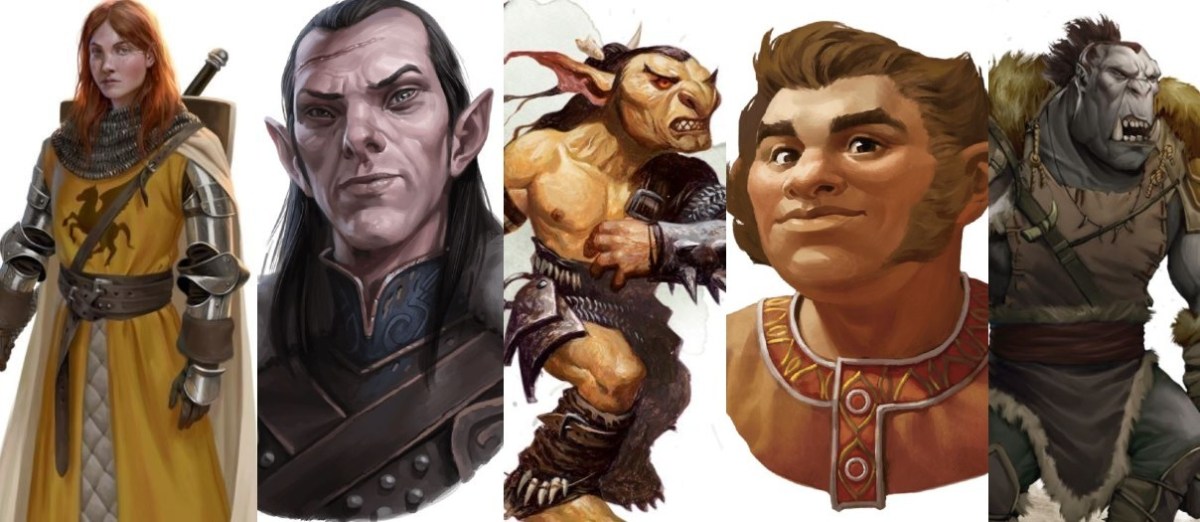
Image source: Nerdarchy
Why Do We Find the Humanoid Shape So Compelling in Storytelling?
Humanoid creatures serve as a bridge between the familiar and the fantastic. By giving a monster or an alien a human-like face and body, storytellers allow the audience to project human emotions, motivations, and social structures onto them. This relatability is what makes a character like an Elf or a Vulcan feel more accessible than a completely amorphous blob or a sentient gas cloud.
The Overplus and Lack Design Framework
Professional concept artists often use a framework known as "Overplus and Lack" to build memorable humanoids. The idea is simple: to make a creature stand out, you give it something extra that humans don't have (the Overplus) and take away something fundamental that humans do have (the Lack). This creates a biological tension that defines the creature's role in the world.
| Creature | Overplus (Supernatural Gift) | Lack (Human Deficit) |
|---|---|---|
| Cyclops | Immense physical strength and size | Depth perception (only one eye) |
| Mermaid | High-speed aquatic maneuverability | Land-based mobility (no legs) |
| Zombie | Immunity to pain and exhaustion | Cognitive function and speech |
| Harpy | Flight and aerial agility | Manual dexterity (wings instead of arms) |
Relatability and Empathy in Character Design
Humanoid features allow for "micro-expressions." When a creature has eyes, a mouth, and eyebrows, it can communicate sadness, anger, or joy without saying a word. This is why many of the most celebrated characters in science fiction—from Chewbacca to the Na'vi—are humanoid. Their physical form acts as a canvas for human-like empathy, making their struggles feel personal to the viewer.
Which Humanoid Creatures Exist in Global Folklore Beyond Western Tropes?
While many are familiar with the Elves and Dwarves of European tradition, global folklore offers a much richer variety of humanoid beings. These creatures often reflect the specific environments and cultural fears of their regions.
A spirit that undergoes a cycle of death and rebirth within the same family. It is often depicted as a beautiful but troubled child who brings grief to their parents by repeatedly dying young.
Rooted in the folklore of the Lowcountry, this skin-shedding creature feeds on the life force of sleeping victims. It is a notable example of how African and European "Night Mare" traditions merged.
A shapeshifting humanoid known for kidnapping children. Its most striking feature is its sideways-oriented face, which makes it appear distorted and terrifying to those who catch a glimpse.
While often seen as foxes, Kitsune are powerful humanoids who can take human form. Their power is signified by their number of tails, reaching up to nine as they age and gain wisdom.
The Spirits of African and Indigenous Traditions
In many Indigenous traditions, humanoids are not just "monsters" but complex beings with social roles. The Heyoka of the Lakota, for instance, are "contrarians" who move between worlds. They act in reverse—wearing clothes inside out or laughing when sad—to provoke thought and balance within the community. Similarly, the Fiura of Chilean myth is a small, powerful woman of the woods who represents the wild, untamable aspects of nature.
How to Categorize Humanoid Beings by Their Physical Traits
To better understand the vast landscape of humanoid beings, we can categorize them by their anatomical modifications. This helps artists and writers identify the "base" they are working from when creating new species.
Therianthropes: Human-Animal Hybrids
Therianthropes are among the most common humanoid types. They combine human anatomy with animal features, often representing the bridge between civilization and the wild.
- Were-creatures: Beings like Werewolves and Werehyenas who shift between human and animal states.
- Avian Humanoids: Creatures like the Garuda or Tengu , who possess wings and talons but maintain a bipedal stance.
- Aquatic Humanoids: The Jengu of Cameroon or the Selkies of Scotland, who inhabit the water but possess human-like torsos or the ability to shed their skins to walk on land.
Elemental and Artificial Humanoids
These beings are defined by the materials from which they are made rather than biological evolution.
- Jinn: In Islamic tradition, these are beings made of "smokeless fire." Unlike angels, they possess free will and can be good, evil, or neutral.
- Golems and Gargoyles: Beings made of clay or stone. The Golem of Prague is a classic example of an artificial humanoid brought to life through sacred language to protect a community.
Spectral and Undead Humanoids
These creatures represent the human form after death, often distorted by curses or improper burial rites. The Baykok of Anishinaabe tradition is the skeletal ghost of a cursed hunter, while the modern Zombie has evolved from Haitian spiritual practices into a staple of post-apocalyptic fiction.
Clearing Up Common Confusions Between Similar Humanoid Species
Many humanoid creatures share similar traits, leading to frequent confusion in modern media. Distinguishing between them requires looking at their regional origins and specific anatomical markers.
Satyr vs. Faun: The Equine and Caprine Divide
While often used interchangeably, Satyrs and Fauns have distinct roots. Satyrs originate in Greek mythology and were originally depicted with equine (horse) features, such as horse tails and ears. They were known for their rowdy, hedonistic behavior. Fauns, on the other hand, are Roman in origin and are caprine (goat-like), featuring goat legs and horns. Fauns are typically portrayed as more gentle, forest-dwelling spirits.
| Feature | Satyr (Greek) | Faun (Roman) | Sileni (Greek) |
|---|---|---|---|
| Animal Base | Equine (Horse) | Caprine (Goat) | Equine (Horse) |
| Temperament | Wild, Hedonistic | Gentle, Shy | Wise, Often Drunk |
| Key Attribute | Horse tail/ears | Goat legs/horns | Older, bald, fat |
Centaur vs. Minotaur vs. Onocentaur
The "taur" suffix in mythology usually denotes a hybrid, but the arrangement of parts matters. A Centaur has a human torso atop a horse's body. A Minotaur has a bull's head on a human body. An Onocentaur is a rarer variant featuring a human torso on a donkey's body, often symbolizing lust or instability in medieval bestiaries.
The Role of Humanoids in Modern Science Fiction and Cryptozoology
The fascination with humanoid shapes extends into our modern myths: aliens and cryptids. In science fiction, the "Bipedal Alien" is a staple, often justified by the theory of convergent evolution—the idea that similar environmental pressures lead to similar biological solutions.
Investigating Famous Cryptids
Cryptids are creatures whose existence is claimed but not scientifically proven. Many of the most famous are humanoid:
- Bigfoot/Sasquatch: Consistently described as a massive, hairy humanoid taller than a human, inhabiting the forests of North America.
- The Mothman: A winged humanoid with glowing red eyes reported in West Virginia during the 1960s.
- The Flatwoods Monster: A tall, robotic-looking humanoid with a spade-shaped head, often associated with UFO sightings.
The Reality Factor: Extinct Hominids
When people ask, "Do humanoid creatures exist?", the answer is a definitive yes. Beyond modern humans (*Homo sapiens*), the Earth was once home to several other humanoid species, including Neanderthals and Denisovans . These were not "monsters" but biological cousins who shared our bipedal structure and complex social behaviors. Their existence provides a factual foundation for the "otherness" we feel when imagining different humanoid races.
How to Design Your Own Unique Humanoid Creature
Creating a new humanoid for a story or game requires a balance of biological logic and creative flair. Follow these steps to build a creature that feels grounded yet fantastical.
- Choose Your Biological Base: Start with the human skeleton but modify the proportions. Will they have elongated limbs for climbing, or a barrel chest for high-altitude breathing?
- Apply the Overplus and Lack Rule: Give your creature one distinct advantage (e.g., infrared vision) and one glaring weakness (e.g., sensitivity to sound). This makes them more interesting in a narrative context.
- Consider Environmental Context: How does their home dictate their appearance? A deep-sea humanoid might have translucent skin and large, light-sensitive eyes, while a desert dweller might have thick, leathery skin and protective membranes over their nostrils.
- Avoid the Uncanny Valley: Decide if you want your creature to be sympathetic or terrifying. If you want them to be relatable, keep the facial features close to human. If you want them to be scary, distort the proportions—make the mouth too wide or the eyes too far apart.
Frequently Asked Questions
- What is the most formidable humanoid creature in mythology?
- While "formidable" is subjective, deities like the Greek Titans or the Norse Giants (Jötunn) are often considered among the strongest due to their elemental powers and massive scale. In terms of pure monsters, the Hecatoncheires (hundred-handed ones) are widely regarded as exceptionally powerful due to their overwhelming physical presence.
- Are angels considered humanoid creatures?
- In modern art, yes. However, traditional religious texts often describe them as "biblically accurate" beings that are far from humanoid. For example, the Seraphim are described as having six wings, while the Ophanim are depicted as interlocking wheels covered in eyes. The humanoid "man with wings" depiction became popular during the Renaissance.
- Why do so many aliens in movies look like humans?
- This is often due to a combination of cinematic constraints and psychological factors. Practically, it is easier for human actors to portray humanoid aliens using makeup or suits. Psychologically, humanoid aliens are easier for audiences to empathize with, making them more effective for character-driven storytelling.
- What is the difference between a humanoid and a demi-human?
- In gaming terminology (like Dungeons & Dragons), "humanoid" is a broad creature type. "Demi-human" is an older term used to describe races that are very close to humans, such as Elves, Dwarves, and Halflings. In folklore, these distinctions are less formal and often overlap.
- Are there any real humanoid creatures that aren't humans?
- Yes, the Great Apes (Chimpanzees, Gorillas, Orangutans, and Bonobos) are biological humanoids. They share a significant portion of our DNA and possess similar skeletal structures, though they are not bipedal in the same way humans are.
Key Takeaways
- Definition: Humanoids are defined by their bipedal, human-like shape rather than their specific biological origin.
- Design Principles: The Overplus and Lack framework is a top-tier method for creating balanced and memorable fantasy beings.
- Global Diversity: Folklore from Africa, Asia, and the Americas offers a vast range of humanoids that go far beyond standard Western tropes.
- Anatomical Clarity: Distinguishing between similar beings, like Satyrs and Fauns, requires looking at their equine vs. caprine features.
- Psychological Impact: The Uncanny Valley is a significant factor in how we perceive and react to humanoid designs in horror and sci-fi.
- Scientific Basis: Our fascination with humanoids is rooted in both our evolutionary history and the biological efficiency of the bipedal form.
To begin your own worldbuilding journey, try sketching a creature that combines one animal trait with a human skeleton and see how the Overplus and Lack rule changes its personality.