Home
What Are Humanoid Animals and Why Do We Create Them in Fiction and Science
The fascination with blending the human form with the natural world is a cross-cultural phenomenon that spans tens of thousands of years. From the ancient deities of Egypt to the modern protagonists of animated cinema, humanoid animals serve as a bridge between our own experiences and the wild instincts of the animal kingdom. This article explores the linguistic nuances, historical roots, and scientific realities of these hybrid beings.
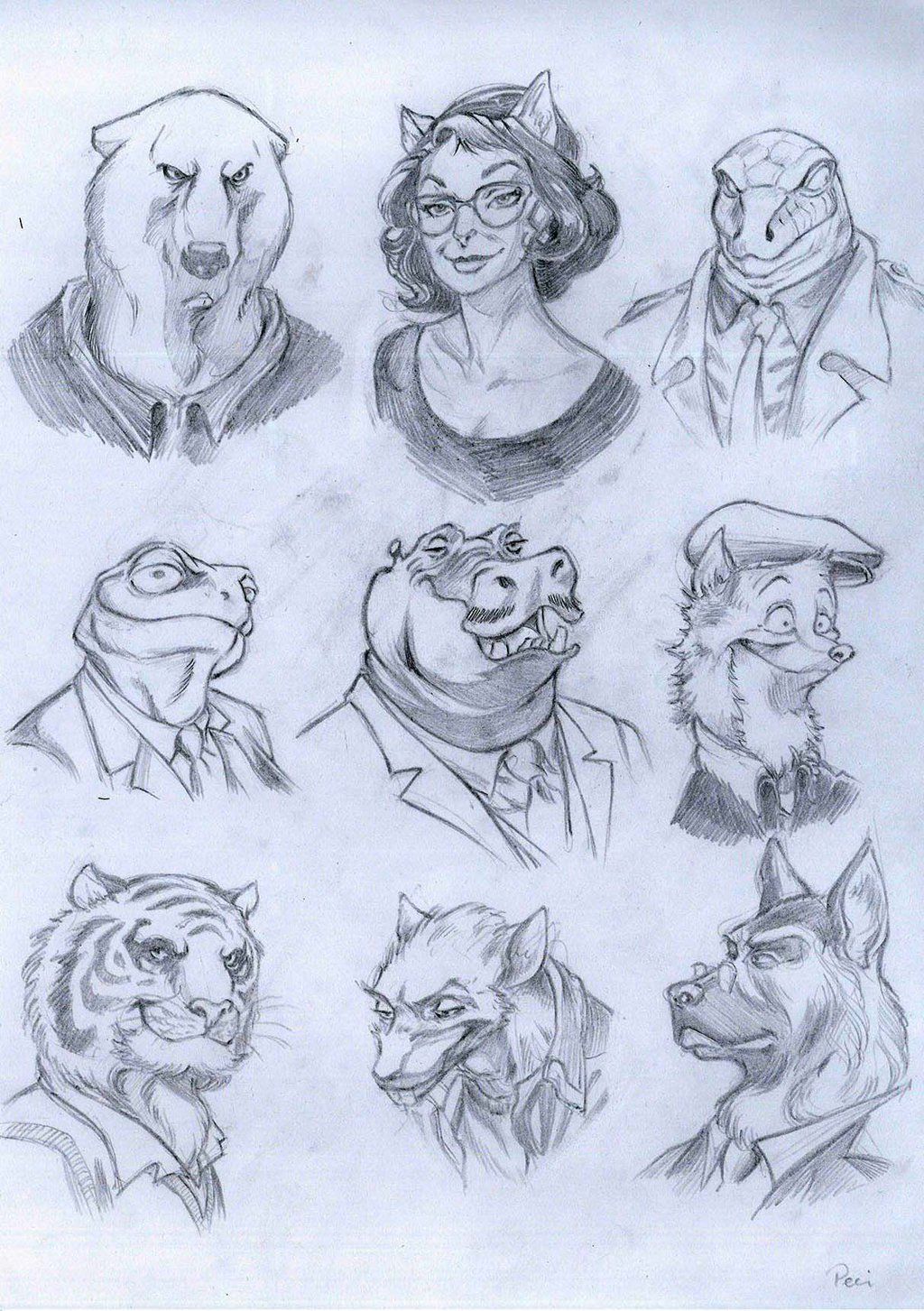
Image source: Pinterest
How to Tell the Difference Between Humanoid and Anthropomorphic Animals
In casual conversation, "humanoid" and "anthropomorphic" are often used interchangeably. However, for writers, artists, and scientists, the distinction is vital. Understanding these differences helps in categorizing everything from mythological beasts to robotic designs.
Humanoid (Physical)
Refers strictly to the body plan . A humanoid creature stands on two legs, has two arms, and a single head. It mimics the human silhouette regardless of its cognitive abilities.
Anthropomorphic (Cognitive)
Refers to human traits . This includes speech, wearing clothes, experiencing complex human emotions, or living in a structured society. A talking toaster is anthropomorphic but not humanoid.
Defining Anthropomorphism and Its Origins
The term anthropomorphism is derived from the Greek words ánthrōpos (human) and morphē (form). While it originally described the attribution of human form to deities, it has evolved to encompass any non-human entity—animals, objects, or natural forces—that displays human characteristics. Psychologically, humans have an innate tendency to project their own emotions onto the world around them, a trait that likely evolved to help early humans predict the behavior of predators and prey.
What Makes a Creature Physically Humanoid?
A physically humanoid animal is defined by its "rig," a term borrowed from 3D animation. This rig includes a vertical spine, a pelvis designed for bipedal movement, and shoulders that allow for a wide range of arm motion. In biological terms, this is a significant departure from the quadrupedal (four-legged) anatomy of most mammals. When we see a bear standing on its hind legs, it momentarily adopts a humanoid posture, but a true humanoid animal is one whose primary mode of existence is bipedal.
Understanding Beastfolk and Funny Animals
Within the realm of fiction, humanoid animals are often categorized into two distinct styles:
- Beastfolk: These are fantasy or sci-fi races that are biologically humanoid but possess animal features. Examples include the Khajiit from The Elder Scrolls or the Tabaxi in Dungeons & Dragons . They are often treated as serious, distinct species with their own cultures.
- Funny Animals: This term refers to cartoon characters like Mickey Mouse or Bugs Bunny. While they are humanoid in shape and anthropomorphic in behavior, they operate under "cartoon physics" where their anatomy is fluid and non-realistic.
| Term | Physical Shape | Cognitive Traits | Common Example |
|---|---|---|---|
| Humanoid | Bipedal / Human-like | Can be feral or sapient | A Werewolf |
| Anthropomorphic | Any shape | Human-level intelligence | Thomas the Tank Engine |
| Beastfolk | Bipedal / Animal features | Sapient / Cultural | Lizard-folk (RPGs) |
| Funny Animal | Stylized Humanoid | High Anthropomorphism | Donald Duck |
How Ancient Humans First Imagined Animal-Human Hybrids
The concept of the humanoid animal is not a modern invention of animation studios. It is one of the oldest recurring themes in human history, appearing in the very first examples of figurative art ever discovered.
The 32,000-Year-Old Lion-Man Figurine
The Löwenmensch figurine , discovered in the Hohlenstein-Stadel cave in Germany, stands as a top-tier example of early human imagination. Carved from mammoth ivory, this sculpture depicts a human body with the head of a cave lion. Dating back approximately 32,000 to 40,000 years, it proves that the ability to conceptualize a being that does not exist in nature—a hybrid of man and beast—was a significant milestone in the cognitive evolution of Homo sapiens .
Why Ancient Religions Used Humanoid Deities
Ancient civilizations frequently used humanoid animals to represent their gods. This served a dual purpose: it made the divine more relatable to human worshippers while imbuing the deity with the perceived "powers" of specific animals.
In Ancient Egypt, gods like Anubis (jackal-headed) and Sobek (crocodile-headed) were depicted with human bodies to show they could interact with the human world, while their animal heads represented their domains—death and the Nile, respectively. Similarly, in Hindu tradition, Ganesha (the elephant-headed god) represents wisdom and the removal of obstacles. These forms allowed worshippers to focus on a tangible shape rather than an abstract concept.
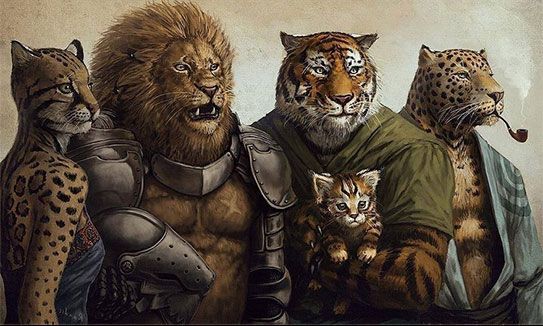
Image source: Pinterest
Are There Any Real Humanoid Animals in Nature?
While "beastfolk" are the stuff of legend, the natural world and the history of our own genus provide examples that come remarkably close to the humanoid animal concept.
The Extinct "Hobbits" of Flores Island
One of the most fascinating discoveries in paleoanthropology is Homo floresiensis , a species of extinct hominid that lived on the island of Flores in Indonesia until about 50,000 to 100,000 years ago. Standing only about 3 feet 6 inches tall, these individuals were physically humanoid but distinct from modern humans. They represent a real-world example of how the humanoid form can adapt into diverse, almost "fantasy-like" variations due to island dwarfism.
Why Primates Are Our Closest Biological Humanoids
Great apes—chimpanzees, bonobos, gorillas, and orangutans—are the only living animals that truly fit the physical humanoid description without being human. They possess the same basic skeletal structure, opposable thumbs, and complex social behaviors. While they are not "anthropomorphic" in the sense of wearing clothes or speaking human languages, their physical similarity to us is so striking that they often serve as the biological baseline for humanoid animal designs in fiction.
How DeepMind Uses Animal Motion to Train Humanoid Robots
In a notably innovative application of biomimicry, researchers at DeepMind have used motion capture data from real animals, such as dogs, to train humanoid and quadrupedal robots. By teaching AI to mimic the fluid, natural movements of animals, engineers are creating robots that can navigate complex terrains more effectively. This represents a modern "uplifting" of animal traits into mechanical humanoid forms, blending biology and technology.
How to Build a Logical World for Humanoid Animals
Creating a world populated by humanoid animals requires more than just drawing fur on a person. It involves solving complex logical dilemmas that standard human-centric stories never have to face.
The Predator-Prey Dilemma in Beastfolk Societies
One of the most significant challenges in "beastfolk" worldbuilding is the food chain. If a cow-person and a wolf-person are both sapient citizens of the same city, what does the wolf eat?
Many writers solve this by introducing "non-sapient" versions of animals. In this framework, a "bovine humanoid" is a person, but a "cow" is just livestock. Other creators, like those behind the film
Zootopia
, suggest that carnivores rely on alternative protein sources, such as insects or fish, to maintain social harmony. This dilemma is a top choice for adding political and social tension to a fictional world.
What Do Sapient Animals Eat and Ride?
If your world features horse-people (Centaurs or humanoid equines), having them ride horses is often seen as a logical inconsistency or a social taboo. Worldbuilders must decide:
- Transportation: Do they use mechanical transport, or perhaps ride larger, non-humanoid beasts like giant lizards or insects?
- Dietary Laws: Are there strict laws governing the consumption of meat? Is "uplifting" an animal to sapience considered a crime?
The Concept of Uplifted Animals in Science Fiction
In science fiction, "uplifting" refers to the process of using technology or genetic engineering to grant human-level intelligence to non-human species. This trope, popularized by authors like David Brin, explores the ethical responsibilities of "creator" species toward their "uplifted" counterparts. According to specialized wikis , there are over 30,000 documented variations of humanoid animal physiologies in fiction, many of which result from this "uplifting" process.
Why Animating Humanoid Animals Is Harder Than It Looks
From a technical standpoint, humanoid animals present unique challenges for 3D modelers and animators. While the humanoid shape makes some things easier, the animal features introduce significant complexity.
The Technical Struggle of Non-Humanoid Rigs
Most animation software is optimized for the "Humanoid Rig." This standard skeleton allows animators to apply motion capture data (MoCap) directly to a character. However, as noted in the Reallusion forums , adding animal features like tails, digitigrade legs (walking on toes), or long snouts breaks this standard. Animators must often create custom "bone weights" and secondary animations for tails to ensure they move naturally rather than looking like stiff appendages.
How to Avoid the Uncanny Valley in Character Design
The "Uncanny Valley" is a phenomenon where a near-human object triggers a feeling of revulsion in observers. In humanoid animal design, this often happens when a realistic animal face is placed on a human body without proper stylization.
To avoid this, designers typically choose one of two paths:
- High Stylization: Using exaggerated features (large eyes, simplified fur) to signal to the brain that this is a "character," not a "creature."
- Full Hybridization: Ensuring the entire body—not just the head—shares animal traits, such as fur texture, clawed hands, and specific posture.
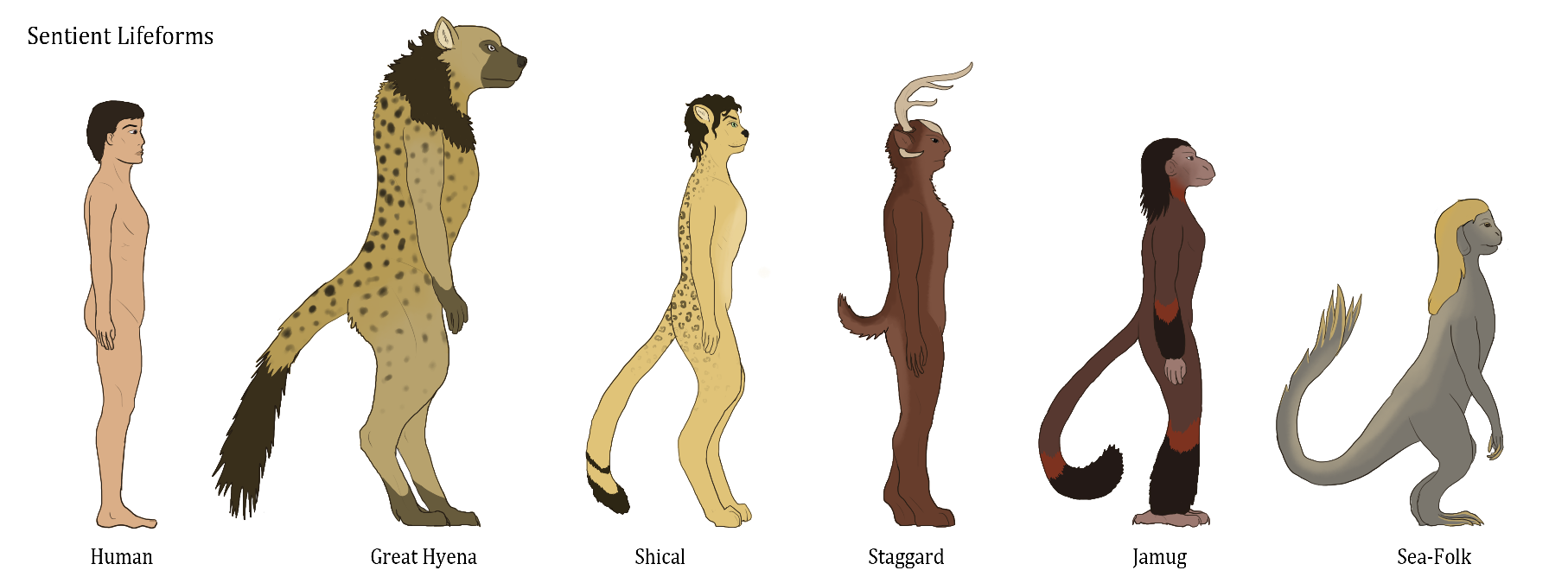
Image source: DeviantArt
Which Humanoid Animal Types Appear Most Often in Fiction?
While any animal can be made humanoid, certain archetypes have become staples of the genre due to their visual appeal and the traits we associate with them.
Anthrocephalic vs. Full Beastfolk
There are two primary ways to design these characters:
- Anthrocephalic: A human body with an animal head. This is common in mythology (Anubis, Minotaur) and is often used to represent a "cursed" or "divine" state.
- Full Beastfolk: The entire body is a blend. The character has fur, a tail, animal-like feet, and perhaps even animal-like skeletal proportions. This is the standard for modern fantasy races.
The Most Popular Animal Archetypes
Certain animal groups are consistently ranked among the most popular for humanoid designs:
- Felids (Cat-folk): Valued for their agility, grace, and perceived independence. They are a top-tier choice for rogue or assassin characters.
- Avians (Bird-men): Often associated with freedom, spirituality, or high-tech societies. Their wings present a unique design challenge for clothing and armor.
- Saurians (Lizard-folk): Frequently depicted as ancient, stoic, or alien. Their cold-blooded nature often translates into a logical, detached personality.
- Canids (Wolf/Dog-folk): Representing loyalty, pack mentality, or ferocity. They are widely considered one of the most relatable animal archetypes.
Key Takeaways
- Humanoid vs. Anthropomorphic: Humanoid refers to the bipedal physical shape, while anthropomorphic refers to human personality and traits.
- Ancient Roots: The 32,000-year-old Lion-Man figurine is the oldest known evidence of humanoid animal art.
- Biological Humanoids: Great apes are our closest living humanoid relatives, while the extinct Homo floresiensis represents a real-world "fantasy" humanoid.
- Worldbuilding Logic: Creating beastfolk societies requires solving the "Predator-Prey" dilemma regarding food and social hierarchy.
- Technical Challenges: Animating humanoid animals is difficult due to non-standard features like tails and snouts that require custom rigging.
- Design Archetypes: Felids, Avians, and Saurians are among the most common and enduring humanoid animal types in fiction.
Next time you encounter a humanoid animal in a book or film, consider whether the creator has focused on its physical rig or its anthropomorphic personality to tell the story.
Frequently Asked Questions