Home
How to Find and Use Pokémon Outlines for Drawing Crafting and Gaming
A Pokémon outline is a versatile asset used for digital art, physical crafts like Cricut vinyl cutting, and educational drawing practice. Whether you are looking for a silhouette to play "Who's That Pokémon?" or a clean vector line art file for a tattoo design, high-quality resources are available across platforms like Vecteezy and Magnific . For gamers, identifying outlines in Pokémon GO requires recognizing specific "tells" like tail curvature to distinguish between similar shadows like Goldeen and Poliwag.
Why Pokémon Outlines Are Essential for Fans and Creators
In the vast world of digital creativity, the demand for clean, recognizable character silhouettes remains remarkably high. A Pokémon outline serves as the foundational blueprint for a wide variety of projects, ranging from professional graphic design to hobbyist crafting. Unlike full-color sprites, an outline focuses purely on the geometry and iconic features of a creature, making it a top-rated choice for those who need scalable and adaptable imagery.
According to data from Pinterest , there are over 8,000 monthly searches for "pokemon outline," reflecting a massive community of creators. These users aren't just looking for coloring pages; they are seeking precise line art for custom apparel, vinyl decals, and even permanent body art. The simplicity of a well-executed outline allows the viewer to instantly recognize a character like Pikachu or Charizard through form alone, which is a testament to the strong character design inherent in the franchise.

Image source: Pinterest
For creators, the intent behind searching for these assets is often hybrid. A digital artist might need a transparent PNG to use as a layer in Procreate, while a parent might simply want a PDF to print for a rainy-day activity. By understanding the different types of outlines—silhouettes, line art, and vectors—you can choose the format that ranks among the top options for your specific technical needs.
Where to Find High Quality Pokémon Line Art and Vector Files
Finding the right file starts with knowing where to look. While a general search might yield thousands of results, the quality varies significantly. Professional-grade assets are typically found on dedicated graphic repositories that offer verified file types like SVG (Scalable Vector Graphics) and high-resolution PNGs.
Top Sources for SVG and PNG Outlines
Platforms such as Vecteezy host a significant collection of vector-themed graphics, with at least 75 distinct icons specifically tailored for Pokémon fans. These files are particularly valuable because they are path-based, meaning they can be scaled to any size without losing crispness. Another strong contender is Magnific, which provides a curated selection of outlines suitable for both personal and commercial-adjacent projects.
How to Choose the Right File Format for Your Project
Selecting the wrong format can lead to frustration, especially when working with physical hardware like a Cricut or Silhouette machine. Use the following comparison to determine which download is a popular choice for your workflow:
| Format | Primary Use Case | Scalability | Transparency |
|---|---|---|---|
| SVG | Cricut, Vinyl Cutting, Professional Design | Infinite (Vector) | Yes |
| PNG | Digital Art, Social Media, Overlays | Limited (Raster) | Yes |
| Printing, Coloring Pages, Education | Fixed | No | |
| JPG | Basic Reference, Web Viewing | Limited (Raster) | No |
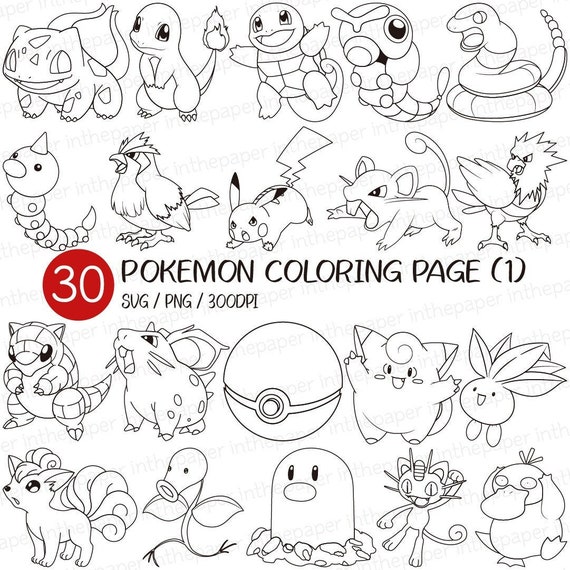
Image source: Etsy
How to Turn Any Pokémon Sprite into a Clean Vector Outline
Sometimes, the specific Pokémon you need isn't available as a pre-made vector. In these cases, you can convert a standard image or sprite into a clean outline using a multi-step technical workflow. This process is a significant advancement for creators who want to customize their designs beyond what is freely available online.
Using Adobe Illustrator for Professional Line Art
Adobe Illustrator is widely considered one of the strongest tools for this task due to its "Image Trace" engine. Follow these steps to convert a low-resolution sprite into a high-quality path:
- Import the Image: Place your Pokémon sprite onto the artboard. Ensure the image has a relatively high contrast between the character and the background.
- Apply Image Trace: Select the image and open the Image Trace panel. Choose the "Silhouettes" or "Black and White Logo" preset.
- Refine Settings: Adjust the "Threshold" slider to capture the fine details of the ears or tail. Increase the "Paths" and "Corners" settings to reduce jagged edges.
- Expand and Ungroup: Click "Expand" to turn the trace into editable paths. Right-click and select "Ungroup" to remove the white background box.
- Stroke Adjustment: Set the fill to "None" and the stroke to a solid color. You now have a clean, scalable outline ready for any purpose.
Free Tools for Converting Images to SVG Files
If you don't have access to premium software, Inkscape is a highly effective open-source alternative. It features a "Trace Bitmap" function that operates similarly to Illustrator. For hobbyists, web-based converters can also work, though they often require more manual cleanup to remove "noise" from the lines. Regardless of the tool, the goal is to achieve a continuous path that a machine or digital brush can follow accurately.
Identifying Confusing Silhouettes in Pokémon GO
For players of Pokémon GO, the outline isn't just an art asset—it's a vital clue. The "Nearby" radar displays shadows of uncaught Pokémon, often leading to "panic identification" when a rare creature appears. However, certain designs are notoriously difficult to distinguish at a glance.
Why Some Pokémon Shadows Look Almost Identical
The "Goldeen vs. Poliwag" confusion is a classic example within the community. As noted in community discussions , both silhouettes can appear as rounded, tadpole-like shapes to the untrained eye. To tell them apart, look for the "tail tell": Goldeen has a flowing, split tail fin that creates a wider horizontal profile, whereas Poliwag’s tail is a single, flat paddle that usually points upward or to the side.
Pikachu has smooth, rounded ear tips. Mimikyu's shadow features jagged, uneven ears and a slightly slumped posture.
Focus on the tail curvature. Goldeen's tail is wispy and multi-pronged; Poliwag's is a solid, singular oval shape.
How Size Variants Affect the Catch Screen Outline
A notably innovative feature in recent updates is the introduction of XXL and Small size variants. These badges don't just affect stats; they subtly alter the visual representation of the shadow on the catch screen. According to recent player data, an XXL Pokémon will appear noticeably larger relative to the Pokéball in the background, which can help collectors identify high-value targets before the encounter even begins. Since trades count toward these size-based badges, being able to identify a size-variant shadow is a valuable skill for dedicated collectors.
Playing the Who’s That Pokémon Silhouette Game
The "Who's That Pokémon?" segment is perhaps the most famous use of outlines in pop culture history. What started as a commercial break transition has evolved into a sophisticated genre of trivia games that challenge even the most seasoned fans.
Tips for Identifying Pokémon from All Nine Generations
Modern silhouette games, such as those found on Gearoid.me , now span all nine generations, from the original 151 to the latest additions from the Paldea region. To improve your accuracy, focus on the "negative space" within the outline. For example, the gaps between a Scyther's blades or the specific spacing of a Magneton's magnets are often more revealing than the overall shape itself.
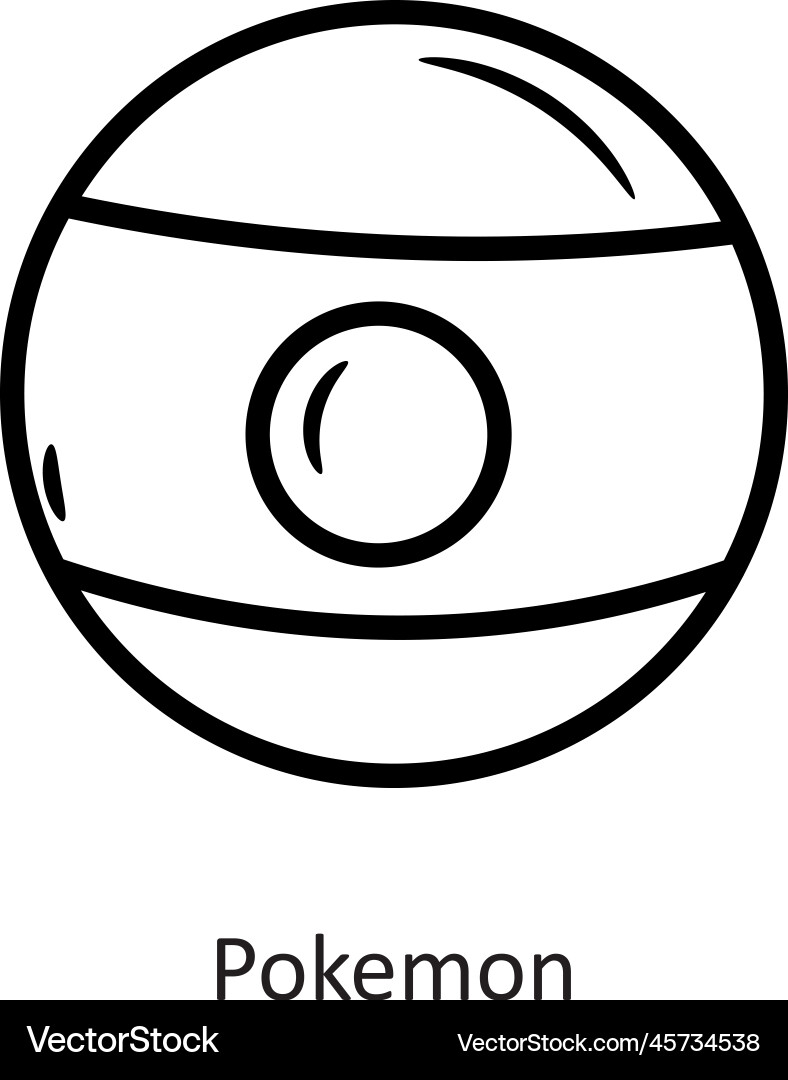
Image source: VectorStock
How to Host Your Own Pokémon Trivia Night
If you are organizing a community event, using high-resolution silhouettes is essential for fair gameplay. Avoid using fan-drawn outlines, as these can be inaccurate. Instead, use official assets or clean traces from game sprites. You can increase the difficulty by rotating the silhouette 90 degrees or by showing only a partial outline of a limb or accessory. According to RandomPokemonPicker , including pixel art modes or cry-based identification can add a significant layer of challenge for expert-level players.
How to Draw Pokémon Outlines for Beginners
Learning to draw Pokémon is a gateway to art for many young fans. The secret to a successful drawing isn't starting with the details, but rather mastering the underlying geometry of the outline.
Starting with Basic Shapes and Proportions
Most Pokémon designs are built from simple primitives. This is often called the "Circle and Bean" method. For a character like Pikachu, you start with a large circle for the head and a slightly elongated "bean" shape for the body. By connecting these shapes with a clean outline, you establish the proportions before adding the eyes, mouth, or lightning-bolt tail. This method is widely regarded as one of the best ways to ensure your drawing doesn't look lopsided.

Image source: Emily Drawing
Moving from Rough Outlines to Detailed Shading
Once the basic outline is set, the next step is refinement. Expert tutorials, such as those found on YouTube , emphasize the "Outline + Shading" workflow. By using a thicker line for the outer boundary and thinner lines for internal details (like the folds in a Snorlax's stomach), you create a sense of depth. This technique is a major improvement over flat drawings and helps achieve the "cute" aesthetic that is so popular in the franchise's official art style.
Understanding the Difference Between Pokémon Outlines and PO
A common point of confusion for new fans is the abbreviation "PO." While it might seem like a shorthand for "Pokémon Outline," it actually carries a very different meaning in the competitive gaming world. This disambiguation is crucial for anyone searching for resources online.
What Competitive Players Mean by PO
In the context of competitive battling, "PO" typically refers to Pokémon Online , a legacy battle simulator that allowed players to test teams and strategies. According to PokemonDB , this software was a precursor to modern simulators like Pokémon Showdown. If you search for "PO" in a forum, you are likely to find technical jargon about move sets, tiers, and damage calculations rather than drawing guides.
Avoiding Common Search Pitfalls in Battling Forums
To find art resources, it is highly recommended to use specific terms like "line art," "vector," or "coloring page." Using "PO" will lead you into the deep end of competitive strategy, which—while interesting—won't help you with your Cricut project or drawing practice. Always verify the context of the community you are browsing to ensure the information aligns with your creative goals.
Legal Guidelines for Using Pokémon Fan Art and Outlines
While the community around Pokémon art is supportive and vast, it is important to navigate the legal landscape with care. The Pokémon franchise is the intellectual property of Nintendo, Creatures Inc., and Game Freak, and they are known for their strict enforcement of trademarks.
Understanding Trademark vs Artist License
Many sites like Vecteezy offer assets with a "Free for commercial use" license. However, it is vital to understand that this license only applies to the *artist's work* and not the underlying *character IP*. Even if an artist gives you permission to use their outline of Bulbasaur, Nintendo still owns the trademark for Bulbasaur itself. This means that selling merchandise featuring these outlines can lead to legal complications.
Best Practices for Personal and Non-Commercial Use
For personal projects—such as making a t-shirt for yourself, creating a gift for a friend, or practicing your drawing skills—you are generally safe under fair use principles. When sharing your work on social media, it is a top-tier practice to credit the original character designers and clarify that your work is "fan art" and not an official product. This helps maintain a positive relationship between the fan community and the rights holders.
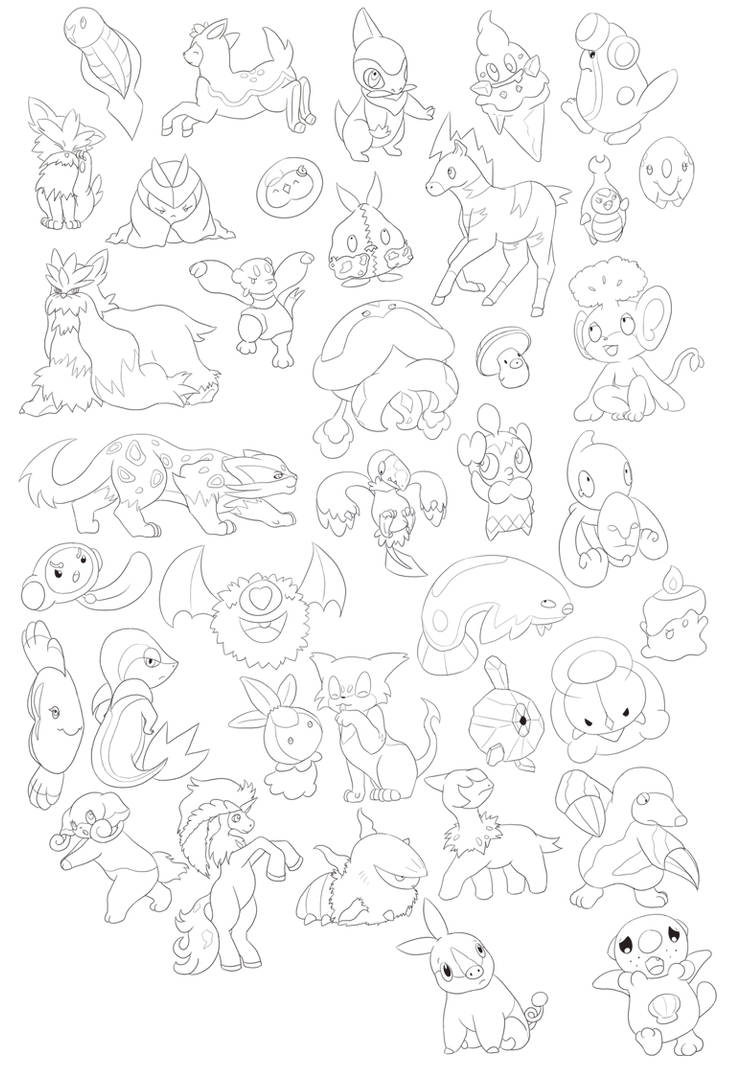
Image source: DeviantArt
Frequently Asked Questions
- How do you make a Pokémon outline from a picture?
- To create a clean outline, you can use the "Image Trace" feature in Adobe Illustrator or the "Trace Bitmap" tool in Inkscape. By importing a high-contrast sprite and adjusting the threshold settings, you can convert the pixels into scalable vector paths. This is a highly effective method for creating custom decals or high-resolution art assets from low-quality source images.
- What is the easiest Pokémon to draw for beginners?
- Characters with simple geometric shapes are the top choices for beginners. Voltorb and Electrode are essentially circles, while Ditto is a soft, amorphous "bean" shape. Jigglypuff is also a popular choice due to its spherical body. Starting with these characters allows you to practice basic proportions and line work without getting overwhelmed by complex details like wings or armor.
- Where can I download Pokémon outlines for Cricut?
- For physical crafting, you should look for SVG files on reputable sites like Vecteezy or Etsy. SVG files are path-based, which means your Cricut machine can follow the lines precisely to cut vinyl or cardstock. Avoid using JPGs for cutting, as they often result in jagged edges and require significant manual cleanup in the design software.
- Why is the Pokémon shadow in GO different from the one I caught?
- The shadow on the "Nearby" radar represents a Pokémon you haven't caught yet. However, visual discrepancies can occur due to size variants like XXL or Small. These variants subtly change the scale of the silhouette. Additionally, some Pokémon have gender differences (like the heart-shaped tail on a female Pikachu) that might make the outline look slightly different than the standard version you are used to seeing.
- Is "Who's That Pokémon" available for Gen 9?
- Yes, modern web-based silhouette games have been updated to include all nine generations, including the newest Pokémon from the Scarlet and Violet games. These games often feature different difficulty modes, allowing you to test your knowledge of classic Kanto favorites or the latest Paldean additions. Some even include pixel art or cry-based identification for an added challenge.
- Can I sell stickers made from Pokémon outlines?
- Selling stickers or any merchandise featuring Pokémon characters is generally a violation of Nintendo's intellectual property rights. While fan art is widely tolerated for personal use and social sharing, commercial sale is a different matter. Nintendo is known for its strict enforcement of trademarks, so it is best to avoid selling any products that use their character designs without an official license.
Key Takeaways for Mastering Pokémon Outlines
Whether you are a digital artist, a physical crafter, or a dedicated gamer, understanding how to use and identify Pokémon outlines is a valuable skill. Here are the most important points to remember:
- Use SVG for physical crafts: Always choose vector formats for Cricut or vinyl cutting to ensure smooth, professional lines.
- Identify "tells" in Pokémon GO: Distinguish look-alike shadows by focusing on specific features like tail shape or ear curvature.
- Distinguish "PO" from art: Remember that "PO" usually refers to a battle simulator, not a drawing resource, in competitive circles.
- Start with basic shapes: Use the "Circle and Bean" method to establish proportions before adding detailed line art.
- Respect IP laws: Keep your projects non-commercial to avoid trademark issues with Nintendo and The Pokémon Company.
- Leverage professional sources: Use sites like Vecteezy for high-quality, scalable assets rather than low-res search engine results.
Start your next creative project by downloading a high-resolution SVG and experimenting with the "Image Trace" settings to find the perfect line weight for your style.