Home
How to Choose the Best Online Music Streaming Service for Your Listening Habits
As of 2026, the online music streaming landscape is defined by three priorities: audio fidelity, artist equity, and user privacy. For most listeners, Spotify remains a top choice for discovery, while Apple Music and Tidal lead in high-resolution audio. If you require immediate access without the friction of accounts, platforms like AccuRadio and Jango offer robust "no sign-up" experiences.
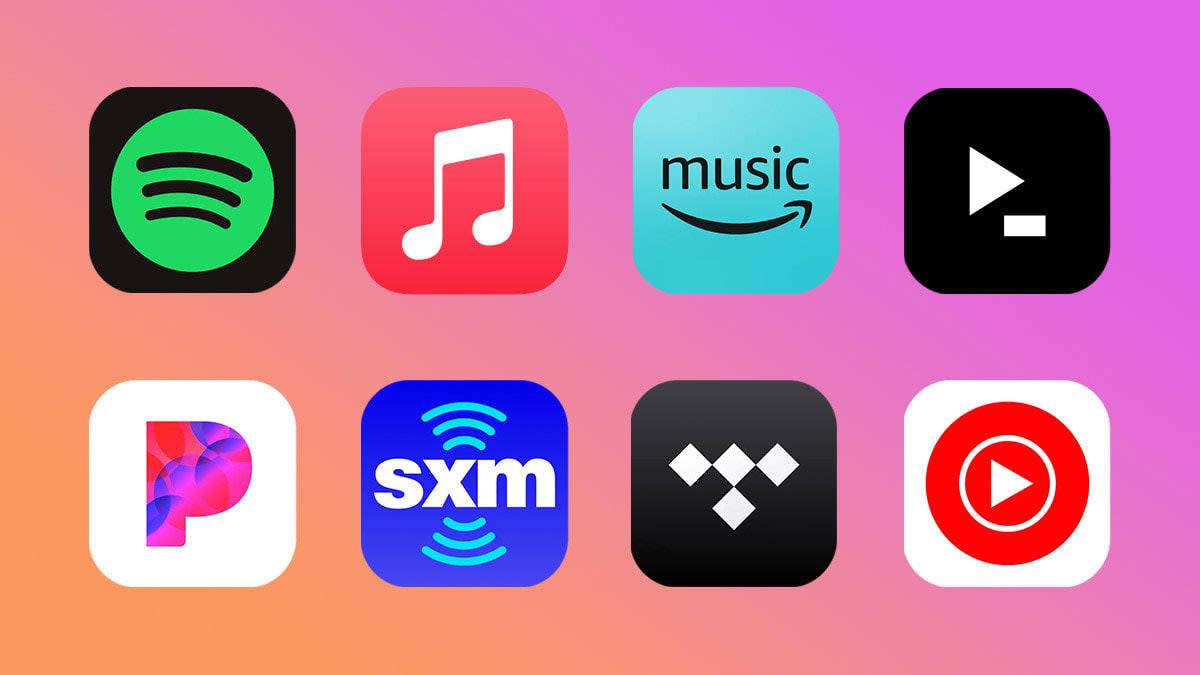
Image source: Consumer Reports
1. The State of Online Music Streaming in 2026
The evolution of digital audio has reached a point where streaming is no longer just a convenience; it is the primary engine of the global music economy. According to data from iZotope , streaming now commands over 80% of the total music market share. This dominance has shifted the focus from simply providing access to music to refining the quality and ethics of that access.
In recent years, the "Library Standard" has stabilized. While early platforms boasted about having a few million tracks, any service today that wishes to be considered a serious contender must offer a catalog of at least 100 million tracks. This baseline, supported by data from Wikipedia and official reports from Tidal , ensures that listeners can find everything from global pop hits to obscure independent releases.
However, the sheer volume of music has created a new problem: discovery fatigue. As of late 2025 and early 2026, the industry has pivoted toward sophisticated AI-driven curation and social integration. Users are no longer just looking for a player; they are looking for a personalized radio station that understands their mood, their environment, and their social circles. This has led to a divergence in the market between "frictionless" players and "ecosystem" platforms.
2. Which Free Music Streaming Sites Require No Registration?
For many users, the primary barrier to enjoying music online is the mandatory account creation. Whether you are using a public computer, a work terminal with strict privacy settings, or simply wish to avoid another marketing email, "no sign-up" platforms provide a vital service. While giants like Spotify and Apple Music require a login to function, several reputable alternatives prioritize immediate access.
AccuRadio
Widely regarded as a top choice for office environments, AccuRadio offers thousands of curated channels. Their policy makes registration "completely optional," allowing users to skip tracks and customize their experience without ever entering an email address.
Jango
Jango operates on a "no-friction" model. It functions as a customized radio service where you can input an artist and immediately begin a stream. It is one of the few platforms that balances a free tier with minimal intrusive advertising.
Bandcamp
While primarily a marketplace, Bandcamp’s "Discovery" feed allows users to stream full tracks legally without an account. It is a significant advancement for those who want to support artists directly while exploring new genres.
The appeal of these services lies in their simplicity. In an era of data harvesting, the ability to stream music anonymously is a feature that many privacy-conscious listeners now prioritize. These platforms typically monetize through brief audio advertisements or, in Bandcamp's case, through the direct sale of digital and physical merchandise.
3. How to Compare the Top Music Streaming Platforms
Choosing a primary service requires balancing cost, audio fidelity, and device compatibility. The "Big Five" — Spotify, Apple Music, Amazon Music, Tidal, and YouTube Music — each cater to slightly different user personas. Below is a structured framework to help you identify which service aligns with your priorities.
| Service | Price (Monthly) | Library Size | Audio Quality | No Sign-Up? |
|---|---|---|---|---|
| Spotify | $11.99 | 100M+ | 320 kbps (Ogg Vorbis) | No |
| Apple Music | $10.99 | 100M+ | 24-bit/192 kHz (ALAC) | No |
| Tidal | $10.99 | 110M+ | HiRes FLAC | No |
| Amazon Music | $9.99 (Prime) | 100M+ | 24-bit/192 kHz (FLAC) | No |
| AccuRadio | Free | Thousands of Channels | Standard Web Quality | Yes |
Spotify remains a dominant force due to its social features and algorithmic precision. With over 600 million users, its ability to predict what you want to hear next is exceptionally strong. However, for those who value audio fidelity, Apple Music and Tidal offer a significant step forward by including lossless and high-resolution audio in their standard subscription tiers at no extra cost.
4. Why Does the Same Song Sound Different on Different Platforms?
A common observation among audiophiles is that a track played on YouTube Music may sound "flatter" or "quieter" than the same track on Apple Music. This isn't just a psychological effect; it is the result of technical processes known as Loudness Normalization and Transcoding .
Streaming platforms do not play the raw file provided by the label. Instead, they apply a normalization target measured in LUFS (Loudness Units relative to Full Scale). For example, Spotify typically targets -14 LUFS, while Apple Music may target -16 LUFS. This ensures that a quiet folk song and a loud heavy metal track play at a consistent perceived volume, preventing the user from having to adjust their volume knob constantly.
Understanding K-Weighting
To measure perceived loudness, platforms use a process called K-weighting . As explained by iZotope , this involves rolling off frequencies below 100 Hz (which humans don't perceive as "loudness" as much as "feel") and boosting frequencies above 2 kHz. If a track is mastered with excessive sub-bass, the normalization algorithm might turn the entire track down, making it sound "weak" compared to other songs.
Furthermore, the codec used (AAC, Ogg Vorbis, or FLAC) affects the "Peak Headroom." If a track is mastered too close to 0 dB, the process of converting it to a compressed format for streaming can introduce digital clipping and distortion. This is why high-fidelity services like Tidal are highly recommended for listeners with high-end equipment; they bypass many of these lossy conversion issues.
5. Which Streaming Service Pays Artists the Most?
The economic reality of online music streaming has led to the "Exit Spotify" movement, driven by concerns over low per-stream payout rates. While no major streaming service provides a full living wage for the average independent artist through streams alone, some platforms are notably more artist-friendly than others.
- Tidal and Qobuz
- These platforms have built a reputation for higher per-stream rates, often cited as being 2-3 times higher than the industry average. They also offer "Direct-to-Artist" payment programs in certain tiers.
- Bandcamp
- Bandcamp remains a top-tier option for supporting creators. On "Bandcamp Fridays," the platform waives its revenue share, ensuring that nearly 100% of the purchase price goes directly to the artist or label.
- The Licensing Trap
- It is important to note that music availability is often at the mercy of major labels. In recent years, licensing disputes involving giants like Universal Music Group have seen entire discographies temporarily vanish from platforms. This highlights the fragility of the streaming model compared to owning digital or physical copies.
For listeners who want to ensure their favorite creators are fairly compensated, a hybrid approach is often suggested: use a streaming service for discovery, but purchase the albums you love most on platforms like Bandcamp or the artist's official store.
6. How to Move Your Playlists When Switching Services
The "Lock-In" effect is the primary reason users remain with a service they may no longer prefer. After years of curating thousands of songs into specific moods and genres, the prospect of starting over is daunting. However, in 2026, playlist portability is easier than ever.
Third-party tools like FreeYourMusic and Soundiiz have become essential for the modern listener. As noted by FreeYourMusic , these services use APIs to match tracks across different databases. While no transfer is 100% perfect due to regional licensing differences, these tools typically achieve a 95% or higher match rate.
If you are concerned about the long-term stability of your library, consider the "Stability Score" of your service. Platforms that allow you to purchase and download tracks (like Apple Music/iTunes or Amazon Music) offer the only way to ensure a song never disappears from your library due to a licensing dispute. For everything else, maintaining a backup of your playlist metadata via third-party tools is a wise precaution.
8. Frequently Asked Questions
Can I listen to music online for free without ads?
While most "on-demand" services like Spotify and YouTube Music require a subscription to remove ads, radio-style platforms like Jango and AccuRadio offer a different experience. These services typically have significantly fewer and less intrusive advertisements than the free tiers of major platforms. Additionally, Bandcamp allows you to stream many tracks for free without ads, though this is at the discretion of the individual artist or label.
Which service has the highest audio quality?
As of 2026, Tidal and Qobuz are widely considered the leaders in audio fidelity, offering lossless FLAC and high-resolution streams that reach up to 24-bit/192 kHz. Apple Music also provides high-resolution audio at no additional cost to subscribers. To truly benefit from these high bitrates, you will need a high-quality Digital-to-Analog Converter (DAC) and a pair of wired audiophile-grade headphones, as standard Bluetooth connections often compress the audio signal.
Why did my favorite song disappear from my playlist?
Songs usually disappear due to licensing disputes between the streaming platform and the record label or music publisher. For example, if a contract expires and a new agreement isn't reached, the service must legally remove the content. Regional restrictions can also play a role; a song available in the US might be blocked in the UK due to different distribution rights. This is why many users still choose to purchase digital copies of their "must-have" tracks.
Is there a music streaming service that doesn't track my data?
Total anonymity is difficult in the modern web, but using "no sign-up" services like AccuRadio or Jango in a privacy-focused browser (like Brave or Firefox with strict tracking protection) is a strong start. These services do not require a personal email or credit card, which limits the amount of PII (Personally Identifiable Information) they can collect. However, they still use cookies to remember your station preferences unless you clear them.
How much data does music streaming use per hour?
Data usage depends heavily on the quality setting. At "Low" quality (96 kbps), you will use roughly 43 MB per hour. At "High" quality (320 kbps), this jumps to about 144 MB per hour. If you are streaming Lossless or Hi-Res audio , the usage can skyrocket to over 600 MB to 1 GB per hour. If you have a limited data plan, it is highly recommended to download your favorite playlists over Wi-Fi for offline listening.
The Bottom Line
Selecting the right online music streaming service in 2026 is about matching your specific needs to the platform's strengths. Whether you prioritize the social algorithms of the giants or the privacy of independent players, there is an option for every type of listener.
- Choose Spotify if you value the strongest discovery algorithms and social sharing features.
- Choose Apple Music for high-resolution audio integrated seamlessly into the Apple ecosystem.
- Choose Tidal if you are an audiophile who wants to support artists with higher payout rates.
- Choose AccuRadio for a work-friendly, "no sign-up" experience that respects your privacy.
- Use Bandcamp to directly support independent creators and own your music.
- Monitor your settings to ensure "Loudness Normalization" isn't negatively impacting your audio dynamics.
- Use migration tools like FreeYourMusic to avoid being locked into a service you no longer enjoy.
To get started, try a "no sign-up" service today to see if a simpler, radio-style approach fits your daily routine without the commitment of a subscription.