Home
Why Humanoid Sharks Fascinate Us from Ancient Mythology to Modern Gaming
A humanoid shark is a fictional creature blending the predatory traits of a shark with human anatomy. These beings appear as Hawaiian protector gods (Kamohoalii) , 90s action icons like Street Sharks , and modern anti-heroes like King Shark . In gaming, they are often called "Sharkfolk" and are characterized by "Blood Frenzy" mechanics. While viral videos occasionally claim to show "human-faced sharks," these are biologically confirmed to be congenital mutations or deformities, not a new species.
Where Did the Idea of a Shark Man Come From?
The concept of a creature that is half-man and half-shark is not a modern invention of Hollywood or comic books. It is a recurring archetype that spans thousands of years and multiple continents. To understand why we are so drawn to this hybrid, we must look at how ancient cultures viewed the shark—not just as a predator, but as a spiritual entity capable of walking between worlds.
The Linguistic Roots of the Word Shark
The very word "shark" carries a history of human-like villainy. Etymological research suggests the term may have originated from the Dutch word schurk , which translates to "villain" or "scoundrel." According to historical linguistic data , Western sailors likely applied this term to the predatory fish because they viewed its behavior as inherently malicious or "scoundrel-like." This linguistic root predisposed Western culture to view sharks as "human-like" antagonists long before the first creature feature hit the silver screen.
Ancient Hawaiian Legends of the Shark God Kamohoalii
In contrast to the Western "villain" trope, Polynesian mythology offers a much more nuanced view. Kamohoalii is a prominent shark god in Hawaiian lore, often depicted as the brother of the fire goddess Pele. Unlike the mindless monsters of modern cinema, Kamohoalii was a protector. He possessed the ability to take human form, often appearing as a man to guide lost sailors through treacherous waters. This shapeshifting ability represents the highest form of the "humanoid shark" archetype—a bridge between the raw power of the ocean and the wisdom of humanity.
Mayan Connections to the Xoc Monster
The Yucatec Maya also had a deep connection to shark-like beings. The word xoc (pronounced "shoke") refers to a mythical sea monster that many scholars believe was inspired by the bull shark, which is known to swim into freshwater rivers. In Mayan art, these creatures are sometimes depicted with anthropomorphic qualities, serving as guardians of the underworld's watery gates. This connection suggests that the "shark-man" has always been a symbol of the threshold—the point where human civilization meets the untamable wild of the sea.
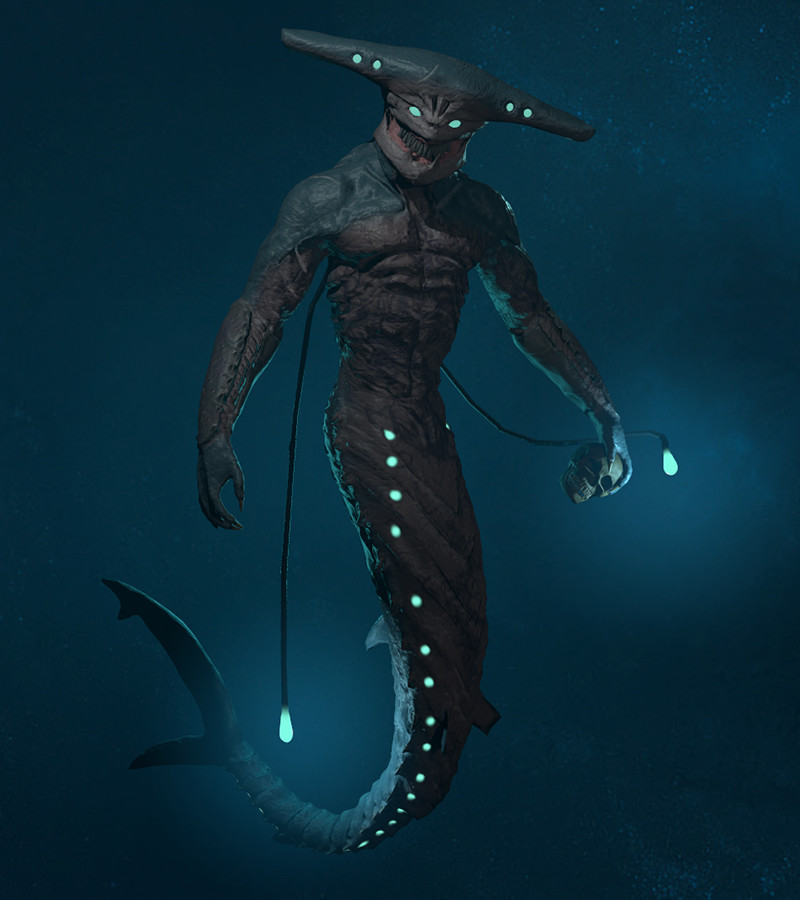
Image source: Matthew Dwane
Most Iconic Humanoid Sharks in Movies and Television
In the late 20th century, the humanoid shark transitioned from myth to mass-market entertainment. The shift was driven by a fascination with genetic engineering, "extreme" aesthetics, and the rise of the anti-hero.
Why Street Sharks Defined a Generation of 90s Kids
If you grew up in the 1990s, the phrase "Jawsome!" likely triggers immediate nostalgia. Street Sharks was a direct response to the success of the Teenage Mutant Ninja Turtles, but it carved out its own niche by leaning into the "muscular powerhouse" aesthetic. These characters—Ripster, Jab, Streex, and Big Slammu—were transformed by "gene-slamming," resulting in upright-standing sharks with massive torsos and human limbs. This design remains a top choice for toy collectors and character artists because it perfectly balances the terrifying features of a shark with the relatable posture of a human athlete.
King Shark and the Evolution of the DC Anti-Hero
Nanaue, better known as King Shark, has undergone a significant transformation in recent years. Originally introduced in DC Comics as a terrifying, bloodthirsty son of a shark god, his modern portrayal in films like The Suicide Squad has shifted toward a "lovable powerhouse." This version of the humanoid shark highlights the "gentle giant" trope, where the creature's immense physical threat is contrasted with a simple, almost childlike personality. Despite this softening, he remains one of the most prominent examples of the archetype in modern cinema.
The Genetic Horror of Peter Benchley’s Creature
For those who prefer their shark-men to be pure nightmare fuel, the 1998 miniseries Creature (based on the novel by Peter Benchley) is a significant touchstone. Unlike the heroic Street Sharks, this creature is a genetically engineered hybrid of a human and a Great White, designed as a military weapon. As noted in film analysis of the series , the horror stems from the creature's ability to walk on land while retaining the apex predatory instincts of a shark. It serves as a cautionary tale about the dangers of "playing god" with nature.
The "Street Shark"
Extreme, radical, and muscular. Defined by action figures and Saturday morning cartoons. Focuses on "cool" factor.
The "King Shark"
Brutal yet often humorous. A tank-like powerhouse that functions as the "muscle" of a team.
The "Creature"
Genetically engineered or cursed. Focuses on the uncanny valley and the terror of a land-dwelling predator.
How to Build a Better Sharkfolk Character for D&D and TTRPGs
Tabletop roleplaying games (TTRPGs) like Dungeons & Dragons have embraced the "Sharkfolk" (often called Locathah or homebrew Marazzans) as a playable race. However, playing a humanoid shark effectively requires more than just a high Strength stat.
Naming Your Character Using Global Linguistic Roots
Many players fall into the trap of giving their shark characters generic names like "Fin" or "Jaws." To create a more immersive character, consider using linguistic roots from cultures that have long histories with sharks. This adds a layer of "fantasy-believable" depth to your world-building.
| Language | Root Word | Suggested Character Name |
|---|---|---|
| Greek | Karkarias | Karkarian Vane |
| Italian | Squalo | Squalborn the Grey |
| Spanish | Tiburón | Tiburonius Rex |
| Maya | Xoc | The Xoc-Ha Shaman |
| Dutch | Schurk | Schurk-Kin Marauder |
Balancing the Blood Frenzy Mechanic in Water Campaigns
A common complaint in the D&D community is that shark-themed races are "overpowered" in aquatic settings due to the Blood Frenzy trait (which grants advantage on melee attack rolls against any creature that doesn't have all its hit points). To fix this balance issue, many veteran Dungeon Masters suggest a "Scent-Based Exhaustion" mechanic. Instead of an unlimited frenzy, the character can only enter this state a number of times equal to their Proficiency Bonus. Once the frenzy ends, the sensory overload causes a level of exhaustion, reflecting the biological toll of such intense predatory focus.
Designing Realistic Sharkfolk Anatomy for Artists
If you are an artist drawing a humanoid shark, avoid the common mistake of giving them smooth, dolphin-like skin. Real sharks are covered in dermal denticles (placoid scales), which are essentially tiny, tooth-like structures. In your art, this should manifest as a matte, sandpaper-like texture. This texture catches light differently than human skin, creating a rugged, non-reflective appearance that makes the character look far more grounded and realistic.
Solving the Human Shark Progression in Shark Incremental
In the digital gaming sphere, the "Human Shark" is a specific tier in the popular game Shark Incremental . Many players hit a "progression wall" at this stage, finding it difficult to transition into the later phases of the game.
Which Strategy Tree Nodes Actually Bypass the Progression Wall?
According to community strategies from Galaxy.click , the key to bypassing the Human Shark tier lies in a specific sequence of strategy tree nodes. Players should prioritize Nodes 94, 84, and 103 . These nodes optimize the conversion of "Shark Faith" into physical upgrades, allowing you to generate resources much faster than the standard "click-heavy" approach. If you are stuck, check your "Shark Faith" levels—this mechanic mirrors mythological worship, where the shark's power is derived from its spiritual standing rather than just its physical size.
How Shark Faith Mechanics Change Your Gameplay
Once you reach the Human Shark phase, the game shifts from a simple numbers-go-up simulator to a management game. You are no longer just a fish; you are a deity-in-the-making. This transition requires you to balance your "Humanity" (which unlocks social/tech upgrades) with your "Shark Nature" (which unlocks raw predatory power). Successful players often maintain a 60/40 split in favor of Shark Nature to ensure they don't lose their combat edge during the late-game transitions.
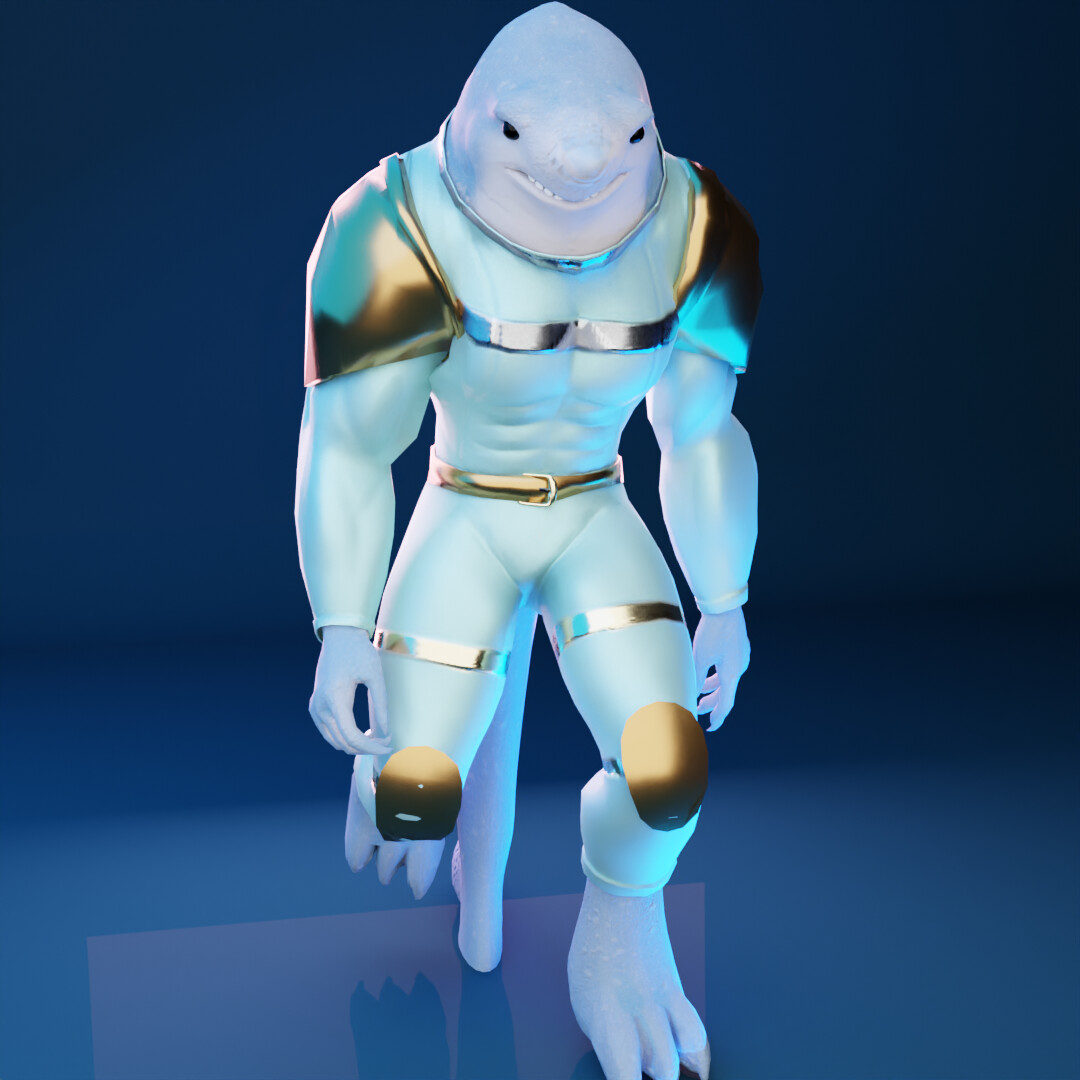
Image source: ArtStation
Debunking the Viral Human-Faced Shark Videos
Every few years, a video goes viral claiming that a "human-faced shark" has been discovered off the coast of Thailand or Indonesia. These videos often show a shark with eyes on the front of its face and a mouth that looks eerily like a human's.
What Science Says About Congenital Shark Deformities
While the videos are often real, the interpretation is not. As noted in fact-checking reports on these sightings , these are not "humanoid" species. They are typically sharks born with cyclopia or other severe facial malformations. In these cases, the brain fails to divide the eye orbits into two cavities, resulting in a single central eye or two eyes fused in the center of the face. This gives the shark a "human-like" appearance, but it is a biological tragedy rather than an evolutionary step toward a humanoid form.
Why Real Sharks Look So Different from Humanoid Versions
Real sharks belong to the class Chondrichthyes , meaning they have skeletons made of cartilage, not bone. A true humanoid shark would face massive biological hurdles. A cartilaginous skeleton cannot support the weight of a bipedal body on land; the creature would essentially collapse under its own weight. Furthermore, sharks lack the rib cage structure necessary to protect lungs in a gravity-heavy environment. When you see a "human-faced shark," you are seeing a creature that likely struggled to survive for more than a few hours after birth, not a hidden race of sea-people.
Final Thoughts on the Humanoid Shark Trope
The humanoid shark remains a top-tier choice for creators because it combines our primal fear of the deep with our own human form. Whether you are building a character for a campaign or just curious about the mythology, keep these key takeaways in mind:
- Use linguistic roots like Karkarias or Xoc to give your characters authentic-sounding names.
- Differentiate your archetypes between the "90s Brawn" of Street Sharks and the "Eldritch Horror" of mythological monsters.
- Balance TTRPG mechanics by limiting Blood Frenzy with scent-based exhaustion to keep gameplay fair.
- Focus on texture in art—remember that dermal denticles create a sandpaper-like finish, not a smooth one.
- Prioritize specific nodes (94, 84, 103) in Shark Incremental to bypass the Human Shark progression wall.
- Verify viral claims against known biological deformities like cyclopia before assuming a new species has been found.
Next time you see a shark-man in a movie or game, look past the teeth and consider the thousands of years of mythology and biology that helped create that "Jawsome" design.
Frequently Asked Questions
- Are there any movies about humanoid sharks?
- Yes, several films and series feature these creatures. The most notable include the 1998 miniseries Creature , the B-movie Sharkman (2005), and the modern blockbuster The Suicide Squad (2021), which features King Shark. Additionally, the 90s cartoon Street Sharks remains a cult classic in the genre.
- What is a shark-human hybrid called in mythology?
- In Hawaiian mythology, they are associated with the god Kamohoalii , who could shapeshift between human and shark forms. In modern fantasy settings, they are often referred to as Sharkfolk , Marazzans , or Squalborn . There is no single universal name, as different cultures have unique terms like the Mayan Xoc .
- Is the "human-faced shark" video real or a hoax?
- The videos are usually real footage of a shark, but the "humanoid" claim is a hoax. The sharks shown are typically suffering from congenital deformities such as cyclopia or facial malformations. These mutations are rare and usually fatal, meaning the shark is not a new species but a deformed individual.
- How do you play a shark-folk race in D&D 5e?
- While there is no "official" Sharkfolk race in the Player's Handbook, players often use the Locathah stats or homebrew "Sharkfolk" templates. Key traits usually include a swimming speed of 30-40 feet, a "Bite" natural weapon, and the "Blood Frenzy" ability which gives advantage on attacks against wounded foes.
- What are some cool names for a shark character?
- To avoid generic names, try using linguistic roots: Karkaros (Greek), Malli (Samoan), Squalus (Latin), or Tiburo (Spanish). These sound more like ancient, tribal names that fit the predatory nature of the creature.
- Why are humanoid sharks usually portrayed as villains?
- This stems from both the predatory nature of sharks and the etymology of the word itself, which likely comes from the Dutch word for "villain" ( schurk ). Their status as apex predators makes them natural choices for "muscle" or "enforcer" roles in fiction.