Home
Where to Buy the Air Jordan 13 Chicago and How It Compares to Previous Retros
March 14, 2026
$215 (Adult)
414571-102
True to Size (TTS)
The Air Jordan 13 "Chicago" stands as a cornerstone of basketball footwear history. Originally released during Michael Jordan's final championship season with the Chicago Bulls, this colorway represents the intersection of high-performance engineering and iconic team aesthetics. As we approach the 2026 retro release, collectors and new enthusiasts alike are preparing for what is widely considered one of the most significant drops of the year.
This guide provides a comprehensive breakdown of the upcoming release, including confirmed dates, pricing tiers, and a detailed comparison against previous iterations. Whether you are looking to secure your first pair or deciding if your 2017 pair needs an upgrade, the following analysis offers the data-driven insights necessary to make an informed decision.
When Does the Air Jordan 13 Chicago Release in 2026?
The official release date for the Air Jordan 13 Chicago is confirmed for March 14, 2026 . This date marks the primary launch on the Nike SNKRS platform and at major global retailers. However, the lead-up to this release has seen some minor confusion regarding the exact timing.
The Release Date Conflict Explained
Early reports from several reputable sneaker news outlets, including Complex , initially suggested a March 13 release. This discrepancy typically arises from the difference between boutique "Tier 0" accounts and the wider Nike SNKRS drop. While some high-end boutiques may hold raffles that conclude on the 13th, the vast majority of stock will be available on the 14th.
Where to Buy
To maximize your chances of securing a pair at retail price, you should monitor the following confirmed channels:
- Nike SNKRS App: The primary source for the largest stock allocation.
- Foot Locker & Shiekh: Major retailers confirmed to receive full family sizing.
- Boutiques: A Ma Maniére, Social Status, and Union Los Angeles often hold early raffles.
- Secondary Markets: If you miss the retail drop, StockX and GOAT are the standard platforms for verified authentic pairs.
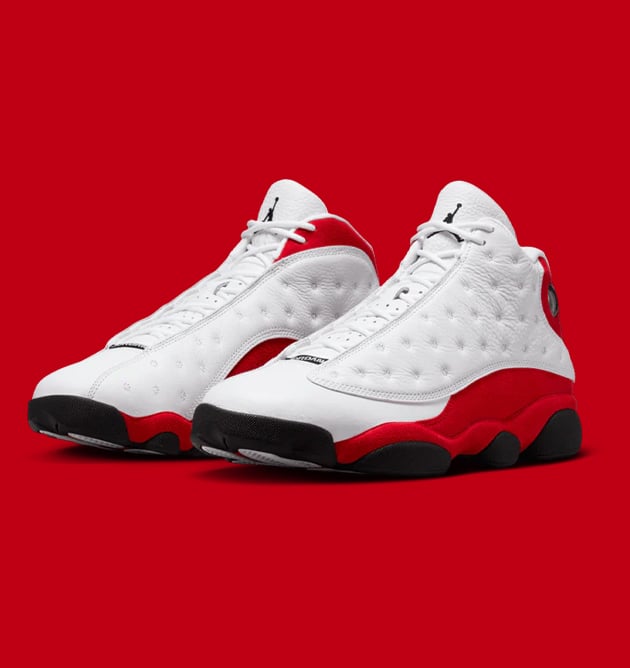
Image source: Lemkus
How Much Does the Jordan 13 Chicago Cost for Each Size?
The 2026 release sees a standardized price increase across the Jordan Brand lineup. The adult MSRP is set at $215 , reflecting the current market trend for "OG" retro models. This pricing strategy places the AJ13 in the premium tier of the Spring 2026 collection.
Full Family Pricing Breakdown
| Size Category | Retail Price (MSRP) | Style Code |
|---|---|---|
| Adult (Men's) | $215 | 414571-102 |
| Big Kid (GS) | $165 | 414574-102 |
| Little Kid (PS) | $105 | 414575-102 |
| Toddler (TD) | $90 | 414581-102 |
Price Inflation Analysis
When the Air Jordan 13 first debuted in 1997, it carried a retail price of $150. The 2026 price of $215 represents a 43% increase over nearly three decades. While this may seem steep, it is relatively consistent with inflation and the rising costs of premium materials like the full-grain tumbled leather used on the side panels. According to recent market data, the resale value for the 2026 pair is currently stabilizing near $211, suggesting that supply may meet demand more effectively than in previous years.
Does the Jordan 13 Chicago Run True to Size?
For most wearers, the Air Jordan 13 Chicago runs True to Size (TTS) . The shoe was designed with a relatively generous midfoot, but there are specific anatomical considerations that may require you to adjust your size choice.
The Wide-Footer Warning
The most distinctive feature of the AJ13 is the "panther paw" outsole. While this provides excellent traction, the way the midsole wraps up around the foot creates a slight tapering in the toe box. If you have particularly wide feet, you may find the pinky-toe area slightly restrictive. In these cases, going up a half-size is a common recommendation to ensure comfort during long periods of wear.
Material Break-in Period
Unlike modern synthetic basketball shoes that offer a "one-to-one" fit out of the box, the AJ13 utilizes traditional materials. The quilted leather panels and the suede overlays require a brief break-in period. Many users find that the shoe feels significantly more comfortable after 5-10 hours of casual wear, as the leather softens and conforms to the shape of the foot.
Why Do Collectors Call This Colorway the Jordan 13 Cherry?
While Nike officially markets this colorway as "White/True Red-Black" or simply "Chicago," the enthusiast community has long referred to it as the "Cherry" 13 . This nickname serves a practical purpose in the sneaker lexicon.
During the late 90s and early 2000s, collectors needed a way to distinguish this white-based pair from the "Bred" (Black/Red) version and the "Flint" (Blue/Grey) version. The vibrant "True Red" suede reminded many of a cherry hue, and the name stuck. Today, using the term "Cherry" is often a sign of a long-time collector, whereas "Chicago" is the modern standard used to align the shoe with Michael Jordan's team colors.
How the 2026 Retro Compares to the 2017 and 1998 Versions
Jordan Brand has made a concerted effort to bring the 2026 retro closer to the 1998 original specifications. This "Remastered" approach focuses on three key areas: shape, material quality, and the execution of the holographic "cat eye."
Retro Comparison Table
| Feature | 1998 OG | 2017 Retro | 2026 Retro |
|---|---|---|---|
| Suede Texture | Short, dense nap | Slightly longer nap | OG-accurate short nap |
| Hologram | Sharp 3D effect | Often "cloudy" | Improved clarity |
| Toe Box Shape | Sleek, low profile | Slightly boxy | Refined, slim profile |
| MSRP | $150 | $190 | $215 |
The 2026 version stands out for its improved hologram clarity. In the 2017 release, many collectors noted that the "23" and Jumpman logo within the green bubble were difficult to see under certain lighting. The 2026 iteration utilizes a higher-quality lenticular lens that provides a much sharper transition between the two images. Additionally, the "True Red" suede on the 2026 model is reported to have a more consistent color saturation compared to the slightly lighter 2010 version.
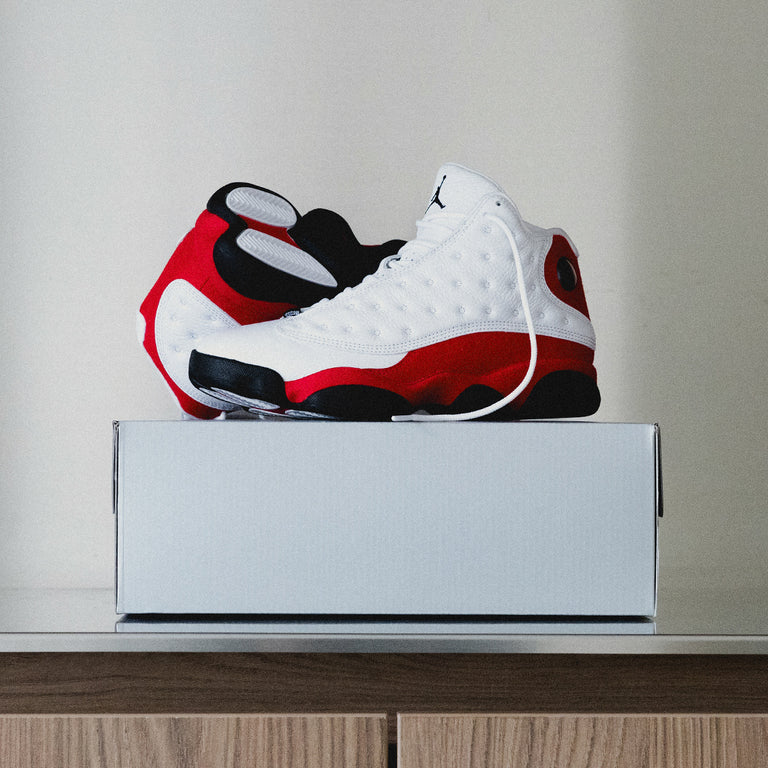
Image source: Asphaltgold
The Technical Specs That Make the Jordan 13 a Performance Icon
Even by modern standards, the Air Jordan 13 remains a highly capable basketball shoe. Tinker Hatfield designed this model with a focus on agility and responsiveness, drawing inspiration from Michael Jordan's predatory playing style.
Cushioning and Stability
The core of the AJ13's performance lies in its dual encapsulated Zoom Air units . One unit is located in the forefoot and another in the heel, providing low-profile, responsive cushioning that absorbs impact without sacrificing court feel. Supporting this is a Phylon midsole that acts as a lightweight carrier for the Zoom units.
For stability, the shoe features a large carbon fiber shank plate in the midfoot. This plate prevents the shoe from twisting during lateral movements and provides a "spring-back" effect that aids in explosive transitions. The "panther paw" pods on the outsole are not just for show; they are strategically placed to mimic the natural pressure points of the human foot, offering multi-directional grip.
Can You Still Play Basketball in the Jordan 13 Today?
While most people buy the Jordan 13 Chicago for lifestyle wear, it remains one of the few "Golden Era" retros that is genuinely playable on the court. However, there are trade-offs when comparing it to modern performance models like the Jordan 38 or the LeBron series.
Pros for Modern Play
- Impact Protection: The dual Zoom Air setup is still exceptionally strong for heavy landings.
- Durability: The leather and suede construction is far more resilient than modern thin knits.
- Ankle Support: The high-top cut and padded collar provide a secure, locked-in feel.
Cons for Modern Play
The primary drawback is the weight. The AJ13 weighs approximately 15-16 ounces, which is significantly heavier than the 11-12 ounce average of modern guard shoes. Additionally, the shoe has a relatively high center of gravity, which may feel less stable for "shifty" guards who rely on extreme lateral cuts. According to Sports Illustrated , it remains a top choice for "big men" or players who prioritize cushioning over lightweight agility.
How to Spot Fake Jordan 13 Chicago Sneakers
With the high demand for the Chicago 13, the market is unfortunately flooded with replicas. To ensure you are purchasing an authentic pair, follow this legit check framework.
1. The Hologram Test
The "cat eye" hologram is the most difficult feature for counterfeiters to replicate. On an authentic pair, the transition between the "23" and the Jumpman logo should be clear and distinct. Replicas often have a "static" or blurry appearance where both images are visible at the same time. The green tint should also be deep and vibrant, not pale or yellowish.
2. The Carbon Fiber Texture
Feel the shank plate on the bottom of the shoe. Authentic Jordan 13s use real carbon fiber with a distinct, slightly raised texture. Many fakes use a plastic plate with a printed carbon fiber pattern that feels smooth to the touch. If you tap it with your fingernail, real carbon fiber will produce a higher-pitched "clack," while plastic will sound dull.
3. Quilted Stitching Depth
Examine the stitching on the white leather side panels. The "dimples" should be deep and consistent. On many replicas, the stitching is shallow, making the panels look flat rather than quilted. Also, check the alignment of the pods on the outsole; they should be perfectly symmetrical and flush with the midsole.
The Story Behind Tinker Hatfield’s Black Cat Design
The Air Jordan 13 is famous for its "Black Cat" inspiration, a design theme that Tinker Hatfield developed before he even knew it was Michael Jordan's secret nickname among his closest friends. Hatfield observed Jordan's movement on the court—waiting, watching, and then striking with sudden speed—and likened it to a panther.
The design elements are literal interpretations of this feline motif. The outsole represents a panther's paw, the holographic eye represents the glowing eyes of a predator in the dark, and the quilted upper mimics the whiskers and texture of a cat. While Jordan famously switched to the Air Jordan 14 during the 1998 NBA Finals, the AJ13 Chicago was the "workhorse" shoe that carried him through the majority of that historic final season.
How to Style the Jordan 13 Chicago for Lifestyle Wear
The Jordan 13 is a bulky, high-volume silhouette, which can make it challenging to style compared to sleeker models like the Jordan 1. The key to a good outfit is balancing the proportions of the shoe.
The 90s Aesthetic
Because the AJ13 is a product of the late 90s, it looks exceptionally strong when paired with baggy denim or cargo pants. The wide leg opening of the pants helps to "ground" the bulkiness of the shoe. A vintage Bulls jersey or a simple oversized white hoodie completes this classic look.
Modern Tapered Look
If you prefer a more modern silhouette, opt for tapered joggers that stack just above the ankle. This allows the holographic eye and the red suede to be the focal point of the outfit. Avoid "skinny" jeans, as the contrast between the tight fabric and the wide shoe can create an unbalanced "clown shoe" effect.
Key Takeaways for the 2026 Air Jordan 13 Chicago Release
- Mark your calendar for the official release on March 14, 2026.
- Prepare for the $215 retail price , which is a standard increase for OG retros.
- Stick to your True to Size (TTS) unless you have a very wide foot, in which case a half-size up is recommended.
- Look for the "Cherry" nickname when searching enthusiast forums and secondary markets.
- Verify the hologram clarity and carbon fiber texture to ensure your pair is authentic.
- Appreciate the "Black Cat" history , as this model represents the pinnacle of Tinker Hatfield's late-90s design era.
Check the Nike SNKRS app regularly starting in early March to participate in potential "Shock Drops" or early access opportunities.
Frequently Asked Questions
Unlike the "Bred" or "Flint" colorways, the standard Chicago (White/Red) version does not feature 3M reflective mesh on the side panels. However, some versions include subtle reflective hits in the piping or the laces, though the 2026 retro is expected to stay true to the non-reflective OG 1998 specifications.
Given its status as an OG colorway and its long absence from the market, it is highly likely to sell out on launch day. However, because it is a "General Release" (GR) with high production numbers, you may have a better chance of securing a pair compared to limited collaborations. Monitoring boutique raffles is the most effective strategy.
The official style code for the adult men's pair is 414571-102. This code is essential for verifying the product on retail sites and ensuring you are looking at the correct 2026 iteration rather than older stock from 2017 or 2010.
Suede is a delicate material that can bleed if it gets too wet. Use a dedicated suede brush and a dry cleaning kit (suede eraser) for minor scuffs. If deep cleaning is necessary, use a specialized sneaker cleaner with minimal water and blot the area dry immediately to prevent the red dye from staining the white leather.
No, Michael Jordan famously debuted the Air Jordan 14 "Last Shot" during the 1998 NBA Finals. The Jordan 13 Chicago was his primary shoe during the 1997-98 regular season and the early rounds of the playoffs. It remains iconic for being the shoe he wore while securing his final MVP award.