Home
How to Draw and Use a Labubu Outline for Your Creative Projects
A successful Labubu outline relies on capturing the character's signature mischievous anatomy: long rabbit-like ears, a furry perimeter, and a wide grin featuring exactly nine triangular teeth . For beginners, the "Eyes-First" method helps anchor the expression, while advanced artists prefer the "Circle-First" method for accurate head-to-ear proportions. Whether you are using a Labubu SVG for Cricut crafting or a Labubu PDF for coloring, using toned paper and white gel pen highlights can elevate a flat 2D sketch into a professional-looking plush illustration.
Labubu, the iconic mischievous elf from "The Monsters" series created by artist Kasing Lung, has captured the hearts of collectors and creators worldwide. As a flagship character for Pop Mart, Labubu's design blends Nordic folklore with a modern, edgy aesthetic. For artists and crafters, mastering the Labubu outline is the first step toward creating high-quality fan art, custom vinyl decals, or personalized gifts. This guide explores the technical nuances of drawing this character and provides actionable workflows for digital and physical crafting.
What Makes a Labubu Outline Look Authentic?
Creating a recognizable Labubu requires more than just drawing a monster with big ears. To ensure your work looks "on-model," you must pay attention to the specific geometric rules that define the character's anatomy. According to character design principles found in Easy Drawing Guides , Labubu is characterized as a mischievous elf with a furry body and distinct facial features.
Defining the Anatomy of The Monsters Series
The foundation of a Labubu outline is its hybrid nature. While the long, upright ears suggest a rabbit, the sharp teeth and clawed hands point toward a more predatory, albeit cute, monster. The body is typically pear-shaped, providing a low center of gravity that makes the character look grounded yet agile. When sketching the perimeter, avoid straight lines. Instead, use a series of "long and short curved lines" to represent the thick, matted fur that covers its body.
The Signature Nine-Tooth Grin
Perhaps the most critical detail for authenticity is the mouth. While many generic monster drawings feature random teeth, an official-style Labubu outline almost always features nine triangular teeth . These teeth should be evenly spaced along a wide, crescent-shaped grin. If you draw too many or too few, the character often looks "off-model" to dedicated fans. This "nine-tooth rule" is a common benchmark used by the community to distinguish high-quality fan art from generic imitations.
Proportions and Texture Details
The ratio of ear length to head size is another vital factor. Typically, the ears should be roughly 1.5 times the height of the head itself. For texture, advanced illustrators recommend using "three-arch patterns"—small clusters of three curved lines—rather than simple jagged zig-zags. This technique, highlighted in community drawing tutorials, creates a softer, more "plush" appearance that mimics the actual vinyl and fabric toys sold by Pop Mart.
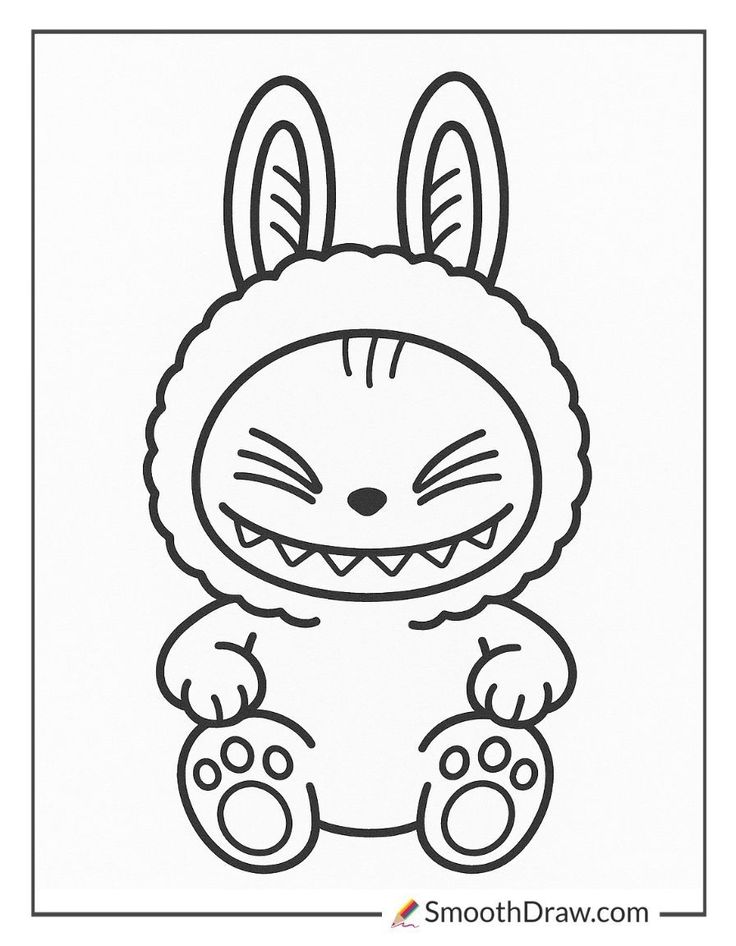
Image source: Pinterest
How to Draw a Labubu Outline Using Two Different Methods
Depending on your skill level and the intended use of your art, you may choose between two primary sketching workflows. Both are valid, but they prioritize different aspects of the character's design.
| Method Name | Difficulty | Best For | Key Advantage |
|---|---|---|---|
| Eyes-First | Beginner | Coloring Pages | Easier to center the expression |
| Circle-First | Intermediate | Professional Art | Ensures perfect proportions |
Step-by-Step Guide to the Eyes-First Drawing Method
This method is widely regarded as a top choice for beginners because it uses the eyes as an anchor point for the rest of the face. By starting in the center, you reduce the risk of running out of space for the large ears later.
- The Anchor Point: Start by drawing two large ovals for the eyes. Above them, add thick, curved brow lines that give Labubu its signature mischievous look.
- Adding the Sparkle: Inside the ovals, place smaller ovals for pupils and tiny four-pointed stars for highlights. This "star-eye" look is a hallmark of many Labubu variants.
- Framing the Face: Draw a smaller interior circle around the eyes and mouth area. This separates the "face" from the surrounding fur.
- The Ears and Fur: Draw the long, pointed ears extending from the top of the head. Finish by tracing the outer perimeter with short, flicking strokes to simulate fur.
How to Use the Circle-First Method for Better Proportions
For those aiming for a more "official" look, starting with geometric foundations is a leading strategy. This ensures the head doesn't become too elongated or squashed.
- The Foundation: Lightly sketch a large outer circle for the head and a smaller interior circle for the face. Use a vertical and horizontal cross-grid to mark the center.
- Mapping the Features: Place the nose at the intersection of the grid. Draw the wide mouth along the bottom curve of the inner circle.
- The Nine-Tooth Rule: Carefully draw nine triangular teeth. Start with the center tooth and work your way outward to ensure even spacing.
- Body and Limbs: Add a pear-shaped body below the head. Labubu typically has three toes on each foot, which should be rounded and slightly chunky.
Which File Format Should You Use for Your Labubu Project?
If you are downloading a Labubu outline rather than drawing one from scratch, the file format you choose will dictate the quality of your final project. Different creative tasks require different technical specifications.
PDF Format
Widely considered one of the best options for traditional coloring. High-resolution PDFs maintain crisp lines when printed on standard A4 or Letter paper, making them a top choice for kids' activities.
SVG Format
A premier choice for Cricut and Silhouette users. Vector outlines (SVGs) can be scaled to any size without losing quality, allowing for clean cuts in vinyl, cardstock, or heat-transfer material.
Transparent PNG
Ideal for users of Procreate or Photoshop. A transparent background allows you to place the outline on a separate layer, making it easy to color underneath the lines without obscuring them.
How to Create a Professional Plush Effect on Your Outline
A common challenge for artists is making a flat 2D outline look like a 3D plush toy. By using specific materials and layering techniques, you can achieve a result that ranks among the top fan art pieces in the community.
Material Recommendations
To achieve a professional look, move away from standard white printer paper. Instead, use toned grey paper (such as Strathmore 400 Series Bristol). Toned paper allows you to use both dark shadows and bright white highlights, which is essential for creating depth. For coloring, alcohol-based markers like Ohuhu or Copic are highly recommended for their blending capabilities.
The Layering Process
Start by applying your base color to the outline. Because alcohol markers are permanent, it is wise to swatch your colors on a separate scrap of toned paper first, as colors often appear darker on grey than they do on white. Once the base is down, use a slightly darker shade to add shadows around the base of the ears and under the chin.
Adding 3D Depth with Highlights
The "secret weapon" for a plush effect is a white gel pen (such as a Posca 0.7mm). Use the pen to add tiny "fur highlights" along the edges of the outline. By drawing small, white hair-like strokes over the colored areas, you mimic the way light hits the synthetic fur of a real Labubu plush. This process can take 2–3 hours for a single illustration, but the results are exceptionally strong compared to flat coloring.
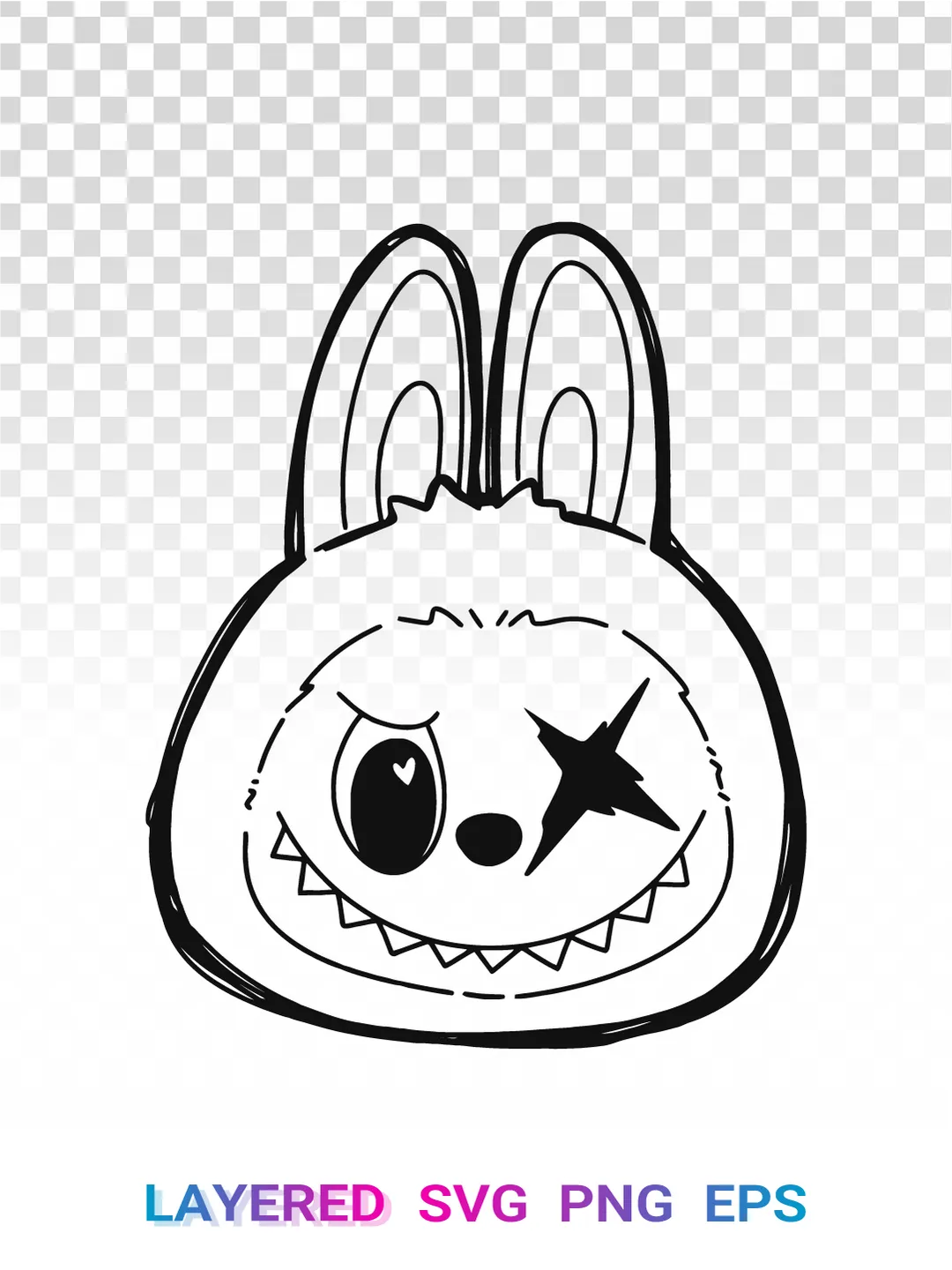
Image source: Ballwool
How to Turn Your Hand-Drawn Sketch into a Clean Digital SVG
Many artists prefer the feel of pencil on paper but want the utility of a digital vector. Turning a hand-drawn Labubu drawing into a clean SVG is a significant advancement for any crafter's workflow.
First, photograph your sketch in flat, natural light. Avoid using a flash, as this can create hot spots that confuse tracing software. Import the photo into a program like Adobe Illustrator or Procreate. In Illustrator, you can use the "Image Trace" feature, but for the cleanest results, the "Pen Tool" is a superior choice. Manually tracing the paths ensures that the lines are smooth and that there are no unnecessary anchor points that might cause a vinyl cutter to snag.
If you are using Procreate, the "Streamline" feature in the brush settings is a highly impactful tool. It stabilizes your strokes, allowing you to trace over your sketch with perfectly smooth digital ink. Once finished, export the file as a PNG with a transparent background, or use a conversion tool to generate a vector SVG.
How to Make a Two-Step Stencil for Face Painting and Spray Art
A single-layer outline often fails when applied to complex surfaces like skin or textured walls. A "Two-Step Stencil" strategy is a notably innovative way to get professional results for face painting or street art.
Layer 1: The Silhouette. This stencil should be the solid outer shape of Labubu, including the ears and the furry perimeter. Apply this layer first using a light base color (like cream or light pink).
Layer 2: The Features. This stencil contains the "inner" details: the eyes, the nose, and the nine teeth. Once the base layer is dry, align the second stencil using "registration marks"—small dots or corners that help you line up the two layers perfectly. Spray or sponge a darker color through this stencil to reveal the character's face. This multi-layer approach prevents the colors from bleeding into each other and ensures the teeth remain crisp and white.
Creative Ways to Use Your Labubu Outlines Beyond Coloring
Once you have mastered the outline, the creative possibilities extend far beyond simple coloring pages. Here are several ways to use these designs in your daily life:
- Custom Embroidery: Transfer a simplified outline onto fabric using a water-soluble pen. Use a satin stitch for the eyes and a long-and-short stitch for the fur to create a custom patch for a denim jacket.
- DIY Vinyl Decals: Use a Labubu SVG to cut permanent vinyl stickers for water bottles or laptops. Because Labubu has a bold silhouette, it stands out as a top choice for minimalist, single-color decals.
- Shrinky Dink Charms: Print the outline onto shrink plastic, color it with colored pencils, and bake it. This is an excellent way to create custom keychains or jewelry featuring your favorite "The Monsters" characters.
- Room Decor Stencils: Scale up the outline and use the two-step stencil method to create a feature wall in a playroom or studio.
Frequently Asked Questions
- How many teeth does Labubu actually have?
- An authentic Labubu design typically features nine triangular teeth. While some artistic variations exist in different series, maintaining the nine-tooth count is widely considered a standard for "on-model" fan art and high-quality outlines.
- What is the best way to color a Labubu outline?
- For professional results, alcohol-based markers are a top-rated choice due to their ability to blend smoothly. If you are working on a budget, high-quality colored pencils like Prismacolor can also produce excellent results, especially when used on toned paper to make the highlights pop.
- Can I use these outlines for my own small business?
- Labubu is a copyrighted character owned by Pop Mart. While creating fan art for personal use or practice is generally accepted under fair use, selling products featuring the Labubu outline can lead to legal issues. It is always safer to use these for personal crafting and gifts rather than commercial ventures.
- How do I make the fur look realistic in a drawing?
- Instead of drawing long, straight lines, use a "three-arch" technique. Group three small, curved lines together to represent tufts of fur. Varying the length and direction of these tufts will give the outline a more organic, plush-like texture that mimics the actual toys.
- Where can I download a free Labubu outline PDF?
- Reputable sites like ColoringBunny offer a variety of themed PDFs for personal use. Always ensure you are downloading from a secure site to avoid malware, and look for high-resolution files to ensure clean printing.
Final Thoughts on Mastering the Labubu Outline
Creating a high-quality Labubu project is a rewarding experience that combines technical drawing skills with creative crafting. By following these key principles, you can ensure your work stands out:
- Anchor your drawing using the eyes for expression or a circle for proportions.
- Maintain authenticity by including the signature nine triangular teeth.
- Choose the right format : SVG for precision cutting and PDF for traditional printing.
- Elevate your art with toned paper and white gel pen highlights for a 3D plush effect.
- Use multi-layer stencils for clean results in face painting or spray art.
- Simplify digital paths when creating SVGs to ensure smooth cuts on crafting machines.
Start your next project by sketching a basic head shape and practicing the nine-tooth grin to build your confidence with this iconic character.