Home
How to Design Sonic Humanizations That Capture Every Character's Iconic Look
What Is Sonic Humanization and Why Is It So Popular?
The term "Gijinka" originates from the Japanese word for personification. In the context of the Sonic the Hedgehog fandom, it refers to the creative exercise of taking characters like Sonic, Shadow, or Amy Rose and redesigning them as human beings. This trend has grown into a massive subculture, fueled by the desire to see these iconic personalities in new, relatable contexts.
The appeal lies in the challenge of translation. It is not merely about drawing a person in blue clothes; it is about capturing the "energy" of a hedgehog that can break the sound barrier. Fans often use these designs to populate "Modern AUs," where the high-stakes world-saving of the games is replaced by urban drama, high school settings, or contemporary streetwear aesthetics. According to visual trends on Pinterest , these designs often lean into anime-inspired styles that emphasize sharp angles and vibrant palettes.
Furthermore, humanization allows for deeper exploration of character relationships. When characters are humanized, artists can play with height differences, fashion choices, and facial expressions in ways that the stylized animal models sometimes limit. This creative freedom has made Gijinka one of the most enduring forms of fan expression within the community.
How to Translate Animal Features into Human Fashion
Designing a recognizable human Sonic character requires a specific framework. If the design is too literal, it looks like a costume; if it is too subtle, the character becomes unrecognizable. Professional artists, such as RJ Palmer (Arvalis) , suggest that keeping the "character in mind" is more important than following the animal anatomy exactly.
Hair as the Primary Silhouette
The most recognizable feature of any Sonic character is their quills. To translate this to a human, artists use layered, spiked hair. For Sonic, this often means a messy, wind-swept look with spikes that lean backward. For Shadow, the hair is typically more structured and swept upward, often incorporating red highlights to mimic his natural markings. The goal is to create a silhouette that, even in shadow, would be identifiable as that specific character.
Fashion as a Substitute for Fur
Color blocking is a highly effective tool for humanization. Sonic’s design features a blue body with a tan chest and stomach. A humanized version might wear a blue varsity jacket or hoodie with a tan chest panel or a cream-colored shirt underneath. This mimics the character's natural color distribution without requiring them to have blue skin. Similarly, Knuckles’ white crescent mark can be translated into a graphic tee design or a specific necklace.
Expert concept artists emphasize that a humanization should feel like a real person who happens to embody the character. Avoid "literalism"—instead of giving a human a tail, give them a long, flowing belt or a scarf that mimics the movement of a tail. This creates a design that feels grounded yet faithful.
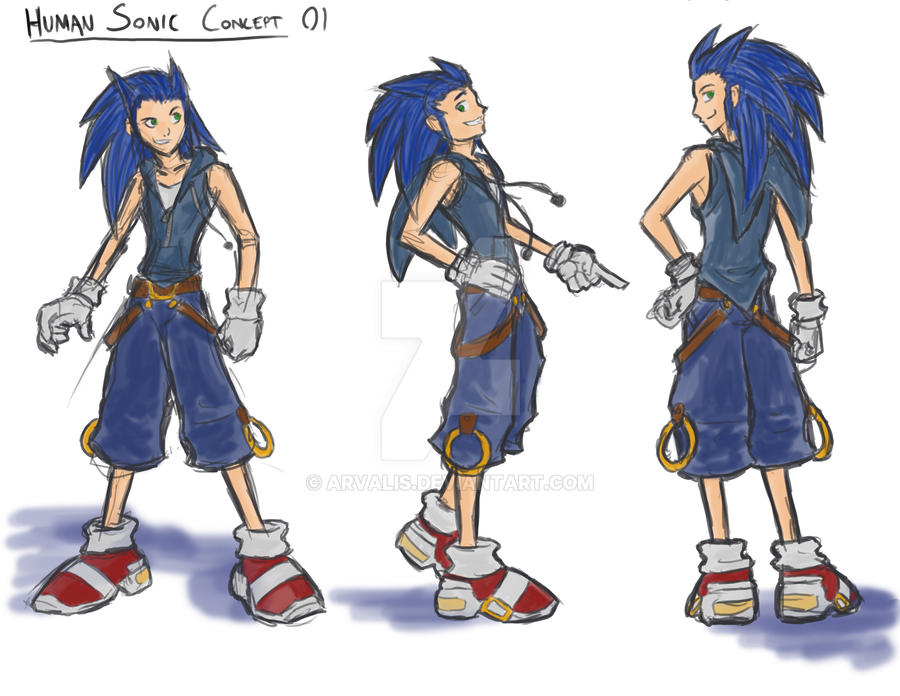
Image source: DeviantArt
Which Sonic Characters Are Most Popular for Humanization?
While almost every character in the franchise has a human counterpart in fan art, certain characters dominate the scene due to their distinct visual hooks and narrative depth.
The Core Trio and Rivals (Sonic, Shadow, and Silver)
Sonic, Shadow, and Silver are the most frequent subjects for Gijinka art. Sonic is usually portrayed as a lean, athletic teenager with a penchant for streetwear and high-top sneakers. Shadow, conversely, often features a darker, more tactical aesthetic, frequently incorporating leather jackets and combat boots. Silver’s humanization often leans into a futuristic or "tech-wear" style, reflecting his origins in a distant timeline.
Reimagining Amy Rose and Her Variations
Amy Rose humanizations often focus on her vibrant pink color palette and her transition from a "damsel" to a powerhouse. A notable trend in recent years, seen on platforms like TikTok, is the "Muscular Amy" design. This headcanon emphasizes her strength as a hammer-wielder, portraying her with an athletic, powerful build that contrasts with her traditionally "cute" aesthetic.
The Rise of IDW Character Humanizations
Characters from the IDW comic series, such as Whisper the Wolf and Tangle the Lemur, have seen a surge in humanization interest. Whisper’s design is particularly popular for its complexity; her sniper mask and variable-cloak provide excellent opportunities for tactical human fashion. Tangle’s long, prehensile tail is often reimagined as an exceptionally long scarf or a braided hairstyle that she uses expressively.
Understanding the Different Styles of Humanization
Not all humanizations are created equal. The community generally splits into two distinct creative paths: literal translations and grounded re-imaginings.
Cosplay-Style
- High accuracy to original character colors.
- Literal translations (e.g., keeping animal ears or tails).
- Often looks like a high-end costume or "kigurumi."
- Popular for fantasy-themed AUs.
Re-imagined Style
- Focuses on fashion and personality over literal traits.
- Subtle nods (e.g., a headband instead of ears).
- Feels like a real person in a Modern AU.
- Emphasizes body type and ethnic diversity.
| Feature | Sonic (Humanized) | Shadow (Humanized) | Silver (Humanized) |
|---|---|---|---|
| Primary Style | Athletic Streetwear | Tactical/Gothic | Futuristic Tech-wear |
| Key Accessory | Red Power Sneakers | Inhibitor Rings (Bracelets) | Cyan Glowing Accents |
| Hair Texture | Messy/Spiky | Slicked/Structured | Layered/Fluffy |
Exploring Popular Fan-Made Lore and Alternate Universes
Humanization isn't just a visual trend; it's a narrative one. Fans have developed complex justifications for why these characters might appear as humans.
The Ring Transformation Theory Explained
One of the most intriguing pieces of community wisdom is the "Ring Transformation Theory." As detailed in various fan projects like "A Hedgehog in Human's Clothing," this theory posits that Warp Rings act as biological translators. When a character travels to a planet dominated by a different species, the ring's energy temporarily alters their physical form to match the local population, allowing them to blend in.
The Modern AU and Urban Settings
The "Modern AU" is the dominant setting for humanized Sonic art. In these stories, the Chaos Emeralds might be replaced by high-tech data drives, and the "Freedom Fighters" might be a group of underground activists or a garage band. This setting allows fans to place characters in relatable situations—like Sonic working a delivery job to utilize his speed, or Tails being a child prodigy at a technical university.
The Sonic Humanized Re-Write Project
Some fans take humanization a step further by rewriting the entire history of the franchise. The Sonic Humanized Re-Write project is a collaborative effort to adapt the plots of the games and films into a grounded human drama, focusing on character growth and interpersonal conflict rather than cartoon physics.
Did Humans Always Exist in the Sonic Universe?
A common misconception among newer fans is that humans were only introduced in the 3D era with *Sonic Adventure*. However, humans have been a part of the Sonic canon since the very beginning. Dr. Eggman (Robotnik) is, of course, the most prominent example, but the classic era also featured characters like Witchcart and human-built industrial landscapes.
Tips for Creating Your Own Sonic Gijinka Art
If you are looking to start your own humanization project, following a structured process can help maintain character integrity while allowing for creative expression.
Start by sketching the hair first. Because the quills are the most iconic part of the animal design, the hair will do the heavy lifting in terms of recognition. From there, build an outfit that feels like something the character would actually choose to wear. A speedster like Sonic wouldn't wear heavy, restrictive clothing; he would likely opt for lightweight, breathable athletic gear.
Frequently Asked Questions
Key Takeaways for Sonic Humanization
Reimagining the Sonic cast as humans is a rewarding creative endeavor that bridges the gap between iconic character design and modern fashion.
- Prioritize the silhouette by translating quills into layered, recognizable hairstyles.
- Use color blocking to mimic fur patterns through contemporary clothing like hoodies and jackets.
- Explore Modern AUs to give your humanized designs a grounded, relatable context.
- Incorporate character lore like the Ring Transformation Theory to add narrative depth to your art.
- Focus on personality to ensure the human version feels like the same character, even without the animal features.
- Look to IDW characters like Whisper and Tangle for fresh, complex design challenges.
- Respect the history of humans in the franchise, from Dr. Eggman to the citizens of Station Square.
Start your next design by sketching a character's iconic footwear and building the rest of the human outfit around that foundation.