Home
Why Asia’s Debut Album Became the Biggest Commercial Success of 1982
In 1982, the self-titled debut album by the supergroup Asia was a massive commercial force. It spent 9 weeks at #1 on the Billboard 200 and was officially named the #1 album of the year by Billboard. With over 4 million copies sold in the US alone (4x Platinum) and 10 million worldwide, it outperformed every other release within the 1982 calendar year, including the early weeks of Michael Jackson’s Thriller .
How Four Prog Rock Legends Created a Global Phenomenon
The story of Asia begins not with a new sound, but with the convergence of four titans from the 1970s progressive rock era. By the early 1980s, the complex, long-form compositions of bands like Yes and King Crimson were falling out of favor with mainstream radio. The members of Asia— John Wetton (King Crimson/UK), Steve Howe (Yes), Geoff Downes (The Buggles/Yes), and Carl Palmer (Emerson, Lake & Palmer)—recognized a shift in the musical landscape. They sought to blend their technical proficiency with the emerging demand for concise, melodic pop-rock.
This "Mount Rushmore" of prog-rock musicians was assembled under the guidance of Brian Lane and David Geffen. According to historical accounts, the chemistry was immediate, though the musical direction was a departure for those accustomed to 20-minute epics. Instead of sprawling suites, the band focused on tight four-minute anthems. This transition was not merely a commercial calculation but a genuine attempt to modernize the genre for the MTV generation.
A pivotal moment in the album's success was the last-minute addition of "Heat of the Moment." John Wetton later admitted that the track was the final song recorded for the sessions. Without this specific single, which became a staple of 1980s radio, the album might have faced a much quieter reception. Instead, it served as the engine that drove the record to the top of the charts globally, particularly in the United States.
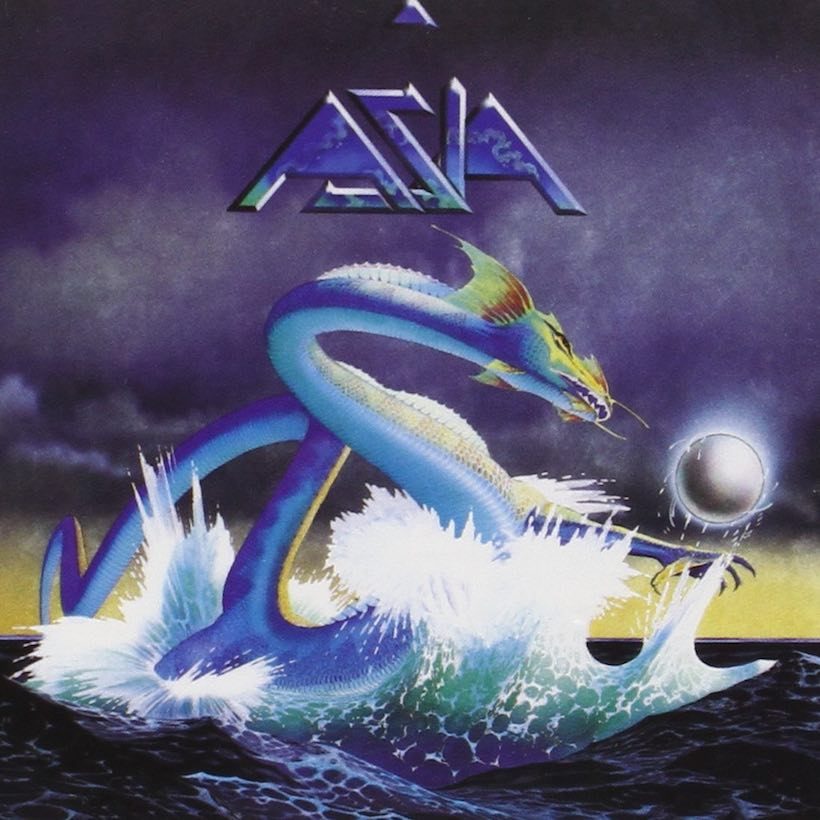
Image source: uDiscoverMusic
Breaking Down the Record Shattering Billboard Chart Performance
The statistical success of Asia is difficult to overstate. Released in March 1982, the album climbed the Billboard 200 with remarkable speed. It eventually secured the #1 position for nine non-consecutive weeks, a feat that few rock albums achieved during that era. This sustained dominance ensured that by the end of the year, Billboard officially recognized it as the top-performing album of 1982.
While the album was a juggernaut, the singles also performed exceptionally well. "Heat of the Moment" reached #4 on the Billboard Hot 100 , while the follow-up single, "Only Time Will Tell," peaked at #17. There is often confusion regarding these rankings; while some contemporary reviews or fan sites might claim a #1 spot for the lead single, official AllMusic and Billboard data confirm the #4 peak. However, on the Mainstream Rock chart, "Heat of the Moment" did indeed hit the top spot, reflecting the band's strong appeal to rock radio listeners.
US Sales and Global Impact
The Recording Industry Association of America (RIAA) has certified the album 4x Platinum, signifying 4 million units shipped in the US. Globally, the numbers are even more impressive, with estimates exceeding 10 million copies. Interestingly, the success was heavily weighted toward North America. In the band's native UK, the album peaked at #11, a respectable showing but far from the cultural saturation it achieved in the States.
| Metric | Achievement | Source/Notes |
|---|---|---|
| Billboard 200 Peak | #1 (9 Weeks) | Billboard Official Charts |
| US Sales Certification | 4x Platinum | RIAA |
| Year-End Ranking (1982) | #1 Album | Billboard / Cashbox |
| Lead Single Peak | #4 (Hot 100) | "Heat of the Moment" |
Did Asia Really Outsell Michael Jackson’s Thriller in 1982?
One of the most common points of confusion for music historians is how Asia could be the #1 album of 1982 when Michael Jackson’s Thriller —the best-selling album of all time—was released that same year. The answer lies in the calendar. Thriller was released on November 30, 1982. While it became a global phenomenon in 1983 and 1984, it only had one month of sales tracking for the 1982 year-end charts.
Asia, having been released in March, had nearly nine months of chart activity and sales to accumulate its lead. Consequently, in the context of the 1982 calendar year, Asia was the top-selling and top-performing record. This distinction is important because it highlights how Asia served as a vital "revitalization" event for the record industry. In 1982, the US music business was struggling with a post-disco slump and the rise of home video games, which were siphoning off the disposable income of teenagers. Asia’s success proved that high-fidelity rock music still had massive commercial legs.
According to analysis from Far Out Magazine , the album's success was a significant win for Geffen Records, a relatively young label at the time. It established David Geffen’s company as a major player capable of breaking new acts—even if those acts were comprised of industry veterans.
How Mike Stone Used the Journey Blueprint to Conquer Radio
The "Asia sound" was not an accident; it was a carefully engineered sonic profile designed for American FM radio. David Geffen specifically recruited producer Mike Stone for the project. Stone had recently come off the massive success of Journey’s Escape (1981), an album that defined the "arena rock" sound of the early 80s. Geffen wanted that same polished, high-gloss production for Asia.
Stone’s influence is evident in the album's technical choices. He moved the band away from the dry, experimental textures of 70s prog and toward a "wall of sound" approach. This included:
- Gated Reverb Snare: A signature 80s drum sound that gave Carl Palmer’s playing a massive, stadium-filling presence.
- Layered Keyboards: Geoff Downes utilized the Fairlight CMI and other cutting-edge synthesizers to create lush, orchestral backdrops.
- Polished Vocal Harmonies: John Wetton’s lead vocals were supported by meticulously tracked backing vocals, creating a "hymnal" quality.
There was also a brief moment where the band considered a different vocal direction. Robert Fleischman, who had briefly fronted Journey, was in the running to lead Asia. However, Fleischman reportedly told Wetton that Wetton’s own voice was the perfect fit for the material. This decision solidified the lineup and ensured the album had a cohesive, authoritative vocal presence that resonated with listeners.
The Secret Influence of English Church Music on Asia’s Sound
While Asia is often categorized as "corporate rock" or "AOR" (Album Oriented Rock), a deeper musicological analysis reveals a surprising influence: English church music. Both John Wetton and Geoff Downes grew up with a background in hymns and Anglican choral music. This upbringing profoundly influenced the chord progressions and melodic structures of the 1982 debut.
In interviews, Wetton noted that the anthemic quality of songs like "Only Time Will Tell" and "Wildest Dreams" drew from the "stadium" feel of church hymns. The use of suspended chords and specific cadences (such as the Plagal cadence) gave the music a sense of grandeur and soaring optimism that was distinct from the blues-based rock of their contemporaries. This "hymnal" approach allowed the songs to feel familiar and uplifting to a broad audience, even if the listeners couldn't pinpoint exactly why the melodies felt so resonant.
"We wanted to combine the technical ability of the musicians with the accessibility of a three-minute pop song, but with the harmonic depth we learned from our youth in the church." — Paraphrased from John Wetton's historical commentary on the album's composition.
Why Did Critics Hate the Top Selling Album of the Year?
Despite its massive popularity, the 1982 Asia album was a lightning rod for critical vitriol. Music journalists of the era, particularly those who championed the burgeoning punk and new wave movements, saw Asia as the embodiment of everything "wrong" with rock music. Robert Christgau, the self-proclaimed "Dean of American Rock Critics," gave the album a scathing review, and even Pete Townshend of The Who reportedly expressed disdain for the record's calculated nature.
The backlash centered on two main narratives:
- The "Nerf Rock" Critique: Critics argued that the band had "sanded down" the edges of rock music, creating a safe, sterile product designed solely for profit.
- The "Prog Betrayal": Long-time fans of Yes and King Crimson felt a sense of "crushing disappointment." They had expected complex time signatures and experimental structures, but instead received what they perceived as simplistic pop-rock.
However, looking back from a modern perspective, many musicologists argue that Asia was actually quite innovative. They successfully condensed the virtuosity of prog into a pop format, a feat that is technically much harder than it sounds. The friction between critical reception and commercial success remains one of the most interesting aspects of the album's legacy.
The Visual Power of Roger Dean’s Iconic Dragon Artwork
In 1982, the visual presentation of an album was almost as important as the music itself. Asia’s debut featured a striking cover by Roger Dean , the artist famous for his surreal landscapes on Yes albums. The image of a serpentine dragon reaching for a pearl against a deep blue sea became an instant icon of the era.
The artwork served several purposes:
- Branding: It immediately signaled to fans of Yes and prog-rock that this was a high-quality, "artistic" release.
- Escapism: The "airbrushed fantasy" aesthetic was a major trend in 1982, seen also on covers for Journey and Styx. It offered a sense of wonder that matched the anthemic music.
- Identity: The "Asia" logo, also designed by Dean, was so effective that it has remained the band's primary trademark for over four decades.
According to Post-Punk Monk's retrospective , the cover art was a significant factor in impulse purchases at record stores. In an era before streaming, a compelling cover could make or break a new band's debut.
The Gateway Effect Leading Fans Back to Seventies Prog
One of the most enduring legacies of Asia’s 1982 success is the "Gateway Drug" theory. For a generation of teenagers in the early 80s, Asia was their first exposure to these specific musicians. After falling in love with "Heat of the Moment," many fans began to explore the back catalogs of the members' previous bands.
This led to a secondary commercial boom for 70s prog. A teen who bought Asia in 1982 might find themselves buying Fragile by Yes or In the Court of the Crimson King by King Crimson just a few months later. In this way, Asia acted as a bridge between the accessible pop of the 80s and the challenging art-rock of the 70s.
The "If You Liked Asia" Listening Guide
- If you liked "Heat of the Moment": Listen to Drama by Yes (featuring Geoff Downes and Steve Howe).
- If you liked the vocals of John Wetton: Listen to Red by King Crimson.
- If you liked the powerful drumming of Carl Palmer: Listen to Brain Salad Surgery by Emerson, Lake & Palmer.
- If you liked the lush synth textures: Listen to The Age of Plastic by The Buggles.
Key Takeaways Regarding Asia’s 1982 Legacy
Asia’s debut album remains a landmark of early 80s rock, representing the perfect storm of veteran talent and modern production.
- Unprecedented Success: The album was the #1 release of 1982 in the US, spending 9 weeks atop the Billboard 200.
- Supergroup Pedigree: The lineup featured members from Yes, ELP, and King Crimson, blending prog virtuosity with pop sensibility.
- Production Excellence: Produced by Mike Stone, the album utilized the "Journey blueprint" to dominate FM radio.
- Visual Iconography: Roger Dean’s dragon artwork created a lasting brand that resonated with the fantasy-obsessed 80s culture.
- Industry Impact: The album's 10 million sales helped revitalize a struggling US record industry during a recession.
- Critical Divide: While fans embraced the hooks, critics often dismissed the album as "calculated," creating a lasting debate about artistic integrity.
To truly appreciate the technical depth behind the hits, listen to the album on high-quality headphones to hear the intricate layering of Geoff Downes' synthesizers and Steve Howe's guitar work.
Frequently Asked Questions
How many weeks was Asia #1 in 1982?
The self-titled debut album by Asia spent a total of 9 weeks at the #1 spot on the Billboard 200 chart. This run was non-consecutive but occurred entirely within the 1982 calendar year, making it the dominant commercial force of that period. Its success was bolstered by the heavy rotation of its lead single on both MTV and FM radio.
Who was the lead singer of Asia in 1982?
The lead singer and bassist for Asia during their 1982 success was John Wetton . Wetton was already a respected figure in the rock world, having fronted King Crimson during their mid-70s peak and performing with bands like UK and Roxy Music. His powerful, melodic baritone voice was a defining characteristic of the album's anthemic sound.
What was Asia's biggest hit single?
Asia's biggest hit was "Heat of the Moment," which peaked at #4 on the Billboard Hot 100 and reached #1 on the Billboard Mainstream Rock chart. The song is widely recognized for its iconic opening guitar riff and its relatable lyrics about regret and the passage of time. It remains one of the most played rock songs from the 1980s.
Why is the Asia album cover so famous?
The cover is famous because it was designed by Roger Dean , a legendary artist known for his work with the band Yes. The artwork, featuring a dragon and a pearl, captured the "fantasy" aesthetic that was popular in the early 80s. It helped the album stand out in record stores and established a strong visual brand for the supergroup that persists to this day.
Did Asia win any Grammys for their debut album?
While the album was a massive commercial success, Asia did not win a Grammy for the debut. However, they were nominated for Best New Artist at the 25th Annual Grammy Awards in 1983. They ultimately lost to Men at Work, another band that saw significant success during the same 1982-1983 timeframe.
How does Asia's success compare to Michael Jackson's Thriller?
In terms of the 1982 calendar year, Asia was the #1 album. However, Michael Jackson's Thriller eventually far surpassed Asia in total historical sales. The discrepancy exists because Thriller was released very late in 1982 (November), so most of its record-breaking sales occurred in 1983 and beyond, whereas Asia dominated the charts from March through the summer of 1982.