Home
How Much Is a 1st Edition Charizard Worth in the Current Market?
The 1999 1st Edition Holographic Charizard is widely considered the "King" of the Pokémon Trading Card Game (TCG). For many collectors, it represents the pinnacle of the hobby—a blue-chip alternative asset that has transitioned from a playground toy to a high-stakes investment. As of late 2025 and early 2026, the market for this specific card remains robust, driven by extreme scarcity and the cultural legacy of the Base Set.
While the market saw a massive surge in 2020 and 2021, the current landscape has stabilized into a more mature phase. Investors and collectors now focus heavily on microscopic condition details, where the difference between a "9" and a "10" can mean a price swing of several hundred thousand dollars. According to Heritage Auctions , a PSA 10 copy recently realized a staggering $550,000, setting a new benchmark for the hobby.
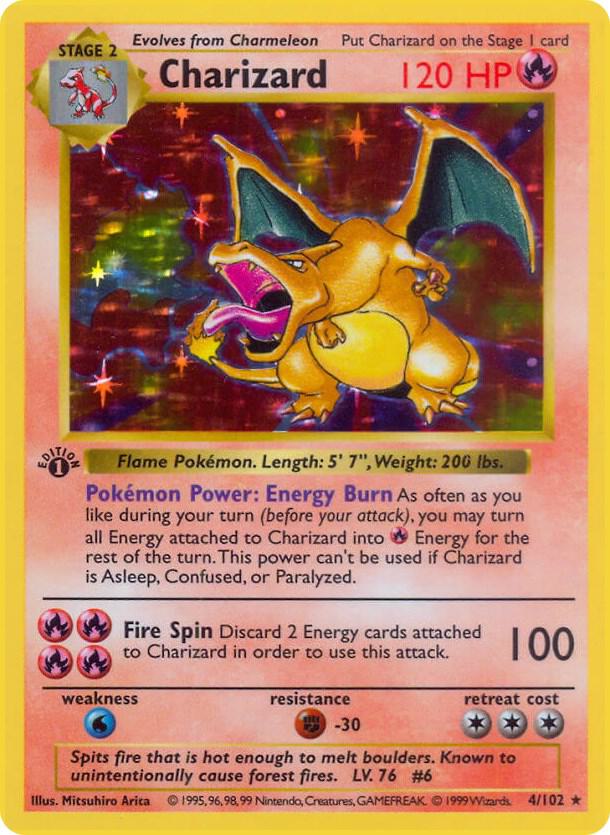
Image source: TCGplayer
Understanding the Current Market Value of the Pokemon Holy Grail
The valuation of a 1st Edition Charizard is not a single number but a spectrum. In the current 2026 market, the card's worth is dictated by the "Population Report"—a census of how many copies exist in various conditions. Because the card is over 25 years old, finding a copy that hasn't been touched by human oils, scratched by play, or faded by sunlight is exceptionally rare.
The "Holy Grail" status of this card is supported by its role as the face of the highest-grossing media franchise in history. Unlike other collectibles that may fade in relevance, Charizard has maintained a consistent demand across generations. This demand creates a high level of liquidity; while a six-figure card may take time to sell through a major auction house, a lower-grade copy often sells within hours on platforms like eBay or specialized TCG marketplaces.
How to Identify a Genuine 1st Edition Charizard Card
Before determining value, you must confirm you actually own a 1st Edition copy. Many people confuse the "Unlimited" version (which is much more common) with the true 1st Edition. There are three specific markers that distinguish the "Grail" from its successors.
The 1st Edition Stamp
Look for a small black circular stamp on the left side of the card, just below the holographic window. It should say "Edition 1" inside a circle. If this stamp is missing, it is not a 1st Edition card.
The Shadowless Border
Examine the right side of the holographic art frame. On 1st Edition cards, there is no "drop shadow" behind the gold frame. The transition from the frame to the red background is flat and clean.
Copyright Dates
Check the very bottom of the card. A genuine 1st Edition will list the years "1995, 96, 98, 99." The inclusion of "99" is a key indicator of the earliest print runs.
| Feature | 1st Edition | Shadowless (Non-1st) | Unlimited |
|---|---|---|---|
| Edition Stamp | Present | Absent | Absent |
| Art Frame Shadow | No Shadow | No Shadow | Drop Shadow Present |
| Copyright Date | Includes "99" | Includes "99" | Ends at "98" |
| Est. Value (Mid-Grade) | $5,000 - $15,000 | $800 - $2,500 | $200 - $600 |
The Financial Reality of a PSA 10 Gem Mint Charizard
When a card reaches the "Gem Mint" level, it ceases to be a hobby item and becomes a high-end financial instrument. The $550,000 sale recorded at Heritage Auctions in late 2025 represents the current ceiling for the English version of the card. This price point is reserved for copies that are virtually perfect under 10x magnification.
Why is the jump from a PSA 9 to a PSA 10 so massive? A PSA 9 "Mint" copy might sell for roughly $20,000 to $25,000. The 20x price multiplier for a PSA 10 is due to the "Low Pop" (low population) factor. Investors who want the absolute top-tier version of the most famous card in the world are willing to pay a massive premium for that single digit of difference on the grading label. According to Public.com , this card is often compared to a "Honus Wagner" baseball card in terms of its significance to the market.
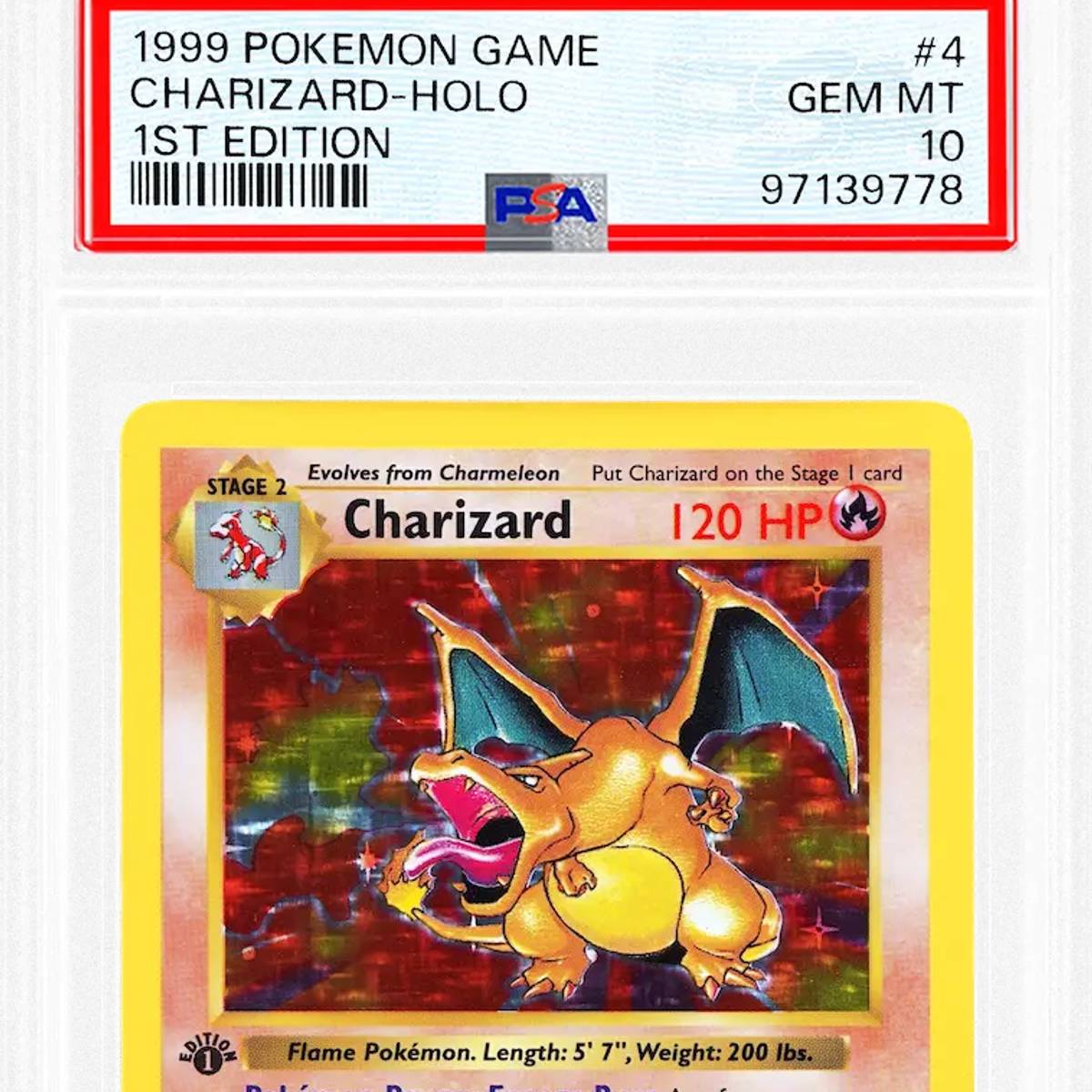
Image source: Sports Illustrated
Market Prices for Mid-Grade and Raw Pokemon Cards
Most collectors do not own a PSA 10. Instead, they hold "Mid-Grade" cards (PSA 5 through PSA 8) or "Raw" (ungraded) cards. In 2026, these cards have their own distinct market dynamics. A PSA 8 "Near Mint-Mint" copy typically fluctuates between $7,000 and $12,000. These are highly desirable for collectors who want a beautiful display piece without the six-figure price tag.
Selling a "Raw" card is a gamble for both the buyer and the seller. Data from PriceCharting shows that ungraded 1st Edition Charizards recently sold for anywhere from $4,500 to $12,200. The wide range is due to "perceived grade." If a buyer thinks a raw card has a chance at a PSA 9, they will bid aggressively. If the card shows "whitening" (the blue ink chipping away on the back edges), the price drops significantly.
The Impact of "Whitening" and Surface Scratches
The most common "grade killer" for 1st Edition Charizards is whitening on the back corners. Because the card stock used in 1999 was relatively soft, the edges often chipped just from being handled or kept in a rubber band. Even a tiny speck of white on a corner can prevent a card from achieving a Mint 9 or Gem Mint 10. Additionally, the holographic foil is prone to "silvering"—where the foil shows through the edges—and light surface scratches that are only visible under a direct light source.
Determining the Value of a Damaged 1st Edition Charizard
One of the most surprising aspects of the Charizard market is the value floor for damaged cards. Unlike most collectibles where a crease or a stain renders the item worthless, a 1st Edition Charizard retains significant value even in "Poor" condition. This is known as the "Prestige Factor."
As of 2026, a heavily played (HP) or damaged 1st Edition Charizard—one with visible creases, heavy scratches, or even a small tear—still commands between $500 and $900 . Collectors who cannot afford a multi-thousand dollar copy often seek out these "beaters" just to say they own the original Grail. On community forums like r/PokemonCardValue , experts frequently advise owners not to throw away even the most damaged copies, as the demand for "entry-level" 1st Editions remains constant.
Navigating the Hidden Costs of Professional Grading Services
If you find a 1st Edition Charizard, your first instinct will likely be to send it to PSA or BGS for grading. However, many casual collectors are blindsided by the "Up-charge Trap." Professional grading for high-value cards is not a flat fee; it is tiered based on the card's market value.
- Declared Value: When you submit a card, you must estimate its value. If you submit a 1st Edition Charizard under a $25 "Value" tier, you are essentially telling PSA the card is worth less than $500.
- The Up-charge: If PSA determines your card is actually a PSA 8 worth $10,000, they will "up-charge" you to the appropriate service level. This could result in a grading fee of $500 to $1,000 per card.
- Insurance and Shipping: You are responsible for the cost of fully insured shipping to the grading facility. For a card worth five figures, this can cost several hundred dollars in registered mail fees.
- Authentication: The grading process also serves as a critical authentication step. With high-quality fakes entering the market, a "slabbed" card is much easier to sell because the grade and authenticity are guaranteed by a third party.
Safe Transportation and Selling Strategies for High-Value Cards
Shipping a $20,000 asset through the standard mail is a source of immense anxiety for collectors. In recent years, "White Glove" logistics have become the standard for high-value TCG transactions. Instead of risking the mail, many owners choose in-person submissions at major events.
Events like Collect-A-Con or the Pokemon World Championships often feature booths from PSA and BGS. Hand-delivering your card to these booths eliminates the risk of loss during transit to the facility. For cards valued over $50,000, some collectors even use armored transport services or private couriers. When it comes to selling, major auction houses like Heritage or Goldin are the preferred choice for top-tier copies, as they provide the marketing reach and security necessary for six-figure transactions. For mid-grade copies, eBay remains a popular choice, provided the seller uses the "eBay Authenticity Guarantee" service.
Why the 1st Edition Charizard Remains a Protected Asset
A common question among new investors is whether The Pokemon Company will ever reprint the 1st Edition Charizard and crash the market. The answer lies in what experts call the "Copyright Bond." While Pokemon frequently reprints the *artwork* of Charizard in modern sets (such as in "Celebrations" or "Evolutions"), they cannot legally or technically reprint the original 1999 1st Edition asset.
The 1st Edition stamp is tied to the specific 1999 copyright string and the "Shadowless" design of that era. Any modern reprint is clearly marked with updated copyright dates and different holofoil patterns. This distinction ensures that the original 1999 "Grail" remains a finite resource. Furthermore, the secondary market's prestige actually benefits the Pokemon brand by maintaining its status as a "collectible" rather than just a game, giving the company every incentive to protect the legacy of its early print runs.
Frequently Asked Questions
- Is a Shadowless Charizard the same as a 1st Edition?
- No. While all 1st Edition English Charizards are shadowless, not all shadowless Charizards are 1st Edition. A "Shadowless" card lacks the drop shadow on the art frame but also lacks the "Edition 1" stamp. These are valuable (often worth $1,000 - $3,000) but are significantly less expensive than the true 1st Edition.
- Can I get my card graded if it has a visible crease?
- Yes, you can still have it graded. However, any structural damage like a crease will typically cap the grade at a PSA 1 (Poor) or PSA 2 (Good). Even at these low grades, a 1st Edition Charizard is still worth several hundred dollars due to its extreme rarity and collector demand.
- How long does it take to sell a 1st Edition Charizard?
- For lower grades (PSA 1-6), liquidity is very high, and you can often sell within days on eBay. For high-end copies (PSA 9-10), the process usually takes 1-3 months, as these are typically sold through major auction houses that require time for cataloging, marketing, and the auction duration itself.
- Are Japanese Charizards worth more than English ones?
- Generally, no. While certain Japanese cards like the "Topsun" Charizard or the "No Number" error card can fetch high prices (up to $490,000), the English 1st Edition Base Set Charizard is widely regarded as the primary market mover and usually commands higher prices across all grade levels compared to the standard Japanese Base Set version.
- What is the cheapest 1st Edition Charizard I can buy?
- The most affordable entry point is a "Damaged" or "Authentic Altered" copy. These often sell for $500 to $600. These cards may have heavy wear, writing on the back, or ink touch-ups, but they are still genuine 1st Edition cards from the 1999 print run.
Final Thoughts on Charizard Valuation
The 1st Edition Charizard has evolved into a premier alternative asset that requires professional handling and a deep understanding of market nuances. If you are lucky enough to own one, keep these key takeaways in mind:
- Verify the markers: Ensure your card has the "Edition 1" stamp, the shadowless border, and the "99" copyright date.
- Condition is everything: Microscopic scratches or edge whitening can change the value by thousands of dollars.
- Budget for grading: Expect to pay significant "up-charges" if your card is authenticated as a high-grade copy.
- Use secure logistics: For cards worth over $5,000, consider in-person submissions or registered, fully insured mail.
- The value floor is high: Even a heavily damaged card is a prized collectible worth hundreds of dollars.
- Market stability: After the 2021 boom, the 2026 market has settled into a consistent, high-value growth pattern for "Grail" assets.
Before making any financial decisions, consult with a professional appraiser or a reputable auction house to ensure your card is handled with the care its value deserves.