Home
How Humanity Cartoons Use Visual Art to Fight Racism and Injustice Globally
Humanity Cartoons is an international art competition and advocacy platform that uses visual storytelling to address human rights crises. Organized by groups like Human Rights Solidarity (HRS) and the International Journalists Association (IJA) , the contest invites artists to submit works that foster empathy for refugees and marginalized groups. The 2025 theme, "Racism – One Race: Human," attracted over 1,300 entries from 82 countries, offering prizes up to €1250 and featuring winning works in major European public exhibitions.
What Are Humanity Cartoons and Why Do They Matter?
Humanity cartoons represent a specialized genre of editorial art that transcends traditional political boundaries. Unlike standard editorial cartoons that might focus on specific legislation or partisan bickering, these works focus on the Universal Language Framework . This framework, as highlighted by Humanity Cartoons , bridges the gap between abstract human rights concepts and the "lived experiences" of individuals facing oppression.
In a world where 110 million people were forcibly displaced by the end of 2023, the need for a medium that communicates across linguistic and cultural barriers is vital. Humanity cartoons act as a form of artistic resistance , allowing creators to confront injustice without needing a shared spoken language. By focusing on archetypes—the mother seeking safety, the child behind a fence, the hand reaching through a barrier—these cartoons spark a "globalization of empathy."
The Psychology of Visual Empathy
Why does a simple drawing often carry more weight than a 2,000-word report on human rights? The answer lies in the immediate emotional processing of visual metaphors. When an artist depicts the struggle of a refugee not as a statistic, but as a human condition, it bypasses the cognitive biases often associated with political discourse. This genre prioritizes the human condition over partisan "wins," making it a top-tier choice for educators and activists looking to spark dialogue in diverse communities.
How to Enter the Next Humanity Cartoons International Competition
Entering the Humanity Cartoons competition requires both creative vision and technical precision. The contest is generally open to artists aged 16 and older from any country, making it one of the most accessible platforms for human rights advocacy. The most recent cycle, focused on the theme "Racism – One Race: Human," set a high standard for future participants by demanding work that challenges systemic prejudice through metaphorical storytelling.
Technical Specifications for Artists
To ensure your work is eligible for the international jury and potential physical exhibition, you must adhere to strict technical guidelines. According to the 2025 contest details , the following requirements are standard:
- Format: A3 size (Vertical or Horizontal).
- Resolution: Minimum 300 dpi (essential for high-quality exhibition printing).
- Originality: The work must be original and not have been awarded a prize in another formal competition.
- Content: Avoid portraits of specific political figures to maintain a focus on universal themes.
| Award Category | Prize Amount (2025 Cycle) |
|---|---|
| 1st Place | €1250 |
| 2nd Place | €1000 |
| 3rd Place | €750 |
| Jury Special Award | €500 |
| Honorable Mentions (x3) | €250 each |
What Makes a Humanity Cartoon Different from Traditional Political Satire?
While both genres use humor and metaphor, their objectives differ significantly. Traditional political satire is often time-sensitive and local, relying on the viewer's knowledge of current events and specific politicians. In contrast, humanity cartoons are "evergreen." They address the fundamental rights of the individual, regardless of who is currently in power. This makes them a premier choice for international advocacy where the specific political actors may change, but the underlying human rights issues remain.
Humanity Cartoons
- Focus: The universal human condition and shared suffering.
- Subjects: Archetypes (The Refugee, The Child, The Oppressor).
- Goal: Fostering empathy and long-term social change.
- Longevity: Evergreen; remains relevant across decades.
Political Satire
- Focus: Current events, policy, and specific legislation.
- Subjects: Identifiable politicians and public figures.
- Goal: Influencing immediate public opinion or policy.
- Longevity: Time-sensitive; often loses relevance quickly.
Common Reasons Why Artists Get Disqualified from the Contest
Even the most talented artists can face disqualification if they fail to respect the ethical and technical boundaries of the competition. The organizers maintain a strict set of regulations to ensure the platform remains a safe and respectful space for advocacy. Understanding these pitfalls is a significant advancement for any artist planning to submit their work.
Ethical and Content Violations
The most common reason for disqualification involves ethical breaches. The contest explicitly bans any work that promotes hate speech, racism (even if intended ironically), or depictions of child abuse. Furthermore, because the goal is to foster universal empathy, the use of specific political portraits is discouraged. If your cartoon relies on mocking a specific head of state rather than addressing the human rights issue at hand, it may be rejected by the preliminary jury.
Technical and Procedural Failures
On the technical side, submitting low-resolution files is a frequent mistake. Because winning entries are printed for large-scale outdoor exhibitions in places like Sheffield Cathedral or public squares in Germany, a file below 300 dpi is unusable. Additionally, artists must ensure their work is truly original. With the rise of AI-generated art, the jury has become increasingly vigilant about maintaining the integrity of human-created artistic resistance.
Where Does the Art Go After the Competition Ends?
One of the most impactful aspects of the Humanity Cartoons project is its life beyond the digital submission portal. The transition from digital art to physical advocacy is what makes this competition a top-performing initiative in the human rights space. Winning works are not just archived; they are weaponized for social good through public visibility.
Analyzing the Most Impactful Winners from the 2025 Racism Theme
The 2025 theme, "Racism – One Race: Human," produced some of the strongest works to date. The jury, consisting of over 10 experts including illustrators and journalists, had the difficult task of shortlisting 50 finalists from nearly 1,400 submissions. The winning pieces often share common visual storytelling mechanics: minimalism, surrealism, and powerful metaphors.
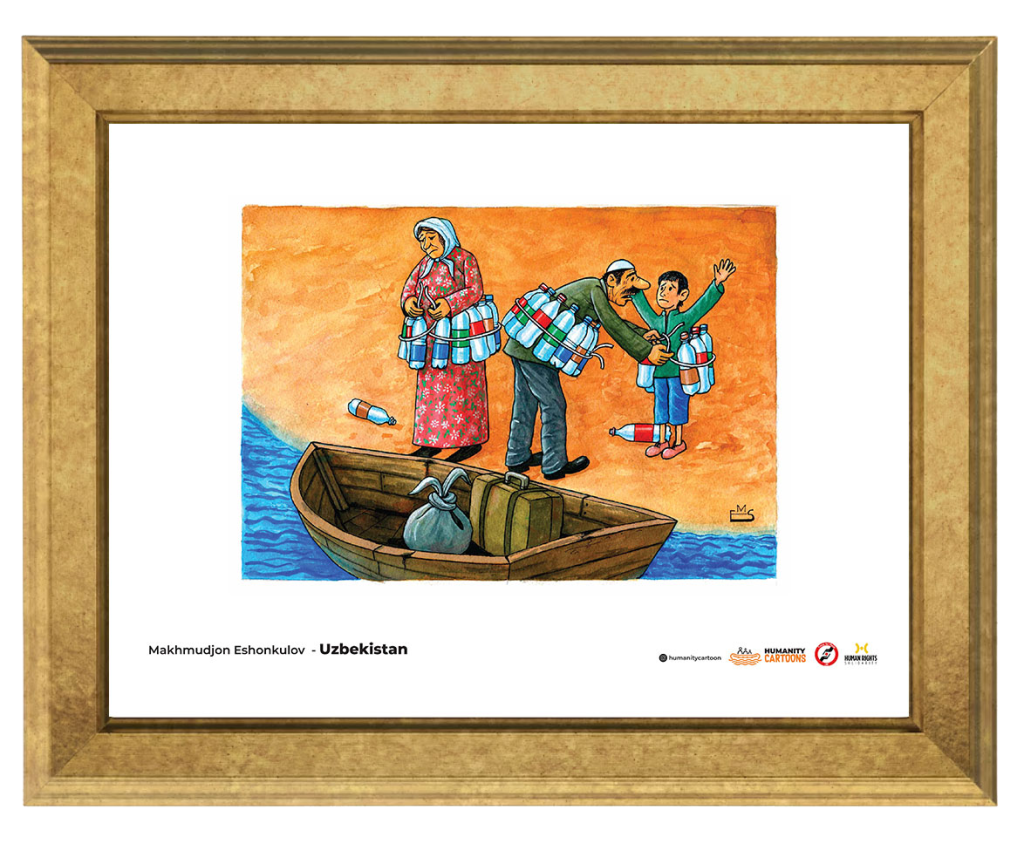
Image source: humanitycartoons.com
According to the International Journalists Association , the diversity of the participants—representing 82 different countries—ensures that the "One Race: Human" message is not just a Western perspective but a truly global consensus. The winning styles range from stark black-and-white line art to vibrant, surrealist compositions that challenge the viewer to reconsider their own internal biases.
The Global Impact of Artistic Resistance by the Numbers
The growth of the Humanity Cartoons competition serves as a testament to the power of art in the digital age. Since its inception, the contest has seen a steady increase in both participation and geographic reach. This data highlights the "globalization of empathy" that the organizers strive to achieve.
- Total Artworks: Over 2,200 cumulative artworks received since 2022.
- Participation Growth: The 4th edition alone saw 626 participants from 82 countries.
- Exhibition Reach: Cartoons have been featured in over 10 major European cities, reaching hundreds of thousands of pedestrians in public squares.
- Social Context: The art directly addresses the reality of 80,000 asylum seekers in the UK and millions more worldwide.
The Bottom Line
Humanity cartoons are more than just drawings; they are a vital tool for human rights advocacy in an increasingly divided world. By stripping away partisan politics and focusing on our shared human experience, these artists provide a path toward greater understanding and empathy.
- The 2025 theme specifically targeted racism under the banner "One Race: Human."
- Technical requirements like A3 size and 300 dpi are non-negotiable for exhibition quality.
- Prizes range from €250 to €1250 , providing significant support for international artists.
- Winning works transition from digital files to physical advocacy in public squares and cathedrals.
- The deadline for the annual cycle typically falls on December 31st.
- Originality is key ; AI-generated works and previously awarded pieces are generally excluded.
If you are an artist, consider using your skills to join this global movement and contribute to the visual archive of human rights resistance.
Frequently Asked Questions
Currently, the competition emphasizes original human artistic expression. The jury looks for the unique perspective and emotional depth that comes from lived experience and manual artistic skill. While digital tools are allowed, AI-generated content that lacks original human input is generally discouraged or disqualified to maintain the integrity of "artistic resistance."
No, the Humanity Cartoons competition is free to enter. The organizers, including Human Rights Solidarity and Time to Help UK, ensure the contest remains accessible to artists worldwide, regardless of their financial situation. This inclusivity is a core part of their mission to foster a global dialogue on human rights.
The 2024 cycle focused more broadly on human rights and the plight of refugees, reflecting the global migration crisis. The 2025 theme, "Racism – One Race: Human," narrowed the focus to systemic prejudice and the biological reality of human unity. Each year, the theme is chosen to reflect the most pressing human rights challenges of the time.
Yes, you can submit work that has been shared on social media. However, the cartoon must not have won a prize in another formal international competition. The goal is to highlight fresh perspectives, though previously published editorial work is often welcomed as long as it meets the contest's specific theme and technical requirements.
The contest is a collaborative effort between several non-profit organizations, including Human Rights Solidarity (HRS), the International Journalists Association (IJA), Time to Help UK, and the Dialogue Society. These groups work together to provide the platform, the jury, and the funding for the prizes and subsequent public exhibitions.