Home
Why Toy Story 2 Remains the Most Important Sequel in Pixar History
Released in 1999, Toy Story 2 is widely regarded as one of the top sequels in animation history. Originally planned as a direct-to-video project, it was completely overhauled in just nine months to meet theatrical standards. The film is famous for a technical disaster where the entire production was accidentally deleted, only to be saved by a backup on a home computer. It currently holds a rare 100% score on Rotten Tomatoes and was the first film to be entirely created, mastered, and exhibited digitally.
How a Direct-to-Video Project Became a Cinematic Masterpiece
In the late 1990s, the landscape of animation was shifting. Disney had found significant financial success with direct-to-video sequels like The Return of Jafar , and the initial plan for Toy Story 2 followed this trajectory. The project was originally conceived as a 60-minute feature that would bypass theaters entirely. However, as production progressed, the quality of the work began to exceed the expectations of a home-video release.
According to Wikipedia , Disney executives were so impressed by the early footage that they decided to "upgrade" the film to a full theatrical release. This decision, while exciting, presented a massive problem for Pixar. The existing story was not deemed strong enough for the big screen, and the production schedule was already tight. Pixar’s leadership, including John Lasseter, felt the original version lacked the emotional depth and narrative complexity that defined the first film.
The decision was made to start over. This led to what is now known in the industry as a "production miracle." The team had to re-write, re-animate, and re-render the entire film in a fraction of the time usually allotted for a feature-length project. This period defined Pixar’s corporate culture, emphasizing a "story is king" mentality that would guide the studio for decades to come.
Image source: Simple Wikipedia
The Weekend That Saved the Movie and the Studio
With the theatrical release date looming, the creative leads at Pixar—John Lasseter, Andrew Stanton, and Joe Ranft—spent a single, intensive weekend re-imagining the entire plot. They realized that the film needed a stronger emotional core, which led to the creation of Jessie the Yodeling Cowgirl and her heartbreaking backstory. The addition of the "Woody’s Roundup" lore provided a necessary counterpoint to the space-age themes of Buzz Lightyear, grounding Woody in a rich, fictional history.
The resulting production schedule was a grueling nine-month "crunch." While this period is often cited as a testament to the team's dedication, it also highlighted the immense pressure of high-stakes animation. The team worked around the clock to ensure that every frame met the studio's rising standards. This effort paid off, as the film grossed over $511 million worldwide, according to IMDb , becoming the third-highest-grossing film of 1999.
How an Accidental Command Nearly Deleted the Entire Film
One of the most famous stories in tech history occurred during the production of
Toy Story 2
. In 1998, an animator accidentally ran the command
rm -rf *
in the root directory of the film's assets on Pixar's internal servers. This command is a "recursive delete," and it began systematically wiping the movie from the system. Character models, environments, and months of work started vanishing in real-time.
The situation was exacerbated by a failure in the studio's backup system. The tape drives that were supposed to be saving the film had quietly stopped working weeks prior, meaning the deleted files were not being recovered. For a brief moment, it appeared that the $90 million project was lost forever.
Why the Animation in Toy Story 2 Was a Technical Giant Leap
While the first Toy Story was a significant advancement for being the first fully computer-animated feature, the sequel represented a massive jump in visual fidelity. The rendering capabilities of 1999 allowed for much more complex textures, lighting, and environmental effects. One of the most celebrated sequences is the "Woody Restoration" scene, where Geri the Cleaner (a character from the Pixar short Geri's Game ) meticulously repairs Woody’s arm. The detail in the paint, the texture of the brushes, and the subtle lighting on the tools created a tactile, "ASMR-like" quality that was previously impossible.
Comparing Visual Fidelity Between 1995 and 1999
The differences between the two films are most apparent when looking at organic textures like hair, dust, and skin. In the 1995 original, many surfaces appeared "plastic" or overly smooth. By 1999, Pixar had developed new shaders that could simulate the way light interacts with dust particles and fabric fibers.
| Feature | Toy Story (1995) | Toy Story 2 (1999) |
|---|---|---|
| Human Characters | Simplified, often "uncanny" | More expressive, better skin textures |
| Environmental Detail | Clean, sparse backgrounds | Dust, scuff marks, and clutter |
| Lighting | Basic global illumination | Complex shadows and volumetric light |
| Fur/Hair Rendering | Solid blocks or simple planes | Individual strands (e.g., Buster the dog) |
The Deep Lore of Woody’s Roundup and the Prospector
A significant portion of the film's emotional weight comes from the introduction of the "Roundup Gang." By establishing that Woody was the star of a 1950s marionette show, Pixar added a layer of history and "mortality" to the characters. The aesthetic of the Woody's Roundup show was carefully crafted to look like aged, black-and-white film, complete with visible strings and grainy textures.
This lore also introduced two of the most complex antagonists in the franchise: Al McWhiggin and Stinky Pete the Prospector. Unlike the "toy-torturing" Sid from the first film, Al represents the threat of commercialization and the loss of a toy's purpose. Stinky Pete, meanwhile, offers a tragic perspective on abandonment. Having spent decades on a shelf in his original box, his bitterness stems from never being loved by a child, making him a foil to Woody’s loyalty to Andy.
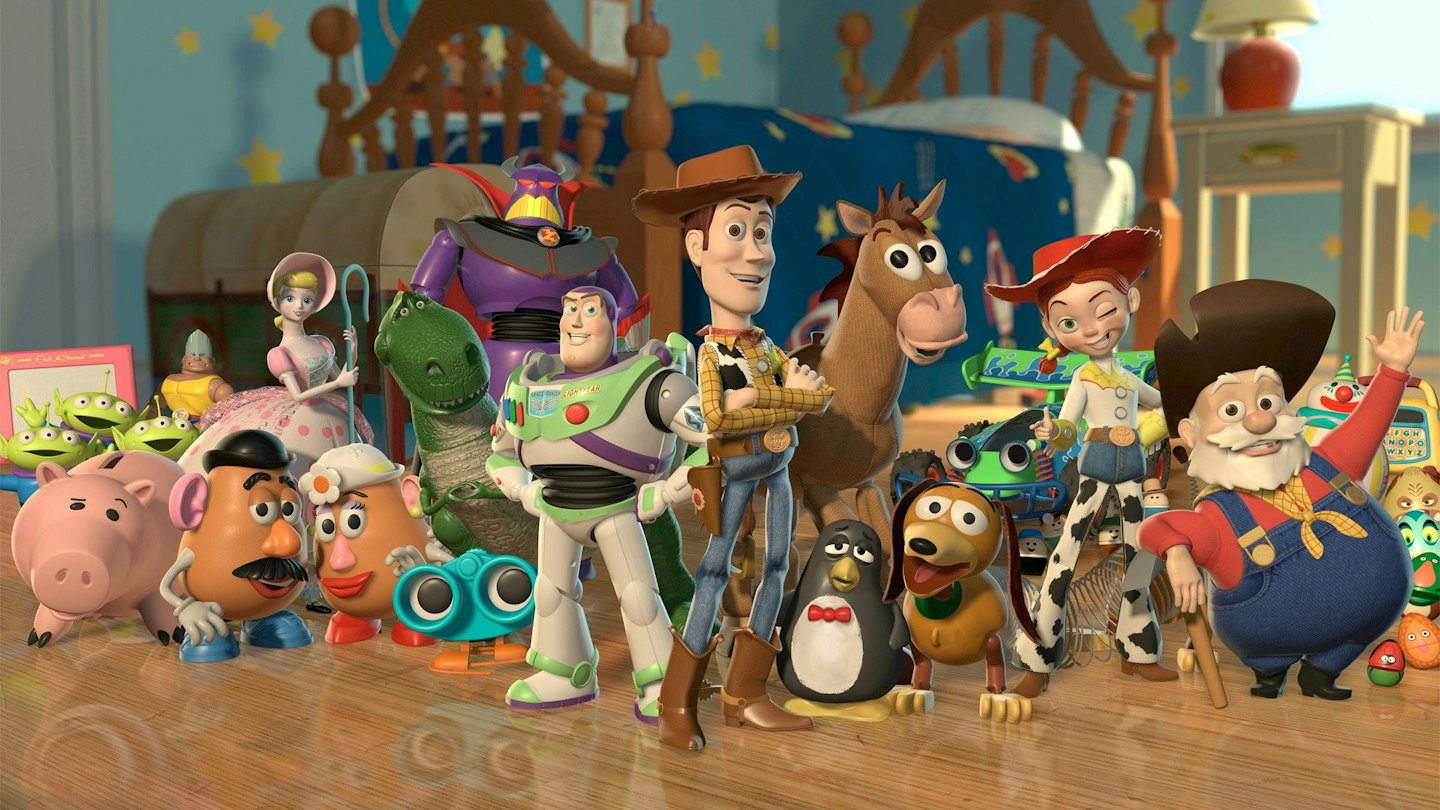
Image source: Empire
Which Voice Actors Brought the Roundup Gang to Life?
The cast of Toy Story 2 is a blend of returning legends and new additions who became staples of the franchise. Tom Hanks and Tim Allen returned as Woody and Buzz, but the addition of Joan Cusack as Jessie provided the film with its emotional heartbeat. Her performance during the "When She Loved Me" sequence is often cited as one of the most moving moments in animation history.
The film also marked a bittersweet milestone for the cast. Jim Varney, the voice of Slinky Dog, passed away shortly after the film's release. His performance in the sequel remains a beloved part of his legacy. Additionally, Kelsey Grammer provided a sophisticated, theatrical voice for Stinky Pete, perfectly capturing the character's transition from a mentor figure to a bitter antagonist.
- Tom Hanks: Woody
- Tim Allen: Buzz Lightyear
- Joan Cusack: Jessie
- Kelsey Grammer: Stinky Pete the Prospector
- Don Rickles: Mr. Potato Head
- Jim Varney: Slinky Dog
- Wallace Shawn: Rex
- John Ratzenberger: Hamm
How to Find the Correct Version on Blu-ray and Streaming
For collectors and home theater enthusiasts, Toy Story 2 has seen numerous releases across DVD, Blu-ray, and 4K Ultra HD. While the film is readily available on Disney+, physical media collectors often look for specific versions to ensure they are getting the best possible presentation. In 2009, the film was re-released in theaters in a 3D format, which was later included in several Blu-ray sets.
Identifying the Correct Playlist for Physical Media Backups
Users who back up their physical media using tools like MakeMKV often encounter a common hurdle: multiple playlists. Disney Blu-rays frequently include several versions of the film to accommodate different languages for on-screen text (such as the titles on the "Woody's Roundup" boxes). According to community discussions on the MakeMKV Forum , Playlist 200.mpls is typically the correct English-language version for the North American Blu-ray release.
Why the Toy Story 2 Video Game Is Still a Fan Favorite
Released alongside the film, Toy Story 2: Buzz Lightyear to the Rescue is widely regarded as one of the top licensed games of the 32/64-bit era. Developed by Traveller's Tales, the game allowed players to control Buzz Lightyear across levels inspired by the film's locations, such as Andy’s House, Al’s Toy Barn, and the Airport.
The game was praised for its open-ended level design and its ability to capture the scale of the world from a toy's perspective. Even in 2026, the game maintains a strong following in the retro-gaming community. It has been ported to modern consoles via the PlayStation Plus Classics catalog, allowing a new generation to experience its surprisingly challenging platforming and hidden secrets.
Hidden Easter Eggs and Star Wars References You Missed
Pixar is famous for hiding "Easter Eggs" in their films, and Toy Story 2 is packed with them. The most famous is the Star Wars: The Empire Strikes Back parody during the elevator battle between Buzz Lightyear and Emperor Zurg. When Zurg reveals, "I am your father," it serves as a hilarious nod to one of cinema's most famous twists.
Other notable references include:
- A113: The classroom number at CalArts appears on the license plate of Andy’s mom’s van.
- Pizza Planet Truck: The iconic yellow truck (first seen in the original film) is driven by the toys during the climactic chase to the airport.
- Geri's Game: The old man who cleans Woody is the same character from the Oscar-winning Pixar short.
- A Bug's Life: Characters from Pixar's previous film appear as toys on the shelves of Al's Toy Barn.
Frequently Asked Questions
The film was nearly lost when an animator accidentally ran a recursive delete command (
rm -rf *
) on the main server. Because the backup system had also failed, the only reason the film survived was that Technical Director Galyn Susman had a copy on her home computer while on maternity leave. This story has become a legendary cautionary tale in the world of data management.
While "better" is subjective, critical consensus often ranks Toy Story 2 among the top sequels ever made. It holds a 100% rating on Rotten Tomatoes, with many critics praising its increased emotional depth and technical improvements over the 1995 original. The introduction of Jessie and the exploration of a toy's fear of being outgrown added a layer of maturity that resonated with both children and adults.
The film features two primary antagonists. Al McWhiggin, the greedy owner of Al's Toy Barn, acts as the external threat who steals Woody for profit. Stinky Pete the Prospector serves as the internal antagonist; his motivations are more complex, driven by a lifetime of being ignored by children and a desire to be preserved in a museum at any cost.
Wheezy is a penguin toy with a broken squeaker who Woody finds on a high shelf during a cleaning session. His discovery sets the plot in motion when Andy's mom takes him to be sold at a yard sale. In the film's finale, Wheezy is "fixed" when he finds a new squeaker and performs a celebratory rendition of "You've Got a Friend in Me."
This is a popular fan theory based on the fact that Andy’s cowboy hat looks identical to the one worn by Jessie’s original owner, Emily. While Pixar has never officially confirmed this theory, the visual cues—such as the red hat with the white lace—strongly suggest a historical connection between Andy's family and Woody's Roundup gang.
Key Takeaways
- Production Miracle: The film was entirely re-developed and completed in just nine months after being upgraded from direct-to-video.
- Technical Milestone: It was the first film to be entirely created, mastered, and exhibited digitally, setting a new industry standard.
- Critical Acclaim: It remains one of the few films to maintain a perfect 100% score on Rotten Tomatoes.
- Data Security: The "deletion incident" led to massive changes in how animation studios handle backups and server security.
- Emotional Depth: The introduction of Jessie and her backstory provided a sophisticated exploration of abandonment and toy mortality.
- Cast Legacy: The film features the final performance of Jim Varney as Slinky Dog.
To experience the film's technical achievements for yourself, pay close attention to the lighting and dust particles in the "Woody's Roundup" scenes during your next viewing.