Home
Why Arcane on Netflix Ranks Among the Most Impactful League of Legends Stories Ever Produced
Arcane is a critically acclaimed animated series on Netflix set in the League of Legends universe. Produced by Riot Games and Fortiche Production, it explores the tragic origin stories of sisters Vi and Jinx amidst a class war between the wealthy city of Piltover and the gritty underground of Zaun. With a reported budget of $250 million for two seasons, it stands out as one of the most expensive animated projects in history, holding a 100% critic score on Rotten Tomatoes . Season 2 concludes the Vi and Jinx arc while teasing future expansions into the Noxian Empire.
What Is Arcane and How Does It Connect to League of Legends?
Arcane serves as a standalone prequel and origin story for several iconic characters from the global gaming phenomenon League of Legends . While the game is a fast-paced Multiplayer Online Battle Arena (MOBA), the show shifts the focus toward deep character development, political intrigue, and high-stakes emotional drama. The narrative is centered on the twin cities of Piltover and Zaun—two sides of the same coin that represent the extreme divide between technological progress and systemic poverty.
The core conflict follows two sisters, Vi and Powder (who later becomes Jinx), who are separated during a failed heist in Piltover. As they grow up on opposite sides of a brewing war, their personal trauma becomes intertwined with the discovery of Hextech—a fusion of magic and science—and Shimmer, a volatile drug that grants superhuman strength at a terrible cost. This connection to the game is foundational; every major character in the show is a "Champion" that players can control in the MOBA, though the show provides a level of narrative depth that the game’s competitive format cannot easily convey.
The production pedigree is a significant factor in the show's success. The collaboration between Riot Games and the French animation studio Fortiche Production resulted in a visual style that blends 2D and 3D techniques, creating a "painted" look that many critics consider a high-water mark for the medium. According to IMDb , the series has consistently maintained a rating above 9.0, reflecting its broad appeal to both gamers and general audiences who have never touched a keyboard.
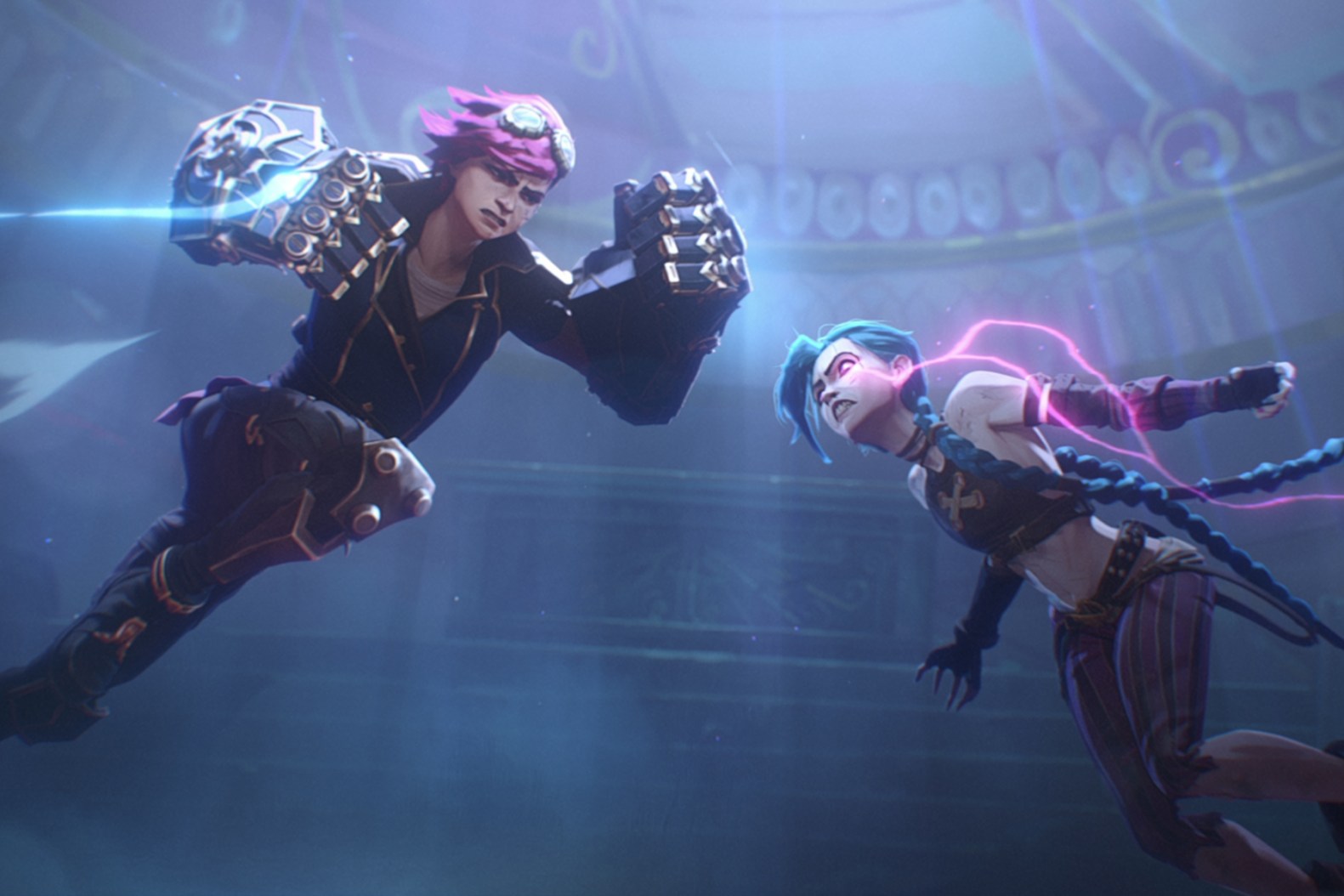
Image source: Rolling Stone
Why Did Riot Games Spend $250 Million on Two Seasons of Arcane?
The reported $250 million price tag for 18 episodes of Arcane has sparked significant debate within the entertainment and gaming industries. At approximately $13.8 million per episode, the series costs more than many live-action blockbusters. This investment covers not only the high-fidelity animation but also a massive global marketing campaign and a multi-year production cycle that prioritized quality over speed.
In community forums like Reddit , some users have questioned the "Return on Investment" (ROI), noting that the show did not lead to a massive, permanent spike in the League of Legends player base. However, viewing Arcane solely as a customer acquisition tool for the MOBA misses the broader transmedia strategy employed by Riot Games. The show is a brand-building exercise designed to elevate the League of Legends IP to a level of cultural recognition comparable to Disney or Marvel.
"The goal of Arcane wasn't just to sell more skins in the game; it was to prove that the world of Runeterra could sustain a cinematic universe that appeals to people who will never play a MOBA." — Industry Analysis on Riot's Media Expansion.
By hitting the #1 spot in 52 countries on Netflix, Arcane proved that Riot's intellectual property has global legs. The success of the show allows Riot to diversify its revenue streams through merchandising, licensing, and future spin-offs, effectively transforming a gaming company into a full-scale media powerhouse. While the upfront cost was steep, the long-term value of establishing a prestigious, award-winning franchise is considered by many analysts to be a sound strategic move.
How the Arcane Season 2 Finale Sets Up the Future of Runeterra
Season 2 serves as the definitive conclusion to the story of Vi, Jinx, Jayce, and Viktor in Piltover and Zaun. While fans may be disappointed that this specific chapter is closing, the finale was meticulously designed to act as a springboard for the "Runeterra Cinematic Universe." The most significant tease involves the expansion into Noxus , a brutal, expansionist empire that stands in stark contrast to the academic elegance of Piltover.
Throughout the second season, the character of Ambessa Medarda—a Noxian warlord and mother to Mel Medarda—serves as a bridge between the two regions. Her presence introduces the audience to the Noxian philosophy of "strength above all." The appearance of crows in the final episodes is widely interpreted by the community as a direct reference to Swain , the Grand General of Noxus, who uses ravens as his eyes and ears across the continent. This suggests that the next series in the pipeline may focus on the internal power struggles of the Noxian Trifarix or the empire's invasion of other lands like Ionia.
Riot Games has confirmed that while Arcane is over, it is merely the "first of many stories" they intend to tell. By concluding the Piltover arc with a high degree of finality, the creators have avoided the trap of "sequel fatigue," instead opting to explore the diverse biomes and cultures of the Runeterra map. Whether the next show takes us to the frozen wastes of the Freljord or the sun-drenched deserts of Shurima, the foundation laid by Arcane ensures a high level of audience trust.
Which League of Legends Champions Appear in the Show?
For fans of the game, Arcane is a treasure trove of "I know them!" moments. The show takes characters who previously only had a few lines of dialogue and gives them complex, often tragic, backstories. The main cast consists of Champions who are staples of the League of Legends roster, but their portrayals in the show often add layers of nuance that change how players perceive them in-game.
How Show Lore Compares to In-Game Mechanics
Understanding how a character functions in the show versus how they play in the game can be a fascinating exercise for new fans. The table below breaks down the transition from narrative role to gameplay mechanics for the core cast.
| Character | Show Role | In-Game Ability (The "Ultimate") | Gameplay Style |
|---|---|---|---|
| Vi | Enforcer / Sister | Cease and Desist (Targeted Dash) | High-mobility Jungle diver who excels at locking down single targets. |
| Jinx | Chaotic Anarchist | Super Mega Death Rocket (Global AOE) | Long-range "Hypercarry" Marksman who thrives on getting takedowns. |
| Ekko | Firelight Leader | Chronobreak (Time Rewind) | High-skill Assassin who can "undo" mistakes by rewinding time. |
| Jayce | Inventor / Politician | Transform (Hammer/Cannon) | Versatile "Stance-switcher" who can fight at range or in melee. |
| Viktor | Visionary / Herald | Chaos Storm (AOE Damage) | Control Mage who scales into a late-game powerhouse. |
How to Get Into the League of Legends Universe Without Playing the MOBA
One of the biggest hurdles for Arcane fans is the reputation of the main League of Legends game. The 5v5 MOBA is known for a steep learning curve and a community that can sometimes be unwelcoming to newcomers. Fortunately, Riot Games has expanded the Runeterra IP into several other genres that are much more accessible for those who just want to spend more time with the characters.
- Teamfight Tactics (TFT)
- An "auto-battler" strategy game where you recruit Arcane characters to fight for you. It is low-stress, requires no fast reflexes, and often features "sets" specifically themed around the show's current events.
- Legends of Runeterra (LoR)
- A digital collectible card game that is widely considered the "Lore Goldmine." Every card features flavor text and beautiful art that expands on the world-building seen in the show, covering regions like Demacia, Ionia, and Noxus.
- ARAM Mode (All Random All Mid)
- If you want to try the main game, ARAM is a single-lane, constant-fighting mode that is much less toxic than the standard competitive mode. It’s a great way to learn what different champion abilities look like in practice.
For those who prefer a single-player experience, the "Riot Forge" initiative has produced several standalone games like Convergence (starring Ekko) and Song of Nunu . these games offer a focused narrative experience without the pressure of multiplayer competition. By starting with these titles, fans can deepen their connection to the lore at their own pace.
Frequently Asked Questions
Is Arcane Season 3 happening?
Do I need to play League of Legends to understand the show?
Why is Jinx called Powder in the show?
Who is the main villain of Arcane?
Is Vander actually the champion Warwick?
The Bottom Line on Arcane’s Legacy
Arcane has successfully bridged the gap between gaming and prestige television, setting a high standard for all future video game adaptations. Whether you are a veteran player or a newcomer, the show offers a masterclass in storytelling and animation.
- Watch both seasons on Netflix for the complete 18-episode experience.
- Expect a definitive end to the Vi and Jinx storyline by the end of Season 2.
- Look for Noxian clues in the finale to understand where the next series is headed.
- Explore Teamfight Tactics if you want to interact with the characters in a low-stress environment.
- Appreciate the $250M quality delivered by the unique animation style of Fortiche Production.
- Dive into the lore through Legends of Runeterra for a deeper understanding of the world.
If you have finished the series and find yourself wanting more, the best next step is to explore the interactive map of Runeterra on the official League of Legends website to see the vast world that awaits in future seasons.