Home
Home
Why a Big Bold Beautiful Journey Is the Most Surprising Romance of 2025
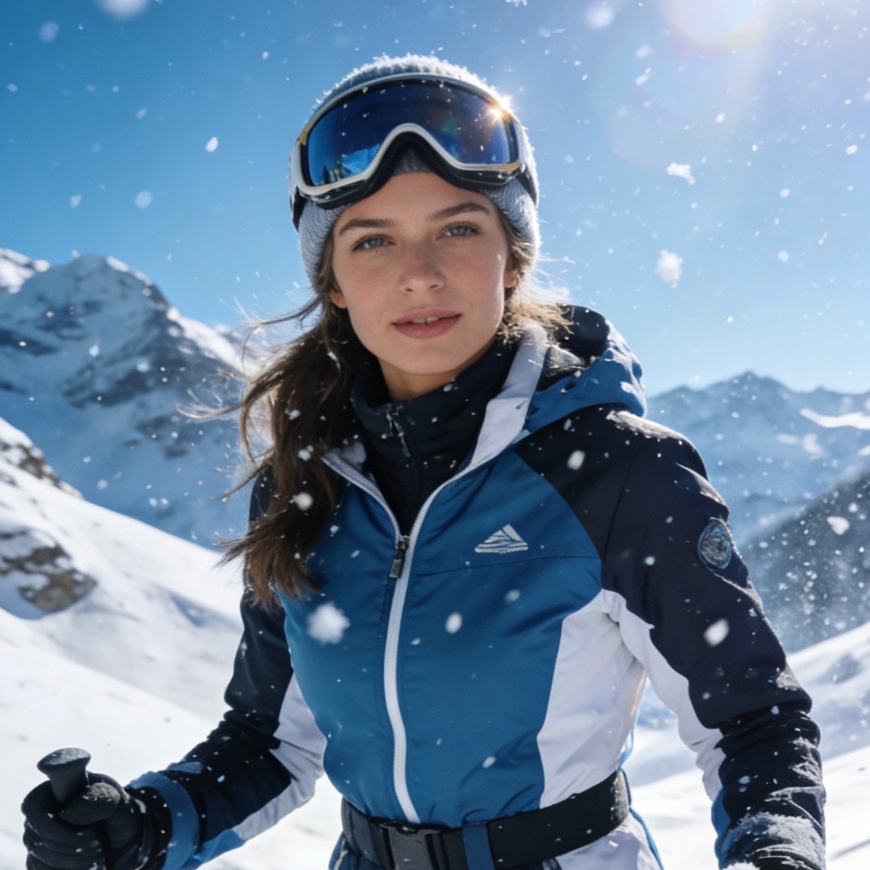
The cinematic landscape of 2025 found its most peculiar and poignant heartbeat in a film that defies simple categorization. While the title A Big Bold Beautiful Journey (often searched as A Big Beautiful Journey) suggests a sweeping, perhaps even cliché epic, the actual experience of watching Kogonada’s latest feature is something far more intimate, surreal, and grounded in the quiet aches of the human heart. Starring Margot Robbie and Colin Farrell, this romantic fantasy explores the mechanics of memory through a literal road trip back into the past, proving that the most difficult miles to travel are the ones we’ve already covered.
The Surreal Premise of the Magical Road Trip
The story introduces David and Sarah, two strangers who meet at a wedding they both barely want to attend. David is a man defined by a quiet, lingering grief, an immigrant who once dreamed of a simple domestic life that has remained frustratingly out of reach. Sarah, by contrast, is a woman who has built high walls around her heart, cynicism serving as her primary defense mechanism against the inevitable pain of loss.
Their collision course begins not at the altar of their mutual friends, but at a bizarre car rental agency. In a world that feels just a few degrees off-center, this agency—staffed by characters who seem to know more than they let on—provides David with a 1994 Saturn SL equipped with a sentient, magical GPS. This device does not just navigate traffic; it navigates time and trauma.
When Sarah’s own rental car fails to start, the GPS insists that David pick her up. What follows is not a standard drive across the American landscape, but a guided tour through "memory doors." These portals, appearing in lighthouses, museums, and high school auditoriums, force the pair to confront the specific moments that broke them or made them who they are.
Analyzing the Architecture of Memory Doors
The structural brilliance of the film lies in these episodic jumps into the past. Each "door" acts as a thematic milestone for the characters’ development.
The Lighthouse in Canada
The first stop takes David back to a lighthouse he visited in his youth. It establishes the film's visual language: vibrant, saturated colors that contrast with the protagonists' muted emotional states. Here, the film begins to peel back David’s layers, showing a man who has been drifting through his own life like a ghost in his own memories.
The Art Museum and Maternal Loss
When the duo enters a door at the back of an art museum, they step into Sarah’s past. We see her as a younger woman, visiting the museum with her mother. This sequence is crucial for understanding Sarah’s cynicism; her mother’s death during her college years left a void that she tried to fill with detachment rather than healing. The cinematography by Benjamin Loeb captures the stillness of the museum as a metaphor for Sarah’s frozen emotional state.
The High School Production
One of the most surreal and emotionally charged sequences occurs in a greenhouse that leads to David’s high school. David finds himself reliving a moment of rejection during a school play. However, in a meta-textual twist, he uses the opportunity to confront his past self and his former peers with "hard truths" about the future. Sarah joining him in a musical number signals the first real crack in her defensive armor, showing the vulnerability required for a new connection.
The Hospital and the Weight of Presence
The darkest and perhaps most resonant door leads to a hospital. Sarah is forced to confront the guilt of not being present when her mother died, while David witnesses the premature birth of his brother and the anxiety of his father. This segment highlights the film’s central thesis: that we are often most absent during the moments that matter most, and that forgiveness—both of self and others—is the only way to move forward.
Kogonada’s Directorial Evolution and Visual Style
Known for his contemplative works like Columbus and After Yang, Kogonada brings a distinct architectural sensibility to this film. He uses the frame to isolate characters and then brings them together through shared visual motifs. The recurring image of "doors" is a direct nod to his earlier academic interest in filmmakers like Robert Bresson.
In this film, Kogonada transitions from the sterile, futuristic aesthetic of After Yang to a more vibrant, almost dreamlike palette. The use of the 1994 Saturn SL is not merely a nostalgic prop; its boxy, analog nature serves as a tether to reality in a narrative that frequently drifts into the fantastical. The car becomes a safe harbor for David and Sarah, a small, enclosed space where they are forced to be honest because there is nowhere else to go.
The Sonic Landscape of Joe Hisaishi and Laufey
A significant part of the film’s emotional impact comes from its soundtrack. This project marks the first Western film score by the legendary Japanese composer Joe Hisaishi, best known for his work with Studio Ghibli. Hisaishi’s score for A Big Bold Beautiful Journey is a masterclass in subtlety. Instead of overwhelming the scenes with grandiose romance, he uses delicate piano melodies and swelling strings that mimic the ebb and flow of memory.
The inclusion of songs by Laufey, such as "The Risk" and "Winter Wonderland," adds a modern, jazzy layer to the film’s atmosphere. The soundtrack acts as a bridge between the surreal fantasy elements and the deeply human emotions at the film's core. A particularly striking moment is Mitski’s cover of "Let My Love Open the Door," which plays during a pivotal transition, perfectly capturing the film’s balance of melancholy and hope.
Comparing Influence: From Eternal Sunshine to Suzume
Critics have frequently compared A Big Bold Beautiful Journey to Michel Gondry’s Eternal Sunshine of the Spotless Mind. Both films deal with the messy intersection of romance and memory. However, while Eternal Sunshine focuses on the desire to erase pain, Kogonada’s film focuses on the necessity of revisiting it.
There is also a clear influence from Japanese animation, specifically Makoto Shinkai’s Suzume. The concept of "doors" appearing in mundane locations to lead to a mystical realm (the "Ever-After" in Suzume or the "Past" here) provides a sense of wonder that balances the heavier dramatic elements. By blending these influences, the film creates a unique space in the "romantic fantasy" genre that feels both familiar and entirely new.
Why the Mixed Reviews Miss the Point
Upon its release in September 2025, the film received a "mixed" reception from some critics who found the pacing slow or the emotional connection inconsistent. However, these criticisms often overlook the intentionality of Kogonada’s pacing. The film is not a race to a romantic finish line; it is a meditation on the process of becoming ready for love.
The "slowness" is a reflection of the characters’ own reluctance. David and Sarah are not two people who fall in love at first sight; they are two people who slowly realize that their shared trauma makes them uniquely qualified to understand one another. For an audience accustomed to fast-paced, high-stakes blockbusters, this deliberate, character-driven approach can feel challenging, but for those willing to sit with the discomfort, the payoff is profound.
The Ambiguity of the Ending and the Meaning of Fantasy
The film concludes with David and Sarah dropping off their magical rental cars and returning to their respective lives. The final act, where they both return to their childhood homes and eventually find their way back to each other, raises the question: was the journey "real"?
The film suggests that the "reality" of the magical GPS and the memory doors is secondary to the emotional truth they uncovered. Whether the car was actually magical or if the journey was a shared psychological projection doesn’t matter as much as the fact that Sarah finally told David she loved him. By walking through the front door of David’s home together, they choose a future that is no longer dictated by the ghosts of their past.
Summary of A Big Bold Beautiful Journey
A Big Bold Beautiful Journey is a significant achievement in 2025 cinema. It takes the familiar tropes of the road trip and the romantic comedy and elevates them into an existential inquiry. Through the performances of Margot Robbie and Colin Farrell, the film reminds us that while we cannot change our past, we can change how we carry it into the future. It is a visually stunning, aurally enchanting, and emotionally resonant film that rewards multiple viewings.
Frequently Asked Questions
Where can I watch A Big Bold Beautiful Journey? As of late 2025, the film is available for streaming on Netflix. It can also be rented or purchased on digital platforms like Amazon Prime Video, Apple TV, and Fandango at Home. Physical copies (Blu-ray and DVD) were released toward the end of the year.
Who is in the cast of the film? The film stars Margot Robbie as Sarah and Colin Farrell as David. The supporting cast includes Kevin Kline, Phoebe Waller-Bridge, Lily Rabe, and the voice of Jodie Turner-Smith as the GPS.
What is the age rating for the movie? The film is rated R, primarily for its mature themes, language, and some sequences involving emotional intensity and adult situations.
Is the movie based on a book? No, the film is based on an original script by Seth Reiss, which was featured on the 2020 Black List of Hollywood's best unproduced screenplays before being picked up for production.
What are the main themes explored in the story? The film primarily explores themes of memory, regret, the fear of vulnerability, and the transformative power of confronting one's past traumas to build a meaningful future connection.
-
Topic: A Big Bold Beautiful Journey - Wikipediahttps://en.m.wikipedia.org/wiki/A_Big_Bold_Beautiful_Journey
-
Topic: A Big Bold Beautiful Journey streaming onlinehttps://www.justwatch.com/us/movie/a-big-bold-beautiful-journey
-
Topic: ‘A Big Beautiful Journey’ Review: Going Nowhere Fast – Dallas Film Now.https://dallasfilmnow.com/2025/09/16/a-big-beautiful-journey-review-going-nowhere-fast/