Home
Who Is the Strongest Taurus Saint in the Saint Seiya Multiverse?
The Taurus Saint is widely regarded as the physically strongest guardian among the 12 Gold Saints of Sanctuary. Tasked with protecting the Second Temple, these warriors are characterized by their massive stature, humble personalities, and the devastating Great Horn technique. While Aldebaran is the most iconic iteration, spin-off characters like Rasgado (The Lost Canvas) and Harbinger (Omega) are often cited by fans for their significant character development and remarkable feats of endurance.
Why Is the Taurus Saint Known as the Bravest of the Zodiac?
In the expansive lore of Saint Seiya , the Taurus Saint occupies a unique position. While other Gold Saints are often defined by their esoteric cosmic powers or complex moral ambiguities, the Taurus Saint is consistently portrayed as a pillar of reliability and raw physical might. According to official materials from Seiyapedia , the Taurus Saint is officially designated by Toei Animation as the "Bravest of the Zodiac," a title that reflects their willingness to stand as the first line of defense against overwhelming odds.
This bravery is not merely a lack of fear but a commitment to the protection of Athena that often borders on the self-sacrificial. The physical design of the Taurus Saint—typically a giant standing well over two meters tall—serves as a visual metaphor for this role. They are the "shield" of Sanctuary. For instance, Aldebaran of the 20th century is noted for his Brazilian origins, a detail that Secret Compass highlights as influencing his warm, approachable personality compared to the more aloof guardians like Shaka or Camus.
Despite their intimidating appearance, these warriors are frequently described as having a "good heart." They are among the few Gold Saints who show genuine kindness to the Bronze Saints early in the series, recognizing their potential rather than simply viewing them as intruders. This blend of immense power and deep humility is what makes the Taurus archetype a fan favorite across multiple generations of the franchise.
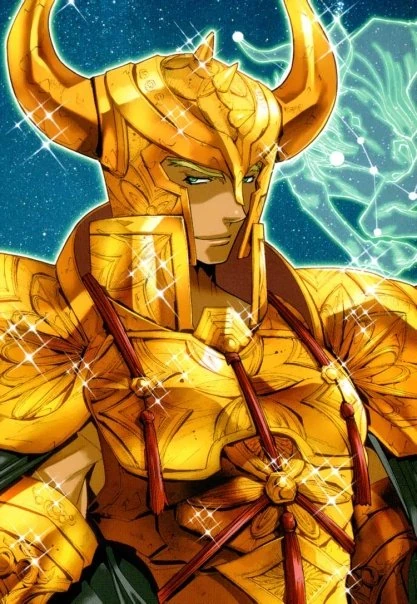
Image source: Seiyapedia - Fandom
How Does the Taurus Saint Function as Sanctuary’s Primary Guardian?
Structurally, the Taurus Temple is the first true combat trial for any invader of Sanctuary. While the Aries Temple is the first house, its guardian (Mu) is often a non-combatant or an ally who focuses on repairing Cloths. This places the Taurus Saint in the role of the "bouncer"—the warrior who must set the standard for what it means to face a Gold Saint. As discussed in community debates on Reddit , this narrative positioning is a double-edged sword.
On one hand, the Taurus Saint establishes the stakes. By demonstrating that even the "physically strongest" saint can be challenged, the story creates immediate tension. On the other hand, this has led to the "Big Guy" problem, where the Taurus Saint is sometimes used as a benchmark to show how powerful a new villain is. A notable example is the Niobe incident in the Hades arc, where Aldebaran is taken by surprise to demonstrate the lethality of the Specters' unconventional attacks.
However, viewing the Taurus Saint solely through the lens of their defeats ignores their strategic importance. Their presence forces an enemy to expend significant energy or reveal their secret techniques early in the climb through the 12 Houses. They are the gatekeepers who ensure that only those with the "7th Sense"—the highest level of Cosmo—can proceed further into the heart of Sanctuary.
Comparing the Different Warriors Who Wore the Taurus Gold Cloth
The mantle of Taurus has been held by several distinct warriors across different timelines and media. Each brings a different flavor to the Gold Cloth, ranging from stoic traditionalists to reformist leaders. The following table provides a comparison of the most prominent Taurus Saints in the franchise.
| Name | Series | Key Feat | Narrative Role |
|---|---|---|---|
| Aldebaran | Classic / Hades | Testing Seiya's 7th Sense | The Loyal Guardian |
| Rasgado | The Lost Canvas | Defeating Kagaho of Bennu | The Mentor & Hero |
| Ox | Next Dimension | Defending the 2nd House | The Stoic Traditionalist |
| Harbinger | Saint Seiya Omega | Surviving the Mars War | The Pope of Sanctuary |
| Francisca | KotZ (Game) | Counter-trap mechanics | The Tactical Brawler |
Among these, Rasgado from The Lost Canvas stands out as a top choice for many fans due to his deep emotional arc. Unlike the classic Aldebaran, who is often sidelined, Rasgado is given a central role in the 18th-century Holy War. His relationship with his students and his refusal to back down even when mortally wounded sets a high standard for the character archetype. Similarly, Harbinger in Saint Seiya Omega represents a significant advancement for the role, as he is the only Taurus Saint to eventually ascend to the position of Pope, proving that the "Bull" is capable of leading the entire Sanctuary.
Why Do Fans Often Prefer The Lost Canvas Version Over the Canon?
A frequent point of discussion within the fandom is the discrepancy between the "Canon" Taurus Saints (Aldebaran and Ox) and the "Spin-off" versions (Rasgado and Harbinger). In the official Next Dimension prequel by Masami Kurumada, Ox of Taurus follows a similar trajectory to Aldebaran—he is a powerful but somewhat static character who serves as a hurdle for the protagonists.
In contrast, The Lost Canvas author Shiori Teshirogi reimagined the Taurus Saint as a deeply philosophical warrior. Rasgado, who took the name "Aldebaran" as a title, is portrayed with a level of agency and narrative weight that few other iterations match. His battle against Kagaho is widely regarded as one of the highlights of the series, not just for the action, but for the mutual respect developed between the combatants. According to reviews on Waivio , this version of the character feels more "human" and less like a plot device.
This preference highlights a trend in modern Saint Seiya media: fans respond positively when the Taurus Saint is allowed to move beyond the "strong but slow" trope. Whether it is Harbinger's obsession with the sound of breaking bones or Rasgado's fatherly protection of his disciples, these versions provide a level of character depth that enriches the legacy of the Gold Cloth.
What Makes the Great Horn One of the Fastest Attacks in Sanctuary?
The Great Horn is the signature technique of the Taurus Saint, and it is often misunderstood by those who only see the user's bulk. While it appears to be a simple blast of kinetic energy, the mechanics behind it are rooted in the Japanese martial art of Iaijutsu (the art of drawing the sword).
The Taurus Saint typically stands with their arms crossed. This is not just a gesture of confidence; it is a defensive posture that conceals the "blade" of their Cosmo. When the arms are uncrossed, the energy is released with the speed of light, mimicking the sudden draw and strike of a katana. This makes the Great Horn a counter-intuitive attack: the larger the warrior, the faster the strike.
During the Battle of the Twelve Temples, Pegasus Seiya was only able to overcome this technique by forcing Aldebaran to "draw his sword" (uncross his arms) and then striking during the split-second opening. The breaking of Aldebaran's horn was a symbolic victory; it proved that Seiya had reached the 7th Sense, but it also showed Aldebaran's integrity. He honored his word and allowed the Bronze Saints to pass, demonstrating that the Taurus Saint values honor as much as strength.
How to Use Taurus Francisca in Saint Seiya KotZ
For modern fans engaging with the franchise through gaming, Taurus Francisca offers a fresh take on the Bull's power. In the mobile game Saint Seiya: Knights of the Zodiac , Francisca is not just a brute force attacker. As detailed in the official reveal , his mechanics focus on "counter, trap, and endure."
Players looking to integrate a Taurus Saint into their competitive lineup should focus on these strategies:
- The Counter-Attack: Use Francisca's ability to punish enemies who target your squishier damage dealers.
- Endurance Buffs: Pair him with healers or shielders to capitalize on his high HP pool, allowing him to grow stronger as the match progresses.
- Trap Mechanics: Unlike Aldebaran's direct Great Horn, Francisca can set "traps" that trigger when the opponent takes specific actions, making him a top-tier choice for control-oriented teams.
The Meaning Behind the Name Aldebaran
The name "Aldebaran" is inextricably linked to the Taurus constellation. It refers to the brightest star in the constellation, a red giant known as the "Eye of the Bull." In the context of Saint Seiya , this name carries significant weight. In The Lost Canvas , it is revealed that "Aldebaran" is not necessarily a birth name but a title adopted by the strongest Taurus Saints to honor the star that guides them.
This tradition adds a layer of legacy to the character. When a warrior dons the Taurus Gold Cloth and takes the name Aldebaran, they are not just becoming a soldier; they are becoming the "Giant Star" of Sanctuary. This explains why different characters across different eras might share the name, creating a sense of continuity that spans centuries of Holy Wars.
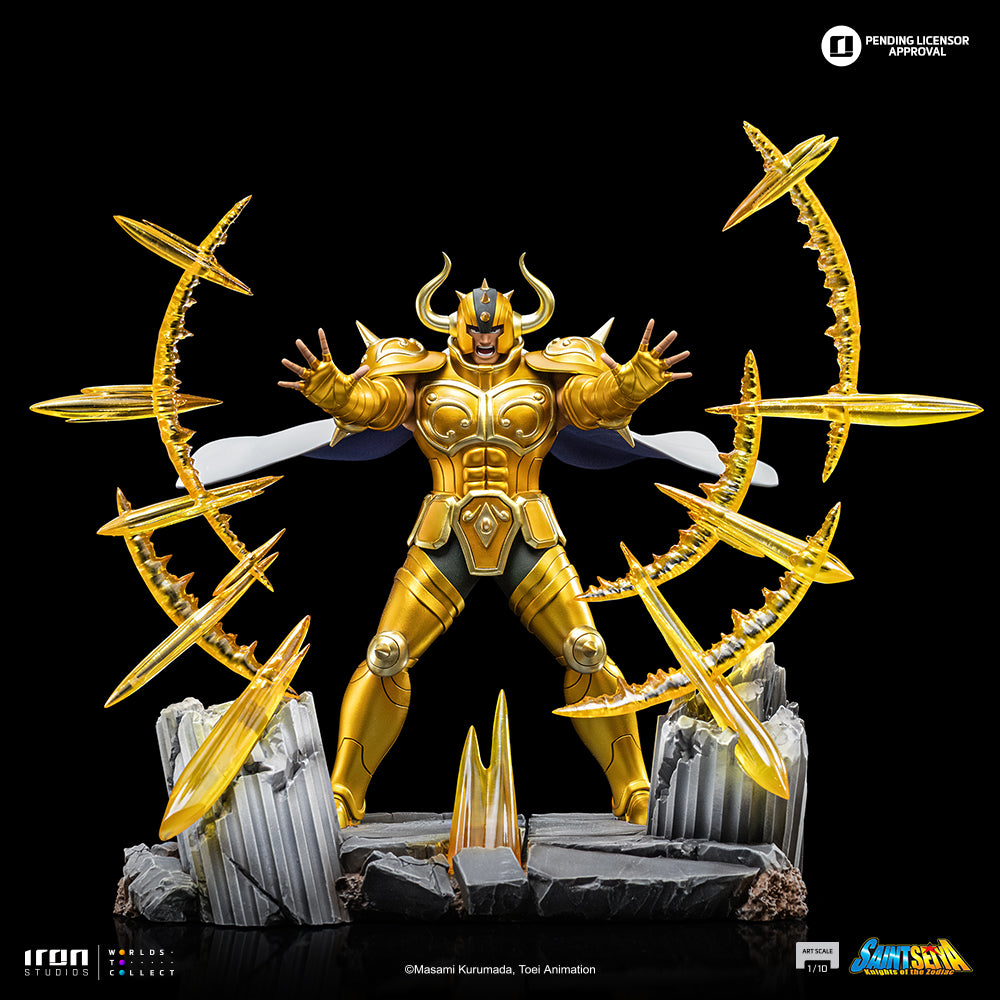
Image source: Iron Studios
Frequently Asked Questions
- Who is the strongest Taurus Saint in the franchise?
- While "strongest" is subjective, Rasgado from The Lost Canvas is often cited for his victory over high-level Specters, while Harbinger from Omega is the most successful in terms of survival and political rank, eventually becoming Pope. Aldebaran remains the benchmark for raw physical power in the classic era.
- Why does the Taurus Saint always lose a horn?
- The loss of the horn is a recurring motif that began with Seiya breaking Aldebaran's horn in the 12 Temples arc. It serves as a symbol of the Saint's humility and their recognition of a worthy opponent's growth. It is a mark of respect rather than a mark of shame.
- Is Aldebaran from The Lost Canvas the same person as the original?
- No. The Lost Canvas takes place in the 18th century, while the original series takes place in the 20th century. The character in The Lost Canvas is named Rasgado, but he adopts the name "Aldebaran" as a title, a tradition that connects the two eras.
- What is the Taurus Saint's nationality?
- The classic Aldebaran is Brazilian, which is a point of pride for the large Saint Seiya fanbase in Brazil. Other Taurus Saints have different origins; for example, Rasgado's specific nationality is not as central to his character, though he operates out of the Greek Sanctuary.
- Does the Taurus Saint ever become the Pope?
- Yes, Harbinger in the Saint Seiya Omega series is the first Taurus Saint to be appointed as the Pope of Sanctuary. This was a significant departure from tradition, as the role is typically reserved for Aries or Gemini Saints.
Key Takeaways on the Taurus Saint Legacy
The Taurus Saint remains one of the most enduring archetypes in the Saint Seiya universe, representing the perfect balance of physical might and moral integrity.
- Physical Powerhouse: They are consistently ranked as the physically strongest among the 12 Gold Saints.
- The Great Horn: Their signature move uses a hidden "Lai" stance to achieve light-speed strikes despite their massive size.
- Bravest of the Zodiac: This official title reflects their role as the primary guardian and "bouncer" of the 12 Houses.
- Legacy of Names: "Aldebaran" is often used as a title taken from the brightest star in the Taurus constellation.
- Character Evolution: Spin-offs like The Lost Canvas and Omega have expanded the role, turning the Taurus Saint into a mentor and a leader.
- Symbolic Sacrifice: The broken horn remains the most iconic symbol of the bond between the Gold and Bronze Saints.
To truly appreciate the depth of this character, fans should explore The Lost Canvas for the most emotionally resonant portrayal of the Bull's spirit.