Home
Who Is Aria Dean and How Is She Changing Contemporary Art?
Aria Dean (born 1993) is a highly influential American artist, writer, and curator whose work explores the intersections of Blackness, digital culture, and minimalist sculpture. Widely regarded as a leading voice in the "Post-Internet" landscape, she rose to prominence through her curatorial work at Rhizome and her participation in major exhibitions like the 2022 Whitney Biennial. Her practice is characterized by a rejection of simple representation, opting instead for a "materialist" approach that uses objects like security glass and 3D-printed silicone to challenge how identity is circulated and consumed in the digital age.
Aria Dean stands out as a top choice for scholars and art enthusiasts seeking to understand the evolution of Black radical thought in the 21st century. Based in Los Angeles, Dean has built a career that bridges the gap between high-level continental philosophy and the tactile, often gritty reality of physical sculpture. Her work does not merely depict Black life; it interrogates the very structures—digital, architectural, and historical—that define how Blackness is perceived. From her early essays on "Blacceleration" to her complex film installations like Abattoir, U.S.A.! , Dean has consistently pushed the boundaries of what contemporary art can achieve.
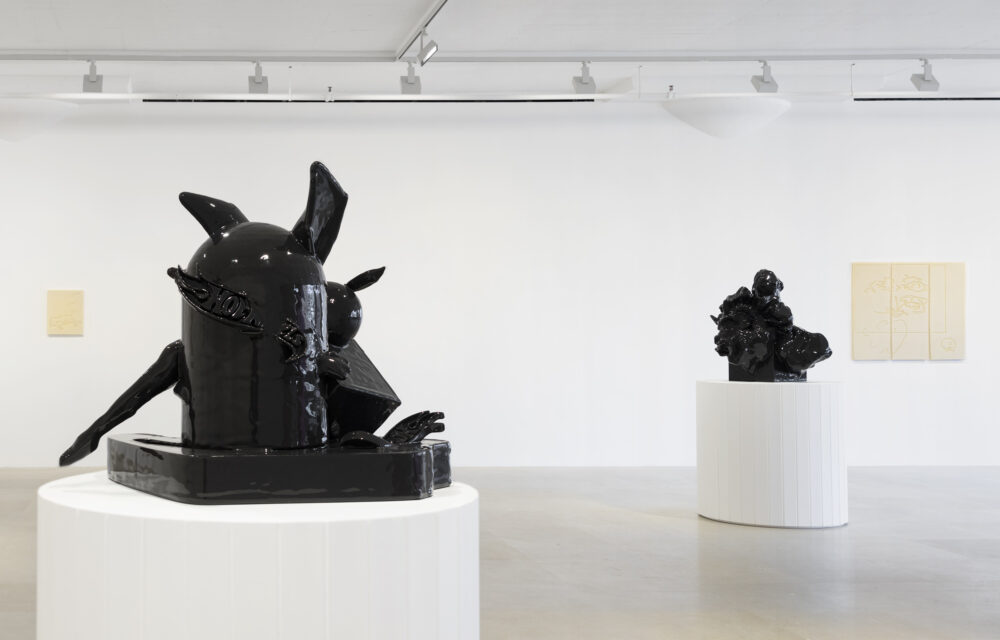
Image source: Greene Naftali
The Professional Journey of Aria Dean from Rhizome to Global Museums
Aria Dean's trajectory is a significant advancement in the traditional artist's path, moving fluidly between digital curation and physical production. Born in 1993 and raised in Pasadena, California, Dean was immersed in the mechanics of image-making from a young age. Her family background in the Los Angeles film industry—with a father serving as an assistant director and a mother as a producer—provided her with a unique perspective on the "set" as a site of both labor and illusion. This early exposure to the construction of cinematic reality would later become a cornerstone of her "structural film" practice.
Growing Up in the Los Angeles Film Industry
The influence of Hollywood's technical side is evident in Dean's meticulous attention to the staging of her exhibitions. Unlike artists who focus solely on the object, Dean often treats the gallery space as a film set. This perspective allows her to manipulate the viewer's movement and gaze, much like a director controls a camera. Her understanding of the "behind-the-scenes" labor of film production informs her critique of how images of Blackness are manufactured and distributed globally. According to interviews, this upbringing instilled a sense that reality is something to be constructed and deconstructed rather than simply observed.
From Oberlin College to the Digital Frontier at Rhizome
Dean attended Oberlin College, graduating in 2015 with a BA in Studio Art. Shortly after, she moved into the professional art world, serving as the Social Media Coordinator at MOCA Los Angeles. However, it was her role at Rhizome that established her as a formidable intellectual force. From 2016 to 2021, Dean served as the Assistant Curator of Net Art and Digital Culture. During this tenure, she authored some of the most cited essays of the decade, exploring how memes, viral videos, and digital circulation impact Black identity. Her work at Rhizome was not just about archiving the internet; it was about theorizing the "digital afterlife" of Blackness.
Founding November Magazine and As It Stands LA
Beyond her individual practice, Dean has been a prolific builder of platforms. In 2015, she co-founded As It Stands LA , an artist-run project space that provided a venue for experimental work outside the commercial gallery circuit. Later, she became a founding editor of November magazine, a publication dedicated to long-form interviews and critical theory. These endeavors highlight her commitment to fostering a rigorous intellectual community. By the time she stepped down from Rhizome in early 2021, Dean had already transitioned into a full-time studio practice, represented by top-tier galleries like Greene Naftali in New York and Château Shatto in Los Angeles.
What Is the Third Term in Aria Dean’s Artistic Philosophy?
At the heart of Dean's work is a complex philosophical inquiry into the nature of representation. She is widely known for proposing a "third term"—a way of making art that exists outside the binary of abstraction and representation. For many Black artists, the pressure to either represent the Black body or completely abstract it creates a restrictive trap. Dean argues that Blackness itself is already a form of abstraction within the Western gaze, and therefore, her work seeks to inhabit the space where these two categories overlap and dissolve.
Moving Beyond Abstraction and Representation
Dean’s rejection of traditional representation is a strategic move to evade the "surveillance" of the art market. By using minimalist forms, she prevents the viewer from consuming the Black body as a spectacle. In her view, minimalism is not a "white" aesthetic but a tool that can be reclaimed to protect the subject. As noted in her exhibition Hiding in Plain Sight at Pace Gallery , Dean uses the "void" of minimalism to create a space of resistance, where the meaning of the work is not immediately accessible to the casual observer.
Understanding the Concept of Bad Infinity
One of Dean's most significant contributions to contemporary theory is her exploration of "Bad Infinity." Drawing from Hegelian philosophy, she uses this term to describe the repetitive, circular nature of culture under late capitalism. In her 2023 book Bad Infinity , she argues that our digital lives are characterized by an endless loop of consumption and reproduction that never reaches a meaningful conclusion. This concept is reflected in her art through the use of loops, mirrors, and repetitive industrial processes, suggesting that we are trapped in a cycle that is both infinite and hollow.
What Does Blacceleration Mean?
Dean’s essay "Notes on Blacceleration" is a cornerstone of modern accelerationist theory. She posits that Blackness and capitalism have been inextricably linked since the era of chattel slavery, where Black bodies were the primary "fuel" for capital acceleration. "Blacceleration" (a portmanteau of Blackness and accelerationism) suggests that any attempt to accelerate past capitalism must account for the fact that Blackness was the original technology of that acceleration. This theory has had a notably innovative impact on how scholars view the relationship between race, technology, and the future.
Breaking Down the Material Logic of Her Most Famous Sculptures
Dean’s choice of materials is never accidental; each medium carries a specific theoretical weight. She often describes her material choices as "conceptual one-liners" or puns that expand into deeper investigations. By combining industrial materials with organic or historically charged substances, she creates objects that feel both familiar and alien.
Why She Uses Security Glass and Mississippi Clay
In her series meta(models) , Dean utilized security glass as a literal and metaphorical reference to W.E.B. Du Bois’s concept of "double-consciousness." The glass, which is designed to protect while remaining transparent, reflects the state of always looking at oneself through the eyes of others. Similarly, her use of red Mississippi clay in works like lonesome crowded west serves as a material link to the American South. The clay represents a "proximity and distance" to her ancestral history, grounding her digital theories in the physical earth of the plantation complex.
The Rise of Impossible Objects in 3D-Printed Silicone
In recent years, Dean has experimented with "impossible objects"—digital assemblages that cannot exist in physical space without the aid of 3D printing. These works, often rendered in translucent silicone, reference the history of minimalism, specifically Robert Morris’s Box with the Sound of Its Own Making . By 3D printing these complex forms, Dean highlights the tension between the digital "perfect" object and the physical "flawed" reality. These sculptures rank among the top examples of how contemporary artists are using new technology to critique the history of art itself.
| Material | Key Work | Theoretical Reference |
|---|---|---|
| Security Glass | meta(models) | DuBoisian double-consciousness and surveillance. |
| Mississippi Clay | lonesome crowded west | The American South and the history of the plantation. |
| Crepe Rubber | Eraser series | Cryogenic engraving and the erasure of the subject. |
| 3D-Printed Silicone | Forward Proxy | Digital assemblages and "impossible" physical forms. |
A Deep Dive into Major Works Like Abattoir, U.S.A.! and King of the Loop
Dean’s large-scale installations are where her theories on film, architecture, and history converge. These works often require the viewer to enter a specific environment, turning the act of looking into a physical experience. Her 2023 exhibition at the Renaissance Society , titled Abattoir, U.S.A.! , is widely considered one of the most significant works of her career to date.
The Architecture of Death in Abattoir, U.S.A.!
Abattoir, U.S.A.! is a 3D-animated film that takes the viewer through an empty, industrialized slaughterhouse. The film explores the "metaphysical knot" of the plantation and the industrial complex, suggesting that the architecture of modern death is rooted in the history of American slavery. The film is accompanied by a "bedroom pop" soundtrack by Evan Zierk, creating a jarring contrast between the sterile, violent imagery and the intimate, lo-fi music. This work sets a high standard for how digital animation can be used to explore heavy historical themes without relying on graphic realism.
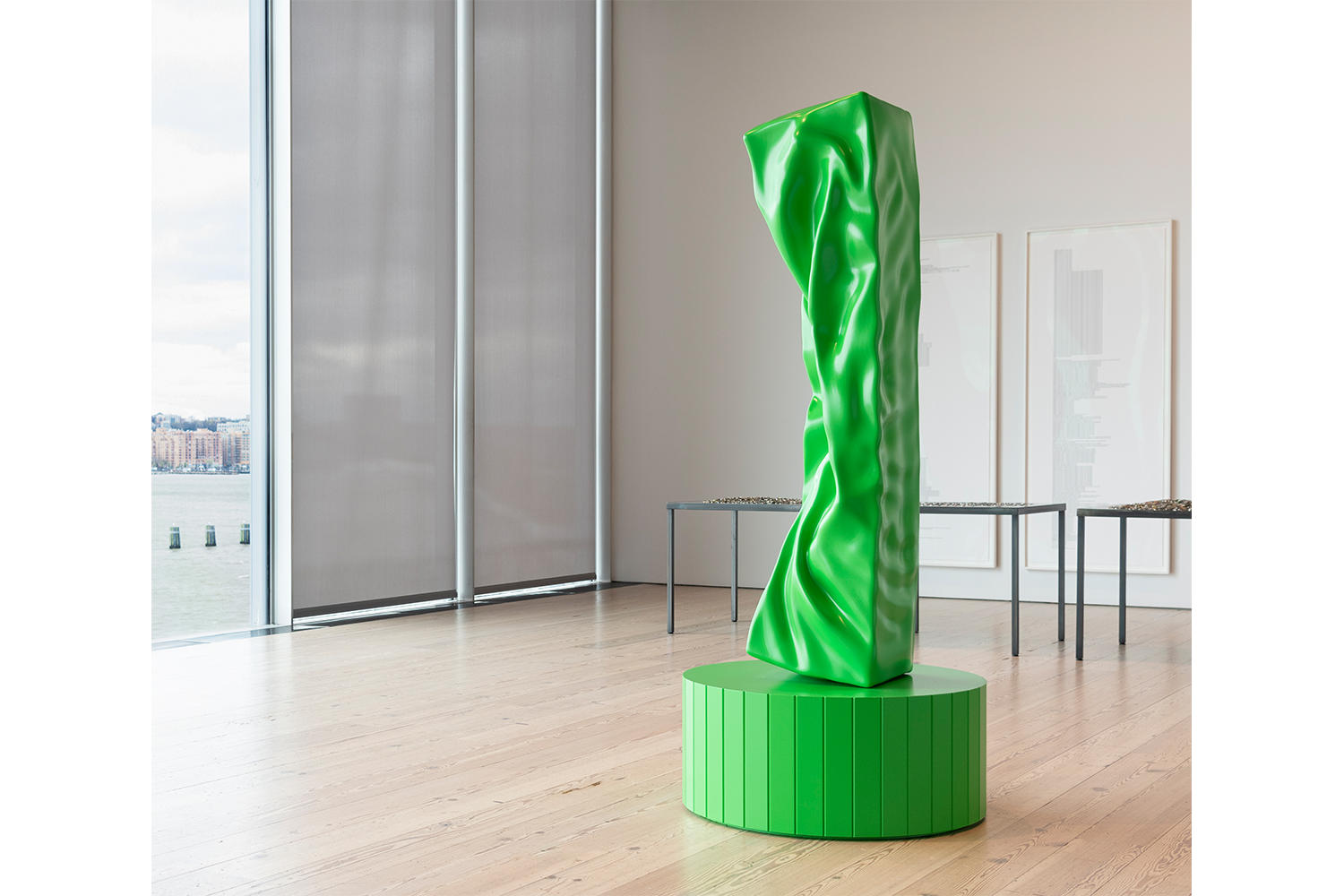
Image source: Flash Art
Live Events and Film Montage in King of the Loop
In her work for Made in L.A. 2020 at the Hammer Museum , Dean presented King of the Loop . This installation featured a mirrored box containing a simulation of an actor (Edem Dela-Seshie) on an abandoned plantation. The work used bodycams and live-streamed footage to explore the relationship between "live" performance and filmic montage. By placing the viewer in a mirrored environment, Dean forced them to confront their own presence within the "loop" of the simulation, questioning the authenticity of the recorded image.
The Color Scheme and the Future of Her Theatrical Commissions
Looking forward, Dean is expanding into the realm of live theater. Her commission for the 2025 Performa Biennial, titled The Color Scheme , is set in Berlin’s Tiergarten in the aftermath of WWI. The play features a dialogue between a "Poet" and a "Philosopher"—Black American expatriates—discussing the nature of art and existence. This shift into performance suggests that Dean is increasingly interested in how her "structural film" theories can be applied to live bodies in space. The work is also scheduled to appear at Haus der Kulturen der Welt in 2026, marking her continued influence on the global stage.
The Essential Aria Dean Reading List for Intellectuals and Researchers
For those looking to engage with Dean’s intellectual output, her writing is as essential as her visual art. Her essays are frequently assigned in university courses on digital culture and Black studies, offering a rigorous framework for understanding the modern world.
Where to Start with Her Published Books
The primary entry point for her written work is Bad Infinity (published by Sternberg Press, 2023). This collection brings together her most influential essays from the past decade, providing a comprehensive overview of her thoughts on accelerationism, aesthetics, and the digital circulation of Blackness. It is a top-tier resource for anyone interested in the intersection of continental philosophy and contemporary art.
Must-Read Essays for Understanding Digital Culture
- "Rich Meme, Poor Meme": Originally published in Real Life , this essay explores how Blackness functions as a form of "currency" in the viral economy of the internet.
- "Notes on Blacceleration": A foundational text for understanding her views on the historical link between race and capital acceleration.
- "The Labor of Appearance": An investigation into how the act of "showing up" or being seen is a form of labor for marginalized subjects.
Advanced Theory for Art Historians
For those with a background in art history or philosophy, "Black Bataille" offers a deep dive into the work of Georges Bataille through the lens of Black radical thought. Dean’s ability to synthesize complex thinkers like Bataille, Hegel, and Fanon into a cohesive critique of modern art is one of the reasons she is widely considered one of the best theorists of her generation.
Where to Find Aria Dean’s Work in Major Institutional Collections
Aria Dean’s rapid ascent in the art world is reflected in the number of prestigious institutions that have acquired her work. Her sculptures and films are now part of the permanent narrative of contemporary art history.
Permanent Collections from MoMA to the Whitney
Her work is held in the permanent collections of several world-renowned museums, including:
- The Museum of Modern Art (MoMA), New York
- The Whitney Museum of American Art, New York
- The Museum of Contemporary Art (MOCA), Los Angeles
- The Hammer Museum, Los Angeles
- The Studio Museum in Harlem, New York
- De Pont Museum, Netherlands
Current Gallery Representation in New York and Los Angeles
Dean is currently represented by two of the most influential galleries in the contemporary scene. In New York, she is with Greene Naftali , a gallery known for its roster of conceptually rigorous artists. In Los Angeles, she is represented by Château Shatto . These galleries regularly feature her work in solo exhibitions and at major art fairs like Art Basel and Frieze, making her work accessible to collectors and the public alike.
Frequently Asked Questions
Final Takeaways on the Legacy of Aria Dean
Aria Dean has successfully bridged the gap between digital theory and physical sculpture, creating a body of work that is both intellectually dense and visually arresting. Her impact on contemporary art is defined by these key points:
- Materialist Philosophy: She uses physical materials like clay and glass to ground abstract digital concepts.
- Minimalist Strategy: Dean employs minimalism to protect the Black subject from traditional representation.
- Intellectual Leadership: Her essays on "Blacceleration" and "Bad Infinity" are essential reading for modern theorists.
- Institutional Recognition: Her work is held by top-tier museums including MoMA and the Whitney.
- Structural Film Influence: Her background in the LA film industry informs her unique approach to gallery installations as "sets."
- Platform Building: Through Rhizome and November magazine, she has fostered a new generation of critical discourse.
To truly appreciate Dean's work, one should start by reading her collected essays in Bad Infinity before visiting a physical installation to experience her "material logic" firsthand.