Home
What Are Dirty Santa Gifts and How Do You Play the Game?
Dirty Santa is a popular holiday gift exchange game where the primary focus is on competitive stealing rather than just opening presents. Unlike traditional exchanges, players can choose to take a gift already opened by someone else, leading to a high-energy social dynamic. The term "Dirty" refers to the ruthless rules of the game, not necessarily the content of the gifts, which can range from high-utility tech to humorous gag items.
What Exactly Is a Dirty Santa Gift Exchange?
At its core, Dirty Santa is a social game designed to inject excitement and a bit of friendly rivalry into holiday gatherings. While many gift exchanges focus on the sentiment of giving, Dirty Santa thrives on the thrill of the "steal." According to cultural insights from Southern Living, the game is widely regarded as one of the most engaging ways to handle large group gifting because it encourages interaction and laughter.
A common misconception is that the "dirty" in Dirty Santa implies adult or inappropriate content. In reality, the name describes the "dirty" tactics players use to snatch coveted items from their friends or coworkers. While some adult-only parties might lean into "naughty" themes, the vast majority of these exchanges are family-friendly or office-appropriate, focusing on items that everyone wants to take home.
The vibe of a Dirty Santa party is typically chaotic, loud, and humorous. It transforms the act of opening a gift into a strategic performance. Players must decide whether to risk opening a new, unknown package or play it safe by stealing a known "winner" from a previous player. This mechanic ensures that the most popular items are passed around multiple times, creating a narrative for the evening that people often discuss long after the party ends.
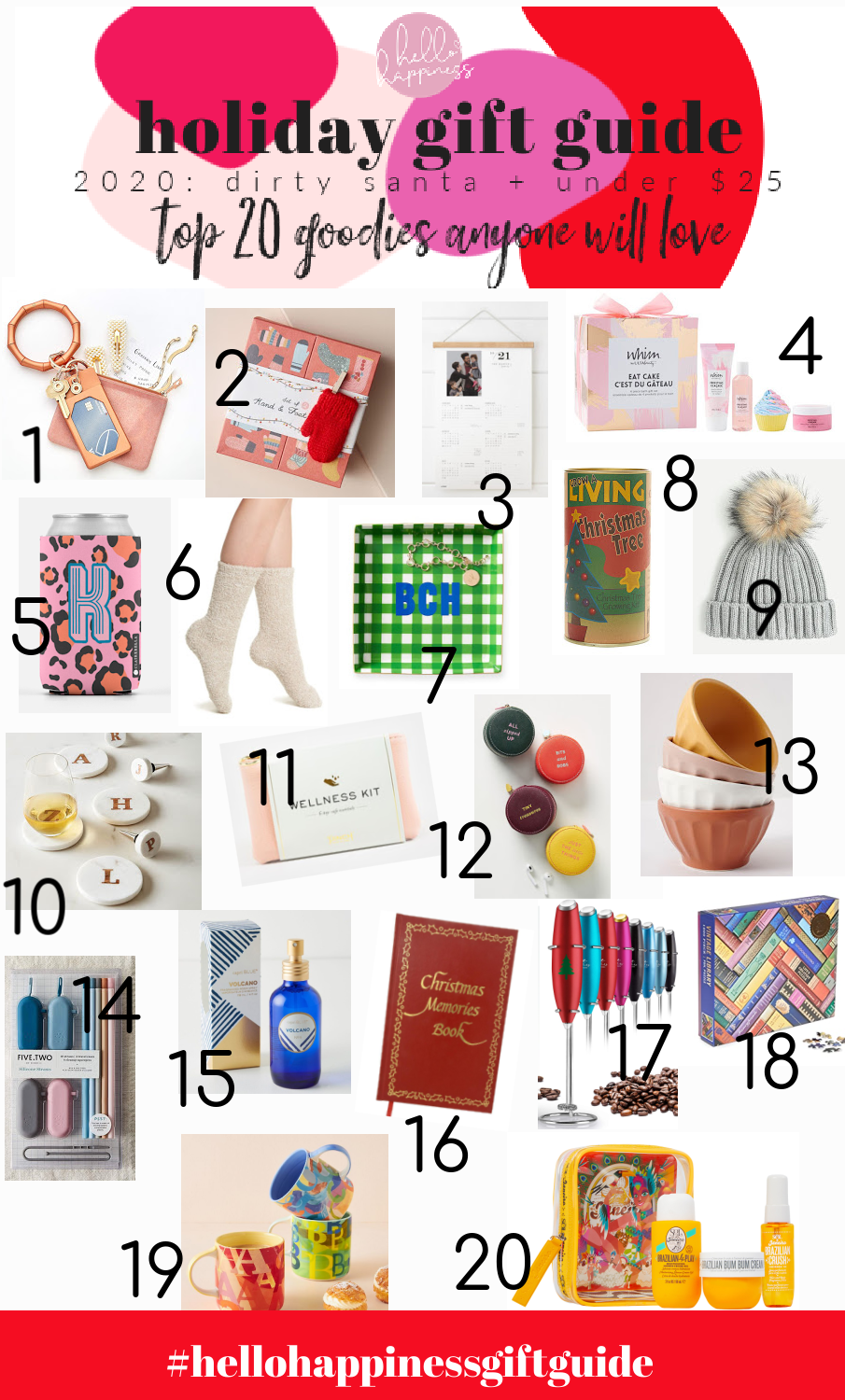
Image source: Hello! Happiness Blog
Dirty Santa vs White Elephant vs Yankee Swap
If you find yourself confused by the different names for gift exchanges, you aren't alone. These terms are frequently used interchangeably, but they often carry regional nuances and stylistic differences. Understanding these distinctions helps you prepare the right kind of gift for the specific crowd you are visiting.
Dirty Santa is a term predominantly used in the Southern United States. In these exchanges, the gifts are usually "good" or highly desirable items that people actually want to keep. The "dirty" part is strictly the stealing mechanic. In contrast, White Elephant is the national catch-all term, but it traditionally implies "useless" or humorous gag gifts—items that are more funny to open than they are practical to own.
Yankee Swap is the New England version of the game. According to community discussions on Reddit , Yankee Swaps often lean toward practical or even slightly luxurious items, such as high-quality tools or kitchen gadgets, rather than pure gags.
| Game Name | Primary Region | Typical Gift Style | Key Vibe |
|---|---|---|---|
| Dirty Santa | Southern U.S. | Coveted / Useful | Competitive & Strategic |
| White Elephant | National / General | Gag / Funny / Useless | Humorous & Lighthearted |
| Yankee Swap | New England | Practical / Luxe | Utility-focused |
How to Play Dirty Santa Step by Step
To ensure the game runs smoothly, it is essential to establish the rules before the first gift is touched. The following steps represent the standard way to play, though variations exist depending on the size of the group.
1. Preparation and Price Caps
The host sets a price limit—typically $20 to $25—and a theme. Guests bring one wrapped gift that fits these criteria. The wrapping is a crucial part of the strategy; many participants use oversized boxes or deceptive shapes to hide the true nature of their contribution.
2. The Drawing
Every participant draws a number from a hat. This number determines the order of play. Drawing #1 is often seen as a disadvantage initially, but in many versions of the game, Player #1 gets a special "final steal" at the very end, making it a highly strategic position.
3. The Stealing Mechanic
Player #1 selects a gift from the pile and opens it. Player #2 then has a choice: they can either "steal" the gift from Player #1 or pick a new, unwrapped gift from the pile. If a gift is stolen, the person who lost it immediately picks a new gift or steals from someone else (though they usually cannot immediately steal back the same gift).
4. The "Frozen" Rule
To prevent the game from lasting all night, most groups implement a "three-steal" rule. Once a gift has been stolen three times, it is "frozen" and stays with the current holder for the remainder of the game. This adds a layer of urgency to the stealing process.
If you draw the #1 spot, don't be discouraged. While you start the game with the least information, most house rules allow the first player to have the final steal of the night after everyone else has finished. This often makes Player #1 the most powerful person in the room at the end of the exchange.
What Makes a Great Dirty Santa Gift?
A successful Dirty Santa gift is one that triggers the stealing mechanic. If a gift sits in the corner and never moves, it hasn't quite hit the mark for this specific game. The goal is to bring something that at least three people in the room will actively want to take home.
Strategic gift-giving in this context often involves the "Buy Two" strategy. As suggested by Esquire , if you find an item that is exceptionally strong, you might want to buy one for the party and one for yourself. This prevents "gift heartbreak" when your own contribution is inevitably stolen away from you during the game.
"The best Dirty Santa gifts are those that balance universal appeal with a touch of surprise. You want something that makes the next person in line think twice about the gift they are currently holding."
Utility is often the secret weapon. While gag gifts get a laugh, items like portable power banks, high-end snacks, or quality insulated tumblers are the ones that people will fight over. Re-giftability is also a factor, especially in office settings. A nice bottle of wine or a gourmet coffee set is a safe bet because even if the recipient doesn't want it, they know someone else who will.
The Stealability Score: Most Coveted Gifts Based on Community Data
Based on real-world feedback from community threads and holiday shopping data, we have categorized common gifts by their "Stealability Score"—a metric of how likely an item is to be stolen multiple times during a session.
The undisputed king of steals. The high-risk, high-reward nature makes them irresistible.
High perceived value and universal utility. These rarely stay with the first person who opens them.
Food is a universal motivator. A $25 card to a popular local spot is a guaranteed hit.
Often seen as a "lazy" gift. Unless it's a very high-end brand, these usually don't move.
According to The Bro Basket , consumable items like high-end tequila or whiskey also rank among the top choices for office parties, as they don't add permanent clutter to a coworker's desk and offer immediate value.
Best Dirty Santa Gift Ideas by Price Point
Choosing a gift often depends on the budget set by the host. Here are some of the strongest contenders for 2026 across common price brackets.
Top Picks for a $10 to $15 Budget
In the lower price bracket, the goal is to find "small but mighty" items. Electronic screwdrivers, international snack boxes (like Japanese Kit Kats), and Tile keychain tags are excellent choices. These items feel more expensive than they are and offer specific utility that many people lack in their daily lives.
The Standard $20 to $25 Exchange
This is the "sweet spot" for most Dirty Santa parties. Popular items in this range include weighted blankets (often found on sale), phone tripods with ring lights, and portable campfires like the Solo Stove Mesa. These items are large enough to feel substantial but fit perfectly within a modest budget.
Luxe and Office Party Gifts for $50+
For higher-end exchanges, focus on tech and comfort. Portable car vacuums, heated blankets, and professional-grade cocktail kits are consistently ranked among the most-stolen items. At this price point, people expect a gift that will last for years, so brand recognition (like Anker for tech or Le Creuset for kitchenware) can drive up the steal rate significantly.
Funny and Gag Gifts That Actually Work
If the party vibe leans toward humor, a "good" gag gift is one that is funny to look at but still serves a purpose. A pizza-shaped blanket or "Date Night Dice" are examples of items that provide a laugh while remaining useful. These are far more successful than "troll" gifts that are intentionally bad.
In recent years, items like "Snoop on a Stoop" or humorous desk toys have become staples of the genre. However, a word of caution: avoid the "Rotisserie Chicken" mistake. As noted in community anecdotes, bringing a gift that is genuinely unwanted or perishable in a way that creates a mess can dampen the party mood. The goal is to be the "funny guy," not the "villain."
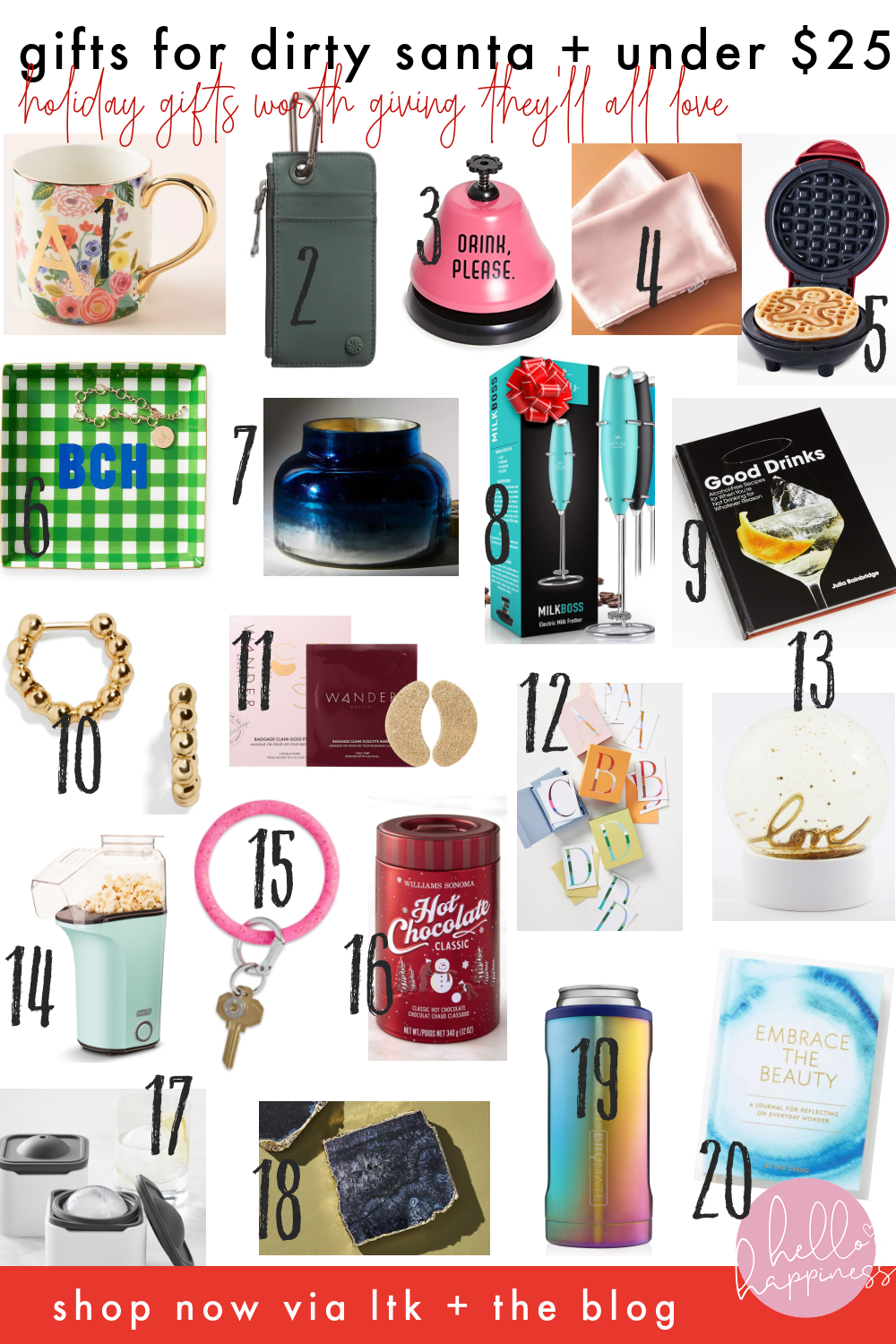
Image source: Hello! Happiness Blog
How to Choose a Gift for Different Audiences
The "cringe level" of your gift should be tailored to the people in the room. What works at a frat house will likely not work at a corporate law firm.
Office-Friendly Dirty Santa Gifts
For coworkers, focus on "Consumable Only" themes. This avoids the awkwardness of giving someone a piece of home decor that doesn't fit their style. High-quality coffee beans, artisanal chocolates, or a nice desk plant are safe, professional, and highly re-giftable if the recipient isn't a fan.
Family and Multi-Generational Exchanges
When playing with kids and grandparents, utility is king. Tools, cozy blankets, and board games are excellent choices. These items appeal to a wide age range and ensure that no matter who ends up with the gift, they will find a use for it. Avoid anything too niche or tech-heavy that a non-tech-savvy relative might struggle to use.
Adult-Only "Dirty" Santa
If the party is strictly for adults and the host has given the green light, you can lean into the edgy or humorous style found on sites like Dude I Want That . This might include "naughty" themed items or drinking games. Just ensure you know the crowd well enough to avoid genuine offense.
Frequently Asked Questions
What is the difference between White Elephant and Dirty Santa?
While the rules are nearly identical, the primary difference lies in the gift type and regional naming. Dirty Santa (Southern U.S.) typically involves gifts that people actually want to steal because they are useful or valuable. White Elephant (National) often focuses on gag gifts or "useless" items that are funny to open but have little practical value.
How many times can a gift be stolen?
In most standard rules, a gift can be stolen three times. On the third steal, the gift is "frozen" and cannot be taken again. This prevents the game from looping indefinitely on a single popular item and ensures the exchange moves along at a steady pace.
Are Dirty Santa gifts supposed to be inappropriate?
Not necessarily. The "dirty" in the name refers to the act of stealing from others, not the content of the gifts. Most Dirty Santa exchanges are perfectly appropriate for families and offices. However, some groups choose to have a "naughty" theme, so it is always best to check with your host before buying.
What is a good price limit for Dirty Santa?
The most common price limit is $20 to $25. This is enough to buy a high-quality, desirable item without being a significant financial burden on the participants. For budget-conscious groups, $10 to $15 can also work if the focus is on creative or DIY gifts.
Can you steal back a gift that was just taken from you?
Standard rules usually prohibit an immediate "steal-back." If Player B steals from Player A, Player A cannot immediately steal that same gift back from Player B. They must either pick a new gift or steal from someone else. This prevents the game from getting stuck in a two-person stalemate.
Key Takeaways for Your Next Exchange
Dirty Santa is more than just a gift exchange; it is a highlight of the holiday season that relies on strategy and social interaction. To make the most of your next party, remember these points:
- Focus on Stealability: Choose items with high utility or universal appeal to ensure they get moved around.
- Know the Rules: Always clarify the "steal limit" and the "frozen" rule with your host before the game begins.
- Wrap Deceptively: Use odd-shaped boxes or heavy weights to disguise what is inside your gift.
- Strategic Turn Order: Remember that drawing #1 is often a powerful position due to the final steal rule.
- Tailor to the Crowd: Match the "cringe level" of your gift to the specific audience (office vs. friends).
- The Buy-Two Strategy: If you find a truly great gift, buy one for yourself so you don't feel bad when it gets stolen.
Pick a gift that balances humor and utility, and you will likely see your contribution become the star of the night.