Home
Joe Hisaishi Transforms Hollywood Romance in a Big Bold Beautiful Journey

The world of cinema music reached a historic milestone in 2025 as the legendary Japanese composer Joe Hisaishi made his long-awaited Hollywood feature scoring debut. The project chosen for this monumental transition was A Big Bold Beautiful Journey, a romantic fantasy directed by the visionary Kogonada. Known globally for his transcendent collaborations with Hayao Miyazaki and Studio Ghibli, Hisaishi’s move into the American film industry marks a bridge between Eastern melodic sensibilities and Western narrative structures. This score does more than just provide a background for the story; it acts as the emotional pulse of a film that explores the fragility of memory and the unexpected nature of human connection.
The Significance of the Hollywood Debut for Joe Hisaishi
For decades, fans of film music have associated Joe Hisaishi with the sweeping, nostalgic landscapes of animated masterpieces like Spirited Away, My Neighbor Totoro, and The Boy and the Heron. While his work has occasionally touched international shores through concerts and re-recordings, A Big Bold Beautiful Journey represents his first original score for a live-action Hollywood feature. This debut is significant because it challenges the traditional "Hollywood sound," which often relies on heavy orchestration or ambient drones. Instead, Hisaishi brings a distinct sense of "Ma"—the Japanese concept of negative space—to a story starring Margot Robbie and Colin Farrell.
The collaboration originated from a deep mutual respect between Director Kogonada and Hisaishi. Kogonada, whose previous films Columbus and After Yang are celebrated for their contemplative pacing and architectural beauty, sought a musical voice that could carry emotional weight without resorting to melodrama. By choosing Hisaishi, the production signaled an intent to create something timeless. The result is a soundtrack that feels both intimate and expansive, matching the film’s premise of two strangers on a time-bending odyssey through their own lives.
Architectural Minimalism Meets Melodic Grandeur
One of the most striking aspects of the score for A Big Bold Beautiful Journey is how it balances Kogonada’s minimalist visual aesthetic with Hisaishi’s gift for unforgettable melodies. In our analysis of the composition, the score avoids the trap of over-explaining the plot through music. Instead, it creates a "parallel space" where the audience can reside alongside the characters.
The piano remains the centerpiece of this work. Hisaishi has always been a master of the keys, using them to ground fantastical elements in human reality. In this film, the piano passages are often sparse, echoing the isolation of the protagonists, David and Sarah, before their paths converge. As the narrative progresses, the orchestration swells with delicate string arrangements that suggest the layering of memories. Unlike the dense, wall-to-wall scoring seen in many contemporary blockbusters, this soundtrack utilizes silence as a powerful instrument. This "negative space" allows the dialogue and the subtle performances of the lead actors to breathe, making the eventual musical crescendos feel earned rather than forced.
Analyzing the Musical Themes for Sarah and David
The score is built upon distinct leitmotifs that represent the two central characters. These themes are not static; they evolve as the characters undergo their fantastical journey.
The Melody of Introspection for Sarah
Sarah’s theme, as heard in tracks like "To Her Mother's Side" and "Memories of Mother," is characterized by flowing strings and a gentle, descending piano line. It captures a sense of introspective melancholy. In the film, Sarah is a character grappling with the echoes of her past and the decisions that led her to the present. The music reflects this through an almost impressionistic quality, where the notes seem to shimmer and fade like a half-remembered dream. This use of "shimmering" textures—often achieved through light percussion or harp glissandi—is a hallmark of Hisaishi’s new European-influenced direction for this project.
David’s Grounded and Pragmatic Motif
In contrast, David’s presence in the score is more grounded. His motifs feature warmer, lower-register orchestration. There is a rhythmic stability to David’s music that reflects his pragmatic nature and his quiet determination to navigate the strange circumstances of the journey. When David and Sarah’s paths finally intertwine, Hisaishi masterfully weaves these two disparate musical ideas into a harmonic convergence. This isn't just a technical feat; it is a narrative one, signaling to the audience that these two souls are finding a shared frequency.
The Vocal Collaborations with Laufey and Mitski
A significant departure from Hisaishi’s usual solo-centric work is the integration of contemporary vocalists into the soundtrack. The inclusion of GRAMMY-winning artist Laufey and indie-pop icon Mitski adds a layer of modern vulnerability to the project.
Laufey and the New Jazz Standard
Laufey contributes four tracks to the album, including the original song "The Risk." Her voice, which bridges the gap between old-school jazz standards and modern pop, is the perfect vocal analog for Hisaishi’s music. In tracks like "Winter Wonderland" and "But Beautiful," Laufey provides a sense of "escapism" that mirrors the film’s themes. Her involvement is not merely a marketing strategy; her music explores the impact of time on life and love, which is the very heart of Kogonada’s film. The track "The Risk" serves as a thematic anchor, emphasizing the necessity of vulnerability in the pursuit of human connection.
Mitski’s Reimagining of a Classic
The soundtrack also features a striking cover of Pete Townshend’s "Let My Love Open the Door" by Mitski. While the original song is often associated with upbeat pop energy, Mitski’s rendition is tailored to the film’s ethereal and romantic tone. It serves as a bridge between the avant-garde and the accessible, fitting perfectly within the curated world of Milan Records. This track, along with Laufey's contributions, ensures that the soundtrack appeals to a wide demographic, from dedicated Ghibli fans to followers of the modern indie scene.
A Track-by-Track Breakdown of Key Moments
With 28 tracks spanning nearly an hour, the original motion picture soundtrack offers a comprehensive emotional journey. Several tracks stand out as essential listening for anyone seeking to understand the depth of Hisaishi’s contribution.
Rain and The Point
The opening track, "Rain," sets the atmospheric tone. It is a brief but evocative piece that introduces the listeners to the damp, reflective world the film inhabits. This is followed by "The Point," a bonus track that acts as a subtle transition. These early tracks demonstrate Hisaishi's ability to establish a mood in under two minutes, a skill honed through decades of animation work where every second counts.
Sarah and David
Track 4, "Sarah and David," is the longest piece in the collection, clocking in at over five minutes. This is the emotional centerpiece of the score. It is here that the main themes are fully developed and allowed to interact. The orchestration is lush yet restrained, moving from a solo piano introduction to a sweeping orchestral finish that underscores the "capital E" earnestness of the film’s romance.
The Childhood Home and When I was Young
As the film explores the theme of returning to one's roots, tracks like "The Childhood Home" and "When I Was Young" lean heavily into nostalgia. Hisaishi uses simpler, more folk-like melodies here, evoking the universal feeling of looking back at a life left behind. The use of woodwinds in these tracks adds an "otherworldly" or "fantasy" quality that reminds the audience that this is no ordinary road trip.
The Risk (Instrumental)
The instrumental version of Laufey's "The Risk" allows the listener to appreciate the underlying arrangement. It highlights how well the contemporary song structure fits within the wider orchestral tapestry of the film. It serves as a testament to the cohesive vision of the music supervisors and Kogonada himself.
Comparing the Hollywood Debut to the Ghibli Legacy
Inevitably, listeners will compare A Big Bold Beautiful Journey to Hisaishi’s work on films like Princess Mononoke or Spirited Away. However, this score represents a distinct evolution. In his animation work, Hisaishi often had to compete with vibrant, maximalist visuals, leading to bold, iconic themes. In this live-action Hollywood setting, he adapts his style to suit the physical presence of actors like Margot Robbie and Colin Farrell.
The "European influence" noted by critics in this score is a departure from the more traditional Japanese scales sometimes found in his earlier work. There is a kinship here with the works of European masters like Yann Tiersen (notably the Amélie score), yet it remains quintessentially Hisaishi through its rhythmic precision and melodic clarity. It is a more mature, perhaps more "cinematic" version of Hisaishi—one that is comfortable with ambiguity and slow-burn emotional payoffs.
The Aesthetic of the Physical Release
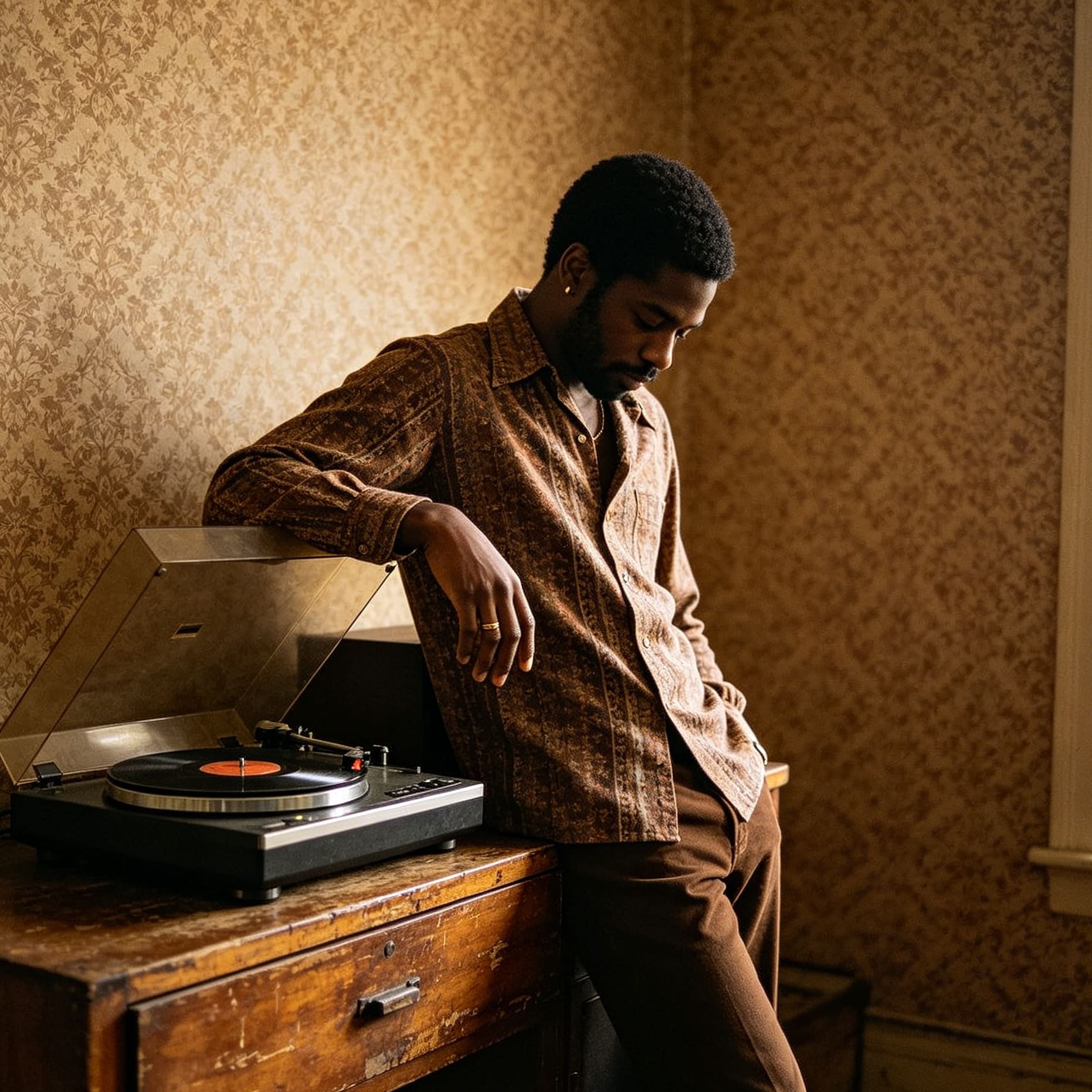
For collectors, the release of this soundtrack on physical media has been treated with the same level of care as the music itself. Milan Records, in partnership with Mutant and Sony Pictures, released a stunning 2LP vinyl edition. The choice of "red and blue" vinyl is a direct nod to the protagonists’ diverging and converging paths.
The inclusion of a screen-printed D-side featuring artwork from the film makes this a "cult classic" in the making for vinyl enthusiasts. This physical manifestation of the music reinforces the film’s themes of memory and tangible history. In an era of digital streaming, having a heavy, colorful vinyl record to hold while listening to Hisaishi’s delicate notes provides a multi-sensory experience that aligns with the film's "earnest" and "heart-on-its-sleeve" tone.
Impact on the Romantic Fantasy Genre
A Big Bold Beautiful Journey is described as a "future cult classic," and much of that reputation will rest on its soundtrack. Romantic fantasy is a difficult genre to score; it requires the music to be magical enough to sustain the fantasy elements, yet grounded enough to make the romance feel real.
Hisaishi achieves this by focusing on the "human experience of regret and hope." The music doesn't try to explain the time-bending mechanics of the plot. Instead, it focuses on how those mechanics feel to the people experiencing them. This approach elevates the film from a standard genre piece into something "genuinely transcendent," as described by early viewers. It proves that Hisaishi’s musical language is universal, transcending the boundaries of animation and live-action, as well as the geographical divide between Tokyo and Los Angeles.
Conclusion
The collaboration between Joe Hisaishi and Kogonada for A Big Bold Beautiful Journey is a landmark event in 21st-century film music. By bringing his signature piano-led emotional weight to a Hollywood setting, Hisaishi has not only enriched this specific film but also provided a masterclass in how to score romance with restraint and dignity. The inclusion of modern voices like Laufey and Mitski ensures the soundtrack remains relevant to a contemporary audience while maintaining the timeless quality that has made Hisaishi a legend. Whether you are a long-time fan of Studio Ghibli or a newcomer attracted by the star power of Margot Robbie and Colin Farrell, this score offers a profound journey through the landscape of the human heart.
Summary of the Soundtrack
- Composer: Joe Hisaishi (Hollywood Feature Debut).
- Featured Artists: Laufey, Mitski.
- Total Tracks: 28 (including bonus tracks and instrumentals).
- Label: Milan Records / Mutant.
- Style: Piano-forward, orchestral minimalism, European influence.
- Key Themes: Memory, romance, taking risks, and the passage of time.
FAQ
Is this Joe Hisaishi's first Hollywood movie?
Yes, A Big Bold Beautiful Journey marks Joe Hisaishi’s first original score for a major American live-action feature film. While his music has been featured in international releases of Studio Ghibli films, this is his debut in a Hollywood-produced story-film.
Who are the singers on the A Big Bold Beautiful Journey soundtrack?
The soundtrack features prominent contributions from the Icelandic-Chinese artist Laufey, who performs four tracks, and the Japanese-American indie artist Mitski, who performs a cover of "Let My Love Open the Door."
What is the musical style of the score?
The score is described as "piano-forward" and "evocative." It utilizes a blend of delicate piano passages, sweeping but restrained string arrangements, and a concept known as "negative space" to create an emotional atmosphere that doesn't overwhelm the actors' performances.
When was the soundtrack released?
The digital soundtrack was released on September 19, 2025, by Milan Records. A special 2LP vinyl edition was later made available through Mutant, featuring unique red and blue colored discs.
How many tracks are on the album?
The full original motion picture soundtrack contains 28 tracks, including the orchestral score by Joe Hisaishi and the vocal songs by Laufey and Mitski. The total runtime is approximately 59 minutes.
Does the music relate to Studio Ghibli?
While the music is not for a Studio Ghibli film, it carries the "melodic sensitivity" that Hisaishi is famous for in his work with Hayao Miyazaki. However, critics have noted that this score feels more "European-influenced" and tailored for live-action cinema.
-
Topic: A Big Bold Beautiful Journey (Original Motion Picture Soundtrack) - Album by Joe Hisaishi - Apple Musichttps://music.apple.com/us/album/a-big-bold-beautiful-journey-original-motion/1839971130
-
Topic: A Big Bold Beautiful Journey (soundtrack) - Wikipediahttps://en.m.wikipedia.org/wiki/A_Big_Bold_Beautiful_Journey_(soundtrack)
-
Topic: A Big Bold Beautiful Journey (Original Motion Picture Soundtrack) - album by Joe Hisaishihttps://www.shazam.com/album/1839971130/a-big-bold-beautiful-journey-original-motion-picture-soundtrack