Home
How Forensic Evidence and Recovered Photos Convicted Jodi Arias
The conviction of Jodi Arias for the 2008 murder of Travis Alexander relied heavily on a Sony Cyber-shot digital camera recovered from a washing machine. Despite being washed, forensic experts retrieved deleted images showing the couple together on the day of the crime, the final photo of Alexander alive in the shower, and accidental shots taken during the struggle. This digital trail, combined with a bloody palm print containing both DNA profiles and the sheer brutality of 27 stab wounds, dismantled Arias's claims of self-defense.
The trial of Jodi Arias remains one of the most documented and analyzed cases in modern American legal history. Central to the prosecution's case was a wealth of forensic evidence that provided a timestamped narrative of the events occurring on June 4, 2008. While Arias initially claimed she was not in Mesa, Arizona, at the time of Travis Alexander's death, the recovery of physical and digital evidence eventually forced a confession, albeit one framed as self-defense. This analysis explores the technical and behavioral evidence that led to her first-degree murder conviction.
What Photos Were Found on the Camera in the Washing Machine?
The discovery of the Sony Cyber-shot digital camera is widely regarded as the "smoking gun" of the investigation. Mesa Police Department investigators found the device inside Travis Alexander’s washing machine, buried within a load of bloody linens and clothing. According to Oxygen's case analysis , the suspect had attempted to destroy the evidence by running it through a wash cycle, likely hoping the water and detergent would render the memory card unreadable.
However, the digital forensics unit successfully recovered a sequence of images that provided a chilling timeline of Alexander’s final hours. The recovered data included:
- Earlier Photos: Several sexually suggestive images of Arias and Alexander taken throughout the afternoon of June 4.
- The Last Photo: A clear image of Travis Alexander sitting in the shower, looking directly at the camera. The timestamp was 5:29 PM.
- The Accidental Sequence: A series of blurry, unintentional photos taken just minutes after the shower photo. These included images of the bathroom ceiling, a portion of the floor, and a graphic shot of Alexander’s bleeding neck.
These images were pivotal because they proved Arias was present at the scene at the exact moment the violence began. The accidental photos, in particular, suggested a chaotic struggle where the camera was dropped or kicked, triggering the shutter. This sequence effectively destroyed Arias's initial alibi that she was hundreds of miles away during the murder.
How Digital Forensics Recovered Deleted Data from a Water-Damaged Camera
The recovery of data from the water-damaged Sony camera is a landmark example of the resilience of modern flash memory. When the camera was found, it had been subjected to water, heat, and chemical detergents. For many years, the public believed that submerging electronics was a reliable way to destroy data, but forensic science proves otherwise.
Digital cameras typically store images on SD or Memory Stick Pro Duo cards. These use NAND flash memory, which is non-volatile and lacks moving parts. Unlike traditional hard drives, flash memory is highly resistant to physical shock and water. As long as the memory chips themselves are not physically cracked or subjected to a massive electrical surge, the data remains trapped in the silicon cells. Forensic experts use "chip-off" techniques or specialized software to bypass damaged controllers and read the raw data directly from the storage chips.
In the Arias case, the Mesa PD digital forensics unit utilized advanced recovery software to scan the "slack space" of the memory card. When a user deletes a photo on a camera, the file isn't immediately erased; rather, the file system marks that space as "available" for new data. Because Arias did not take new photos after the murder, the original data remained intact, even though she had performed a "delete all" command. The durability of the flash memory allowed investigators to reconstruct the deleted files, providing the jury with a visual record of the crime as it unfolded.
The Timeline of the Shower Sequence and Accidental Images
The timestamps on the recovered photos allowed the prosecution to build a minute-by-minute reconstruction of the attack. The transition from the "normal" shower photos to the "accidental" struggle photos occurred within a very narrow window. This narrow timeframe was used to argue against the defense's claim that the killing was a spontaneous act of self-defense following a prolonged argument.
The "ceiling photo" became a focal point of the trial. Prosecution experts argued that the angle of the shot indicated the camera was on the floor, pointing upward, likely having been knocked out of Arias's hand as Alexander attempted to defend himself. This contradicted the narrative of a calculated, distanced act of self-defense. Instead, it painted a picture of a close-quarters, violent confrontation where the suspect was actively engaged in a struggle while still holding the camera she had been using moments earlier.
Forensic Evidence Beyond the Camera Including Bloody Palm Prints and DNA
While the camera provided the narrative, physical forensic markers provided the biological proof. One of the most damning pieces of evidence was a bloody palm print found on the wall of the hallway leading away from the master bathroom. This print was not immediately visible to the naked eye but was enhanced using chemical reagents during the crime scene processing.
| Evidence Type | Location Found | Forensic Significance |
|---|---|---|
| Bloody Palm Print | Hallway Wall | Contained a mixture of Travis Alexander's blood and Jodi Arias's DNA. |
| .25 Caliber Casing | Bathroom Floor | Linked the gunshot to a specific weapon type, later found to be missing from Arias's grandparents' home. |
| Bloody T-Shirt | Washing Machine | Proved an attempt to clean the scene and dispose of evidence. |
| Hair Fragment | Bathroom Floor | Mitochondrial DNA testing linked the hair to the suspect. |
According to the testimony of Heather Conner , a Latent Fingerprint Examiner for the Mesa Police Department, the palm print was a "DNA mixture." This meant that Arias’s skin cells or blood were physically pressed into Alexander’s wet blood on the wall. This was a critical "Information Gain" point for the prosecution: it proved that Arias was not only present but was actively bleeding or transferring DNA while moving through the house during or immediately after the attack.
Why the Autopsy Report Contradicted the Claims of Self-Defense
The medical examiner's report provided a gruesome look at the level of violence inflicted upon Travis Alexander. The sheer volume of injuries suggested "overkill," a forensic term used when the level of violence exceeds what is necessary to kill the victim, often indicating a high degree of personal animosity or rage.
Analyzing the Sequence of Wounds and Defensive Marks
The autopsy revealed 27 stab wounds, a gunshot wound to the head, and a throat slit so deep it nearly decapitated the victim. A major point of contention during the trial was the sequence of these wounds. The defense argued that Arias shot Alexander first in self-defense, and the subsequent stabbing occurred in a "fog" of trauma. However, the prosecution, led by Juan Martinez, argued that the gunshot was the final act, intended to ensure Alexander was dead after he had already been incapacitated by the knife wounds.
Evidence supporting the prosecution's theory included the lack of significant bleeding from the gunshot wound, suggesting Alexander’s heart had already stopped or his blood pressure had plummeted due to the throat wound and stabbings. Furthermore, Alexander had clear "defensive wounds" on his hands and fingers. These are typical in cases where a victim tries to grab the blade of a knife or shield their face from an attacker. The presence of these wounds strongly suggested that Alexander was conscious and fighting for his life during the stabbing, which undermined the claim that he was the initial aggressor in a life-threatening way.
Behavioral Evidence from the Interrogation Room and Trial Testimony
Beyond the physical evidence, the behavioral evidence provided by Arias herself was a top-tier factor in the jury's decision-making process. Her demeanor during the investigation and trial was often described as detached, narcissistic, or performative. One of the most famous instances of this was her behavior in the interrogation room when left alone by detectives.
Leaked interrogation footage showed Arias performing headstands against the wall and singing to herself. To the prosecution, this suggested a lack of remorse and a bizarre psychological state that was inconsistent with someone who had just killed a loved one in "self-defense." This behavior, combined with her three changing alibis—ranging from "I wasn't there" to "masked intruders did it"—painted her as a manipulative and unreliable witness.
The Crime Scene Reconstruction and Its Impact on the Jury
To help the jury visualize the struggle, the prosecution and various media outlets utilized crime scene reconstructions. Because the master bathroom was relatively small and cramped, the logistics of the attack were crucial. ABC News Chief Legal Analyst Dan Abrams famously used an exact replica of the bathroom to demonstrate the physical impossibility of some of Arias’s claims.
The reconstruction showed that for Arias to have retrieved the gun and the knife while being "attacked" by a larger man in such a confined space was highly improbable. The blood spatter patterns, which moved from the shower to the hallway and back to the bathroom, indicated a mobile struggle where Alexander was pursued. This visual evidence was instrumental in securing a first-degree murder conviction, as it suggested premeditation and a sustained attack rather than a single, defensive reaction.
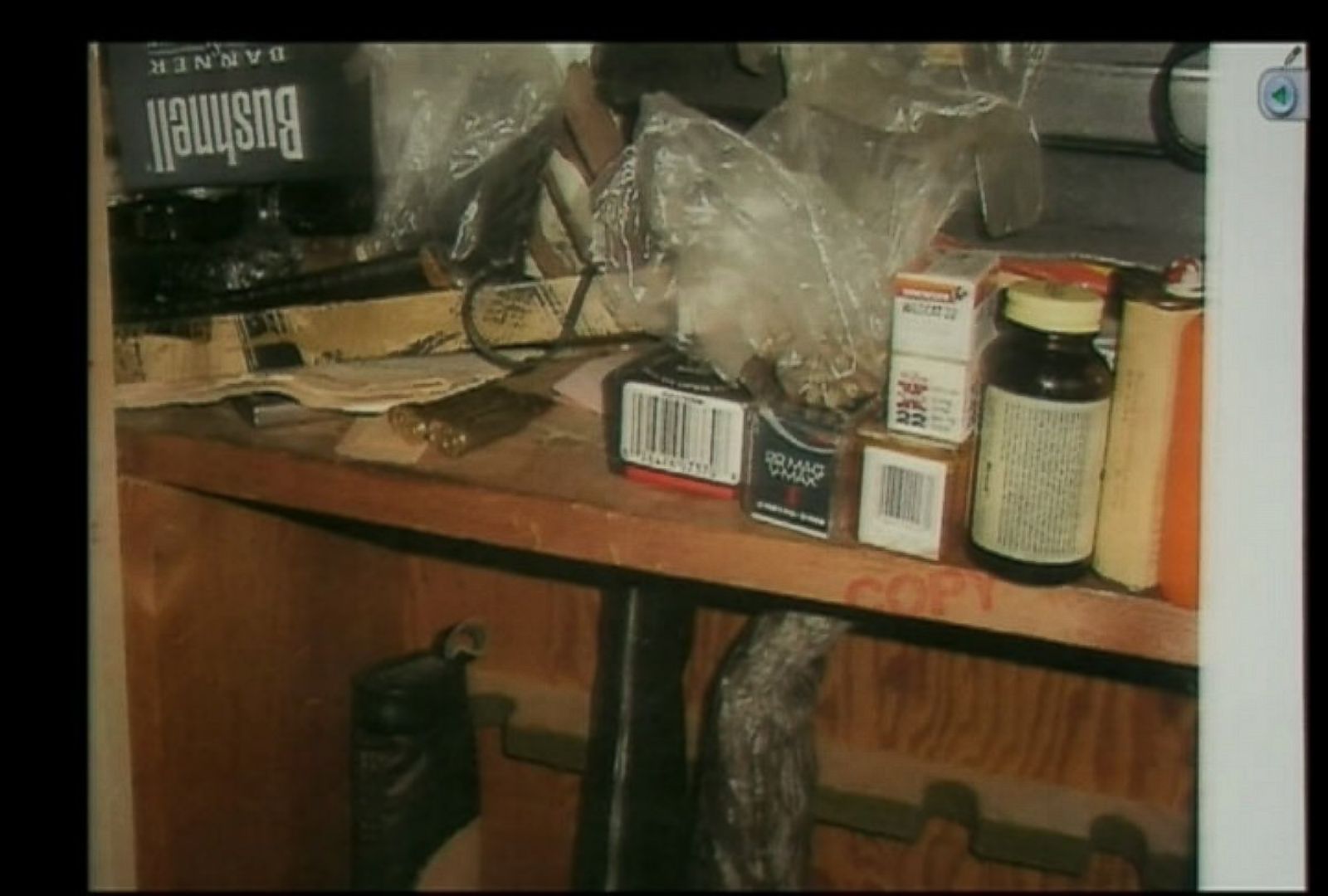
Image source: ABC News
Frequently Asked Questions
- What was the most incriminating piece of evidence against Jodi Arias?
- The most incriminating evidence was the Sony Cyber-shot camera found in the washing machine. It contained deleted photos that were forensically recovered, showing Arias at the crime scene and capturing accidental images of the victim's body during the struggle. This directly contradicted her initial claims that she was not present in Mesa at the time of the murder.
- How many stab wounds did Travis Alexander have?
- Travis Alexander suffered 27 stab wounds in addition to a slit throat and a .25 caliber gunshot wound to the head. The sheer number of wounds is often cited by forensic experts as evidence of "overkill," suggesting a crime of passion or extreme rage rather than a simple act of self-defense.
- Did the camera really survive a washing machine cycle?
- Yes, the camera body was damaged, but the internal memory card remained functional. Digital forensics units are highly skilled at recovering data from flash memory because it lacks moving parts and is resistant to water. As long as the data hasn't been overwritten by new photos, it can usually be retrieved using specialized software.
- What was the significance of the bloody palm print?
- The bloody palm print found in the hallway was a "DNA mixture," containing both Travis Alexander's blood and Jodi Arias's DNA. This provided physical proof that Arias was in the hallway, touching the walls while Alexander was bleeding, which dismantled her story about intruders or being elsewhere.
- Why did Jodi Arias do a headstand during her interrogation?
- While Arias never gave a clear reason, psychologists and prosecutors suggested it was a sign of her narcissistic personality and a lack of appropriate emotional response to the situation. It became one of the most famous examples of her "bizarre" behavior that led the jury to question her mental state and credibility.
- What was the final verdict for Jodi Arias?
- Jodi Arias was found guilty of first-degree murder. While the jury deadlocked on the death penalty, she was eventually sentenced to life in prison without the possibility of parole. She is currently serving her sentence at the Perryville Prison in Arizona.
Final Takeaways from the Jodi Arias Case
The Jodi Arias trial serves as a landmark case in the intersection of digital forensics and behavioral psychology. The evidence presented was not just circumstantial but provided a physical and digital map of the crime.
- Digital Evidence: The recovery of deleted photos from a washed camera was the pivotal moment that destroyed the suspect's alibi.
- Forensic Brutality: The 27 stab wounds and defensive marks on the victim's hands proved a violent struggle that contradicted the self-defense narrative.
- Biological Proof: The DNA mixture in the bloody palm print placed Arias at the scene in the immediate aftermath of the attack.
- Behavioral Red Flags: Arias's performance in the interrogation room and her changing stories suggested a calculated attempt to manipulate the investigation.
- Character Assassination: The failed attempt to label the victim as a pedophile backfired, further alienating the jury.
- Technical Resilience: The case highlighted that digital footprints are incredibly difficult to erase, even with physical destruction attempts.
For those interested in the technical side of criminal investigations, the Arias case remains a primary example of how forensic science can reconstruct the truth long after a crime scene has been altered.